
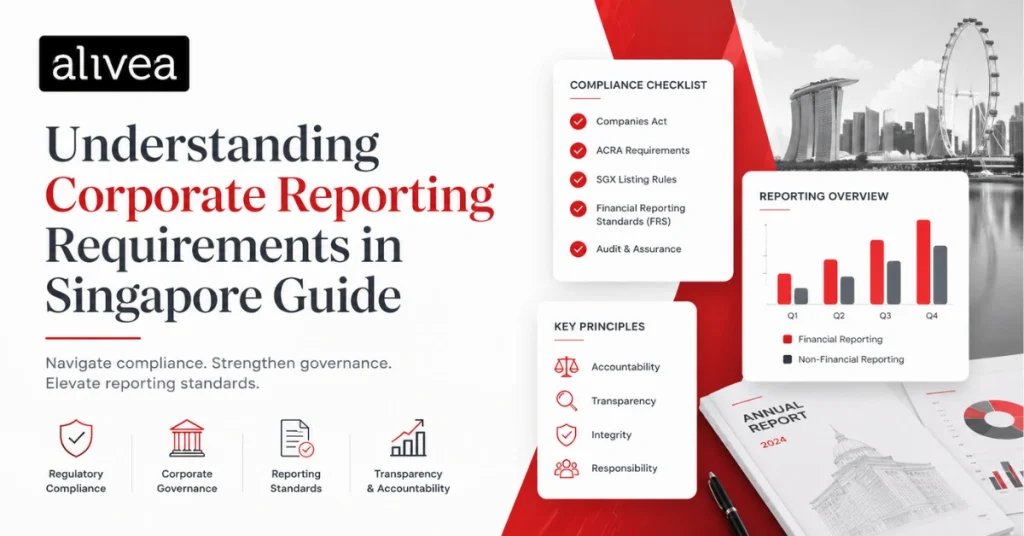
Corporate Annual Reporting Requirements for Clear Singapore Business Disclosure
Corporate annual reporting requirements in Singapore are more than a yearly administrative task. They form the foundation of transparent governance, credible business communication, and responsible stakeholder engagement. Every company needs to understand how statutory filings, financial statements, annual returns, directors’ responsibilities, and public disclosures work together. ACRA states that all Singapore companies must file annual returns on time, with deadlines depending on the company type and financial year end.
For business owners, boards, finance teams, and brand leaders, annual reporting is not only about satisfying a regulator. It is also about explaining how the company performed, what changed during the year, how risks were managed, and where the business is heading next. This is why annual report design plays an important role. A report that is legally complete but difficult to read may still fail to communicate value. A well-planned report turns compliance content into a clear, structured, and trustworthy business story.
This annual report design guide singapore perspective is especially useful for companies that want to build confidence among shareholders, investors, lenders, employees, clients, and public stakeholders. Good reporting combines accuracy, visual hierarchy, narrative flow, compliance discipline, and accessible language. It helps readers quickly understand the company’s financial position, governance approach, operational progress, and strategic direction.
A practical business annual reporting guide should begin with the company’s obligations, then move into content planning, financial disclosure, board review, design execution, and final filing. For growing companies, this creates consistency from year to year. For listed issuers, it supports investor relations and market transparency. For SMEs, it reduces the risk of missed deadlines and confusing documentation.
Everything about annual report singapore planning should be handled with both technical care and communication strategy. Brands such as alivea can position annual reporting as a professional business asset rather than a routine document. When compliance, storytelling, and design work together, a company’s annual report becomes a trusted record of performance and a useful tool for future growth.
Corporate Annual Reporting Requirements That Shape Singapore Compliance
Corporate annual reporting requirements in Singapore are shaped by statutory filing rules, financial reporting standards, board responsibilities, and, for listed companies, additional market disclosure expectations. The Companies Act 1967 governs companies in Singapore, including areas such as company management, operations, director duties, and winding up procedures. This legal framework gives annual reporting its formal importance because the report is connected to accountability, accuracy, and the public record of a company’s activities.
At the operational level, companies must pay attention to annual returns, financial statements, and supporting company information. ACRA notes that all Singapore-incorporated companies must prepare financial statements, except dormant relevant companies, and must file financial statements unless exempted. Financial statements filed as part of an annual return may also be available for public purchase. This means reporting is not only internal administration. It may become visible to external parties who assess credibility, stability, and business seriousness.
Annual report design should therefore begin with compliance mapping. Before any layout, photography, infographics, or executive message is created, the reporting team needs to identify what must be included, what is optional, what is audited, what must be filed in XBRL, and what must be approved internally. A strong annual report design guide singapore process keeps these requirements visible from the start, so the creative team does not build a beautiful document around incomplete or unverified information.
For private companies, the reporting focus is often statutory accuracy, shareholder clarity, and efficient record management. For public companies, the annual report must also support investor confidence, market communication, corporate governance explanation, and sometimes sustainability disclosures. This is where a business annual reporting guide becomes valuable: it translates complex requirements into a manageable production workflow.
Everything about annual report singapore compliance should also involve responsible review. Directors, company secretaries, finance leaders, auditors, legal advisers, and communication teams may all contribute different forms of expertise. When the process is coordinated early, companies avoid rushed editing, inconsistent numbers, unclear statements, and design changes that conflict with financial tables. Strong compliance is not created at the final filing stage; it is built throughout the reporting cycle.
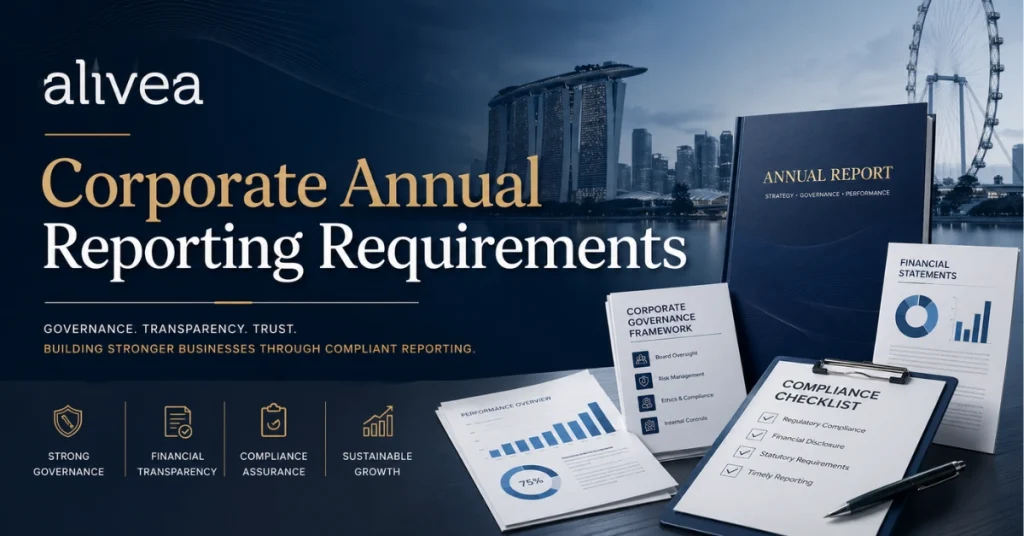
Annual Report Design That Turns Compliance Data Into Investor Clarity and Trust
Annual report design is the bridge between required disclosure and meaningful understanding. A company may have accurate financial statements, complete governance details, and timely filings, but if the annual report is poorly structured, readers may struggle to identify the most important messages. Design is not decoration. It is a communication system that guides attention, organizes evidence, and helps stakeholders interpret business performance with confidence.
A professional annual report design process begins with content architecture. The report should have a logical flow, usually moving from company overview and leadership messages to business performance, strategy, governance, financial statements, risk management, and forward-looking priorities. This structure helps readers move from broad context to detailed evidence. It also supports corporate annual reporting requirements because compliance sections are easier to locate, check, and review when the document follows a clear hierarchy.
Visual design should support clarity, not distract from it. Typography, spacing, color, charts, icons, section dividers, pull quotes, and data visualizations should make complex information easier to absorb. For example, revenue trends, operating segments, sustainability indicators, board composition, and risk themes may be easier to understand through well-designed charts or summary panels. However, every visual must remain accurate, proportional, and consistent with the underlying data.
An effective annual report design guide singapore approach also considers the needs of different readers. Investors may look for financial performance and strategic direction. Regulators may focus on required disclosures. Employees may want to understand company progress and future priorities. Clients may read the report to evaluate stability and professionalism. A report that serves these audiences well feels organized, transparent, and credible.
A practical business annual reporting guide should also protect the integrity of the content. Designers should not alter financial meanings for aesthetic reasons. Writers should avoid exaggerated claims that are unsupported by evidence. Leadership messages should be clear but not promotional in a way that weakens trust. Everything about annual report singapore communication should balance compliance, readability, and brand identity. When design is used responsibly, the annual report becomes a high-value business document that improves understanding rather than simply fulfilling a filing requirement.
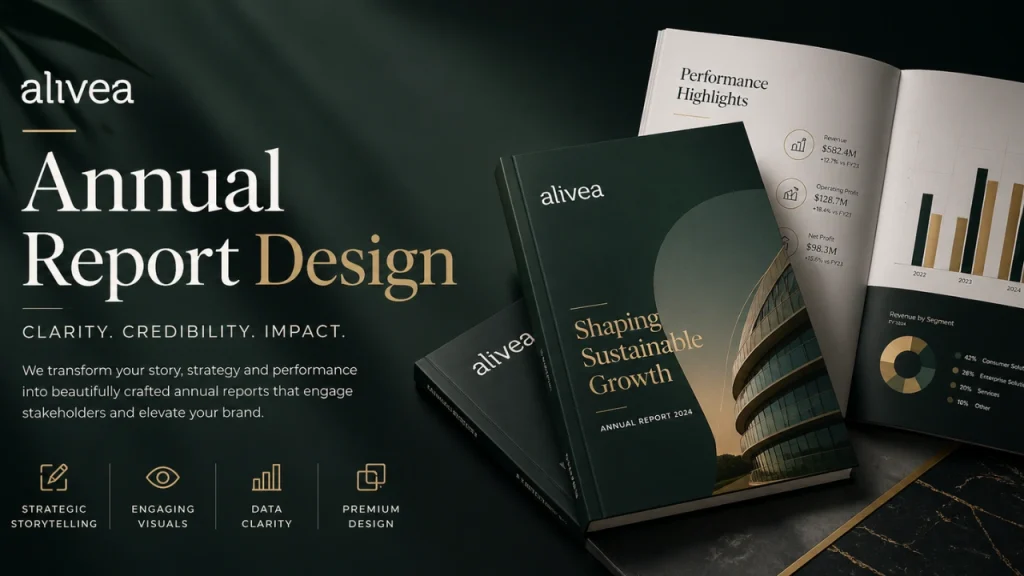
Annual Report Design Guide Singapore Companies Can Use for Better Reporting
An annual report design guide singapore companies can use should start with a simple principle: every design decision must support accuracy, readability, and stakeholder trust. Singapore’s business environment values clarity, governance, and professional presentation. Therefore, annual report design should never be treated as a last-minute visual wrapper. It should be integrated into the reporting workflow from the planning stage.
The first step is to define the reporting scope. The company should identify whether it needs a statutory annual return, financial statements, audited statements, XBRL filing, a full corporate annual report, sustainability disclosures, or a listed-company report. ACRA’s guidance explains that company officers, such as directors or company secretaries, may file annual returns, and companies may also engage a corporate service provider to file on their behalf. This shows why responsibility must be clear before production begins.
The second step is to create a content map. This map should include required sections, optional narrative sections, approval owners, data sources, design assets, and review dates. A reliable content map prevents missing pages, duplicate information, inconsistent figures, and unclear ownership. It also helps the annual report design team plan page count, visual rhythm, and document hierarchy.
The third step is to align financial reporting with recognized standards. The Accounting Standards Committee states that SFRS(I)s refer to Singapore Financial Reporting Standards (International) and related interpretations issued by the ASC, including standards effective for annual reporting periods beginning on 1 January 2026. For design teams, this matters because financial tables, notes, terminology, and presentation style must be handled carefully.
The fourth step is to build a review workflow. Finance should check figures, legal or compliance teams should review required disclosures, leadership should approve strategic messages, and design teams should ensure layout consistency. A strong business annual reporting guide should include version control, proofreading, accessibility checks, and final output testing for both print and digital formats.
Everything about annual report singapore production depends on coordination. When the process is fragmented, the report becomes stressful, expensive, and error-prone. When it is planned properly, the final document becomes a polished record of performance, governance, and corporate direction.
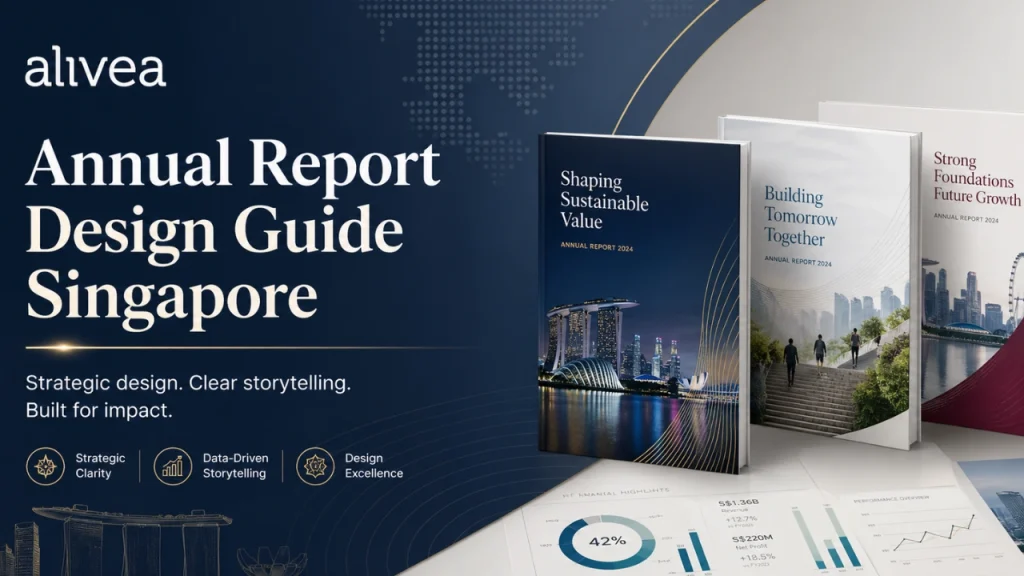
Business Annual Reporting Guide for Building Audit Ready Corporate Records
A business annual reporting guide should help companies maintain audit-ready records long before the annual report is designed. Many reporting problems begin because information is scattered across departments, stored in inconsistent formats, or collected too late. A strong reporting system keeps financial records, board approvals, shareholder information, operational data, sustainability metrics, risk updates, and governance notes organized throughout the year.
The reporting team should begin with a compliance calendar. This calendar should include the financial year end, board meeting dates, audit timelines, annual return deadlines, content drafting periods, design milestones, and final approval dates. ACRA confirms that annual return deadlines depend on company type and financial year end, so companies should not rely on generic assumptions. A tailored calendar reduces last-minute pressure and helps every contributor understand when their input is needed.
Next, companies should maintain reliable source documents. These may include trial balances, audited financial statements, directors’ statements, shareholder records, corporate structure updates, business segment data, sustainability records, and management commentary. When these materials are maintained properly, annual report design becomes smoother because the content team can work from verified information.
The guide should also include clear ownership. Finance teams may own numbers and notes. Company secretaries may manage statutory details and board-related information. Senior management may own strategic commentary. Investor relations or corporate communications may shape the narrative. Designers may translate the approved material into a readable and professional layout. Without ownership, annual reporting becomes a cycle of confusion, late edits, and duplicated reviews.
Corporate annual reporting requirements should also be connected to internal governance. Companies should ask whether the report accurately reflects the business, whether claims are supported, whether risks are fairly described, and whether the final document can stand up to scrutiny from stakeholders. This is where annual report design and compliance discipline meet. A beautiful report with weak records is risky. A compliant report with poor readability is underused. A strong report has both.
Everything about annual report singapore best practice points toward preparation. Companies that treat annual reporting as a year-round discipline usually produce clearer, faster, and more credible reports.
Everything About Annual Report Singapore Leaders Need for Better Decisions
Everything about annual report singapore planning should be viewed through the lens of decision-making. An annual report is not only a backward-looking document. It helps leaders assess what happened, explain why it happened, and communicate how the business intends to move forward. When prepared carefully, it becomes a strategic reference for board discussions, investor communication, financing conversations, partnership reviews, and brand positioning.
Singapore companies should understand the difference between mandatory reporting and value-added reporting. Mandatory reporting focuses on statutory obligations, financial statements, annual returns, and required disclosures. Value-added reporting goes further by explaining performance drivers, market context, customer priorities, operational improvements, people strategy, digital transformation, risk management, and sustainability progress. Both are important. Corporate annual reporting requirements create the foundation, while strong storytelling helps readers understand the company’s direction.
For listed companies, sustainability reporting is also an increasingly important part of the reporting landscape. SGX states that an issuer must issue a sustainability report to shareholders and the Exchange for its financial year at the same time as the annual report, or, where external assurance has been conducted, no later than five months after the financial year end. Singapore’s sustainability reporting roadmap also takes a climate-first approach with phased implementation starting from FY2025, and all companies listed on SGX need to report, with requirements depending on company tier.
Annual report design should respond to this broader reporting environment. Companies need layouts that can handle financial statements, governance content, business highlights, ESG data, charts, timelines, case studies, and leadership messages without overwhelming the reader. This requires disciplined editorial planning and a design system that supports both detail and readability.
A business annual reporting guide should also encourage leadership teams to ask better questions. What does the report reveal about business resilience? Which metrics matter most? Are risks explained honestly? Is the company’s strategy understandable? Are stakeholders receiving enough context to trust management’s direction?
An annual report design guide singapore companies can rely on should therefore combine compliance, clarity, evidence, and brand credibility. When leaders use the annual report as a strategic communication tool, it becomes more than a regulatory document. It becomes a yearly expression of accountability and business maturity. Trending now everything you need to know about annual report design in singapore.
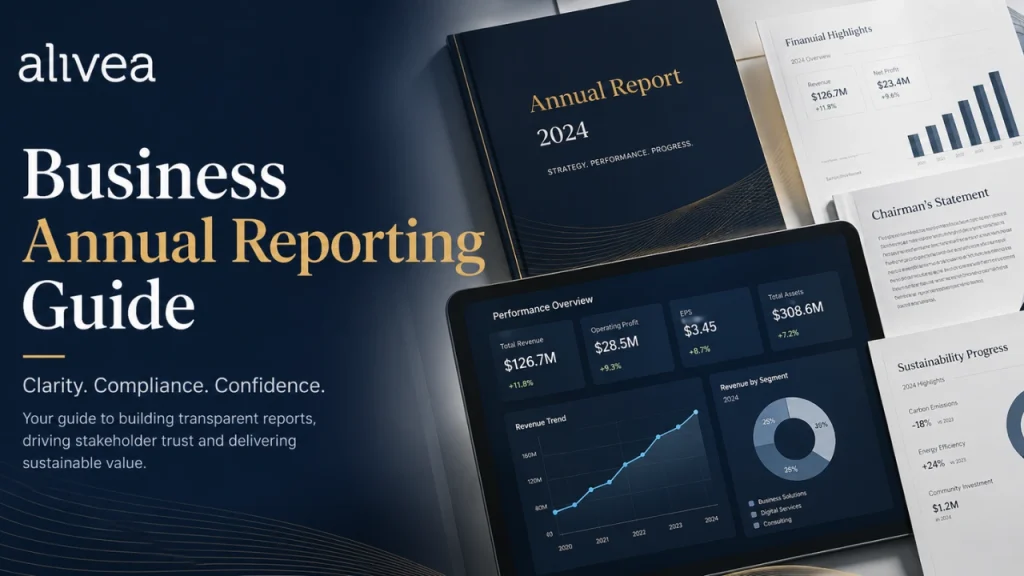
What Corporate Annual Reporting Requirements Mean for Singapore Companies
Corporate annual reporting requirements mean that a company must maintain proper records, prepare required financial information, file annual returns, and communicate essential corporate details within the expected timeline. In Singapore, this process is closely connected to governance because annual reporting confirms that the company remains active, accountable, and properly administered.
From a communication perspective, these requirements also shape annual report design. The report must present financial, operational, and governance information in a way that is clear and reliable. A good annual report design guide singapore approach helps companies avoid confusing layouts, weak section flow, and unsupported claims.
For business leaders, the meaning is practical: reporting is a yearly discipline that protects credibility. A business annual reporting guide helps the company know what to prepare, who should review it, and how the final document should support stakeholders. Everything about annual report singapore preparation should therefore begin with accuracy, then move into clarity, design, and strategic explanation.
Who Should Manage Annual Report Design and Reporting Duties in Singapore
Annual reporting duties should be managed by a coordinated team, not one person working alone. Directors carry important governance responsibility, company secretaries support statutory administration, finance teams prepare financial information, auditors review relevant statements, and management contributes business commentary. Designers and writers then transform approved content into a professional report.
This collaboration matters because corporate annual reporting requirements involve both technical accuracy and public communication. A finance team may understand the numbers, but annual report design specialists understand how to make those numbers readable. A company secretary may understand filing obligations, while communication teams understand tone, audience, and brand consistency.
An annual report design guide singapore process should clearly define each role early. This prevents delays, conflicting feedback, and repeated revisions. In a practical business annual reporting guide, every section should have an owner, reviewer, and approval deadline. Everything about annual report singapore success depends on disciplined teamwork because the final report represents the company’s governance, performance, and professionalism.
Where Annual Reports Are Filed, Shared, and Reviewed in Singapore Today
Annual reports and related reporting materials may be filed with ACRA, shared with shareholders, reviewed by directors, assessed by auditors, used by investors, and published through company or exchange channels depending on the company type. The exact destination depends on whether the business is private, public, exempt, listed, dormant, or subject to additional disclosure obligations.
Corporate annual reporting requirements are therefore not limited to one filing action. A company may need to prepare financial statements, complete an annual return, maintain internal records, distribute information to shareholders, or publish broader reports for stakeholder access. For SGX-listed issuers, sustainability reporting may also be shared with shareholders and the Exchange under applicable listing rules.
Annual report design must consider where the report will be used. A print-ready PDF, website version, investor presentation, and digital report may require different formatting choices. A strong annual report design guide singapore workflow ensures that the same approved content remains consistent across all channels.
When Annual Reporting Deadlines Affect Singapore Business Compliance Plans
Annual reporting deadlines affect planning immediately after the financial year end. Companies should not wait until the filing date approaches before gathering information. Annual report production includes data collection, financial closing, audit coordination, board review, writing, design, proofreading, approval, and submission. Each stage takes time.
Corporate annual reporting requirements become easier to manage when the company builds a reporting calendar at the beginning of the year. This calendar should include internal deadlines before external deadlines. For example, the finance team may need one date for final numbers, the board may need another date for review, and the design team may need enough time for layout and quality checks.
A practical business annual reporting guide should also include contingency time. Delays can happen when figures change, audit comments arrive late, leadership messages require revision, or design files need correction. Annual report design is strongest when content is stable before final layout. Everything about annual report singapore deadline management should focus on preparation, review discipline, and early coordination.
Why Annual Report Design Matters Beyond Basic Corporate Compliance Needs
Annual report design matters because readers judge both the information and the way it is presented. A report that is difficult to navigate can make a strong company appear disorganized. A report that is visually polished but unclear can feel promotional rather than trustworthy. The best annual report design improves comprehension while respecting corporate annual reporting requirements.
Design also affects how stakeholders interpret performance. Clear charts, readable tables, structured sections, and concise summaries help readers understand important trends. Good design can highlight business achievements, explain challenges, and connect strategy with measurable outcomes. This is especially valuable for companies that want to build credibility with investors, lenders, clients, employees, and partners.
An annual report design guide singapore framework should therefore treat design as a governance communication tool. It supports transparency, not decoration. A business annual reporting guide should encourage companies to use design for clarity, evidence, and confidence. Everything about annual report singapore communication becomes stronger when information is both accurate and easy to understand.
How Companies Build an Annual Report Design Guide Singapore Teams Trust
Companies build an annual report design guide singapore teams trust by combining compliance knowledge, editorial planning, brand standards, and a clear production workflow. The guide should explain required sections, preferred writing style, chart rules, data sources, approval steps, visual identity, accessibility standards, and final output formats.
The process begins with corporate annual reporting requirements. Teams should list what must be included before deciding how the report should look. After that, they can create a page structure, content checklist, design template, and review schedule. This helps annual report design remain consistent from first draft to final publication.
A strong business annual reporting guide should also include quality control. Numbers should match source documents, headings should be clear, charts should not distort data, and all leadership messages should be reviewed before publication. Everything about annual report singapore production should be repeatable, so the company improves each year instead of rebuilding the process from zero. Trust grows when the guide helps teams produce accurate, readable, and professional reports consistently.
Strong Corporate Annual Reporting Requirements Create Better Business Confidence
Corporate annual reporting requirements in Singapore give companies a clear framework for accountability, transparency, and responsible business administration. They help ensure that company information is updated, financial statements are properly prepared where required, annual returns are filed on time, and stakeholders receive reliable information. However, the real value of reporting is not limited to regulatory compliance. The annual report can also become a strategic business document that explains performance, governance, priorities, and future direction.
Annual report design is central to that value. A well-designed report makes complex information easier to understand. It turns financial data, governance details, sustainability information, leadership messages, and operational highlights into a structured narrative. This helps readers move through the document with confidence. It also shows that the company respects its stakeholders by presenting information clearly rather than forcing them to search through confusing pages.
An annual report design guide singapore companies can rely on should combine four elements: compliance accuracy, content clarity, visual professionalism, and review discipline. Compliance accuracy ensures that required information is complete. Content clarity helps readers understand the story behind the numbers. Visual professionalism strengthens brand credibility. Review discipline protects the company from errors, inconsistencies, and unsupported claims.
A practical business annual reporting guide should also encourage companies to think ahead. Reporting should not begin at the last minute. It should be supported by year-round recordkeeping, timely financial closing, early content planning, coordinated approvals, and a realistic production schedule. This approach reduces stress and improves the quality of the final report.
Everything about annual report singapore best practice points to one conclusion: strong reporting is both a legal responsibility and a communication opportunity. Companies that treat the annual report as a strategic asset can build stronger trust with shareholders, investors, employees, customers, regulators, and partners. By combining corporate annual reporting requirements with thoughtful annual report design, Singapore businesses can produce reports that are compliant, credible, readable, and valuable for long-term decision-making.
