
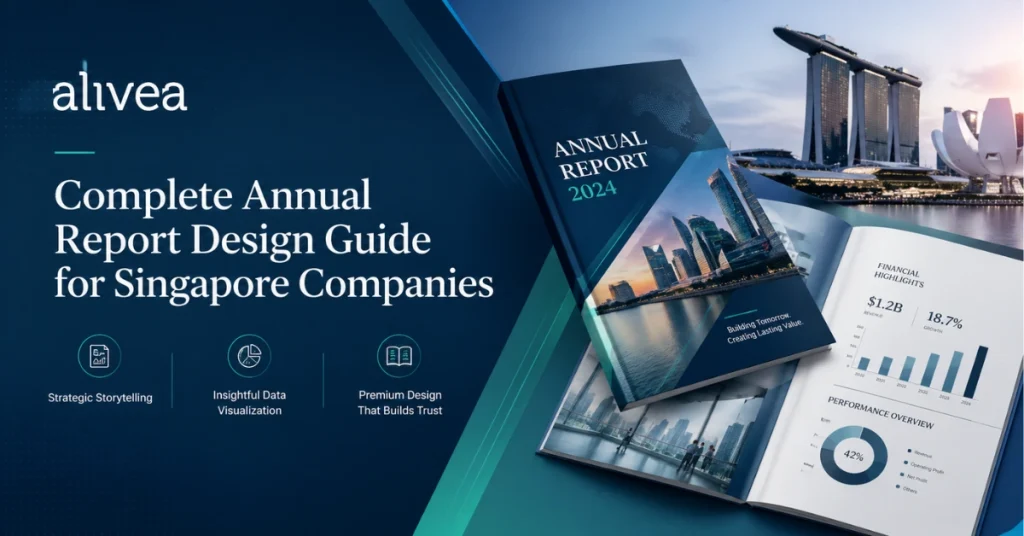
Annual Report Guide Singapore for Clear, Compliant, Investor-Ready Reporting
An effective annual report design guide singapore companies can rely on should do more than explain pages, numbers, and statutory sections. It should help business leaders understand how annual reporting becomes a structured communication tool that connects governance, performance, financial clarity, sustainability direction, and brand credibility. In Singapore’s competitive business environment, an annual report is not simply a yearly obligation. It is a formal record of business activity, a communication bridge with shareholders, and a public-facing document that can influence investor confidence, stakeholder trust, and corporate reputation.
For Singapore companies, annual reporting must balance accuracy with accessibility. Directors, finance teams, corporate secretaries, sustainability officers, and design specialists often need to work together so the final report is compliant, readable, and visually professional. A strong annual report design singapore strategy turns complex data into meaningful insight. Instead of presenting financial statements as isolated tables, the report should explain what the numbers mean, how the business performed, which risks were managed, and what direction the company plans to take.
This is especially important because corporate reporting requirements in Singapore are not one-size-fits-all. ACRA states that all Singapore companies must file annual returns, while filing deadlines depend on company type and financial year end. Listed and non-listed companies also follow different timelines, and some companies may need to file financial statements depending on their classification.
A useful business reporting guide should therefore cover both compliance and communication. It should explain everything about annual report planning, from business narrative and director statements to financial highlights, ESG disclosure, governance content, visual hierarchy, and final production quality. For brands that want a polished corporate presence, working with experienced reporting professionals or agencies such as alivea can help transform raw information into a cohesive report that supports both regulatory responsibility and business storytelling.
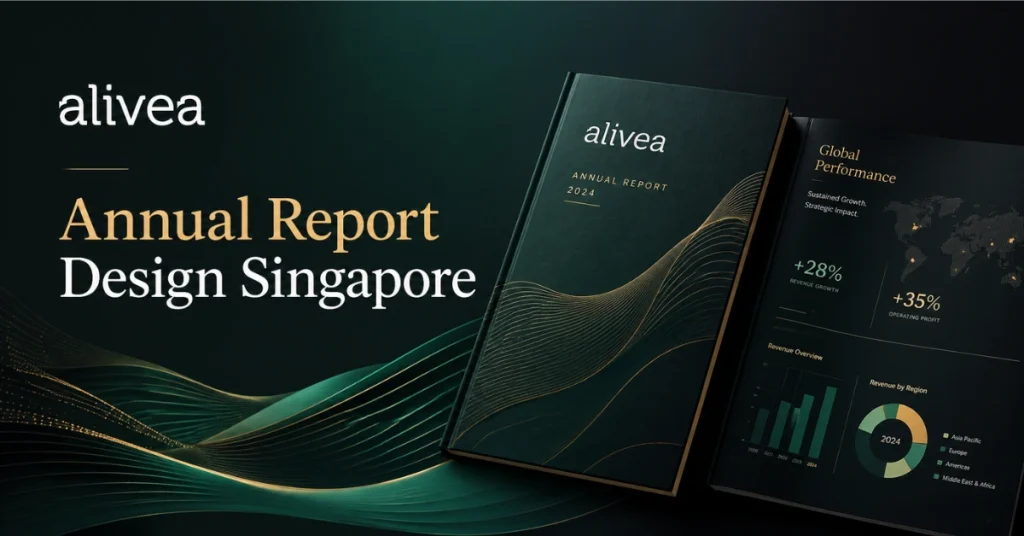
Annual Report Guide Singapore for Stronger Governance and Market Confidence
A practical annual report guide singapore businesses can use begins with one important principle: the report must serve the reader before it serves the company’s internal preference. Shareholders, investors, lenders, regulators, partners, employees, and potential clients may all read the document with different expectations. Some readers want financial transparency. Others want assurance that the board is responsible, risks are being monitored, sustainability issues are being considered, and business plans are realistic. A well-developed report answers these needs in a clear sequence.
The first layer of annual reporting is governance. Singapore companies should present leadership accountability through board information, director responsibilities, corporate governance practices, committee activities, risk management structures, and internal control explanations where relevant. These sections help readers understand how the company is directed and supervised. Even when the business is privately held, a governance-minded report can improve credibility because it shows that decision-making is organised and documented.
The second layer is performance communication. A report should not only show whether revenue increased or declined. It should explain the business context behind the results. Did the company enter new markets? Did costs change because of operational investment? Were margins affected by supply chain issues, talent expansion, digital transformation, or capital expenditure? These explanations help stakeholders interpret performance more fairly.
The third layer is compliance awareness. ACRA describes an annual return as an online form that includes key company details such as company name, registration number, company type, business activities, registered office address, directors, secretary, members, share information, and financial statements if required. This information supports informed decisions by stakeholders such as investors and partners.
The fourth layer is presentation quality. Even accurate information can lose impact when the structure is confusing. A reader-friendly annual report uses logical headings, concise summaries, page hierarchy, charts, captions, callout boxes, and consistent design patterns. When these elements work together, annual report design singapore becomes more than decoration. It becomes a communication system that helps people understand the company faster, remember key points longer, and trust the content more deeply.
Annual Report Design Singapore That Turns Data Into Corporate Storytelling
A strong annual report design singapore approach transforms reporting from a dense document into a strategic corporate story. The purpose of design is not to hide complexity or make figures look better than they are. The real purpose is to organise information so readers can move from overview to detail with confidence. This is where visual hierarchy, typography, colour discipline, chart selection, image direction, and layout consistency become essential.
Corporate storytelling in an annual report starts with a central message. A company may want to communicate resilience, transformation, disciplined growth, innovation, sustainability progress, regional expansion, or operational excellence. Once this message is defined, every section should support it. The chairman’s message, business review, financial highlights, governance discussion, ESG content, and future outlook should not feel like disconnected parts. They should create a guided journey.
Design helps build that journey. For example, a strong opening spread may present the company’s theme, year in review, major milestones, and selected performance indicators. The business overview may use diagrams to explain the operating model. Financial sections may include charts that compare year-on-year results, segment performance, cost movement, and cash flow trends. Sustainability pages may use icons, materiality maps, emissions tables, and progress trackers to make ESG information easier to interpret.
However, design must remain responsible. It should not overuse decorative elements that distract from substance. It should not manipulate charts with misleading scales. It should not create a polished appearance while leaving important explanations unclear. The best annual report guide singapore companies can follow is one that respects accuracy and usability equally.
For digital-first readers, responsive PDF design, web-based annual reports, accessible colour contrast, searchable text, compressed file size, and mobile readability are increasingly important. Many stakeholders now review reports on laptops, tablets, or phones rather than printed copies. A modern business reporting guide should therefore consider both print and digital delivery.
This is also where brand identity matters. A report should look like it belongs to the company, not like a generic template. Fonts, imagery, tone, icons, colours, and page rhythm should reflect the company’s positioning while still supporting serious corporate communication. When done well, annual report design builds recognition, reinforces trust, and makes complex information feel structured rather than overwhelming.

Corporate Reporting Requirements Singapore Companies Should Plan Early
Understanding corporate reporting requirements early is essential because annual reporting involves more than final design. Singapore companies need enough time to prepare financial information, confirm statutory details, review board content, coordinate approvals, manage audit timelines where applicable, and complete required filings. When teams delay planning, the report often becomes rushed, inconsistent, and stressful. Early preparation reduces errors and improves both compliance and communication quality.
ACRA states that all live companies registered in Singapore must file an annual return every year, including companies that are inactive or dormant and those granted a tax waiver by IRAS. Filing annual returns helps keep public company information accurate, and directors have a legal duty to file on time. This means even companies with limited business activity should not assume they can ignore annual obligations.
Deadlines also matter. According to ACRA, listed companies generally file annual returns within five months after the financial year end, while non-listed companies generally file within seven months after the financial year end. Different rules may apply to companies with share capital and an overseas branch register. For this reason, a company should build its reporting schedule around its financial year end rather than waiting until the deadline approaches.
Financial statement filing depends on the company’s nature and size. ACRA explains that smaller and non-publicly accountable companies may file simplified XBRL financial statements with a PDF copy of authorised financial statements, while other Singapore-incorporated companies that are required to file may need full XBRL financial statements and a PDF copy. ACRA also defines a smaller company as one where revenue and total assets for the current financial year do not exceed S$500,000.
Sustainability reporting is another growing area. ACRA states that Singapore’s sustainability reporting roadmap follows a climate-first phased approach starting from FY2025, with requirements depending on company type and market capitalisation. All SGX-listed companies need to report, while large non-listed companies meeting specified thresholds are scheduled to comply from FY2030 unless exempted.
Because requirements differ by company profile, this article should be treated as a strategic business reporting guide, not legal advice. Companies should confirm their specific obligations with qualified corporate secretaries, accountants, auditors, or legal professionals.
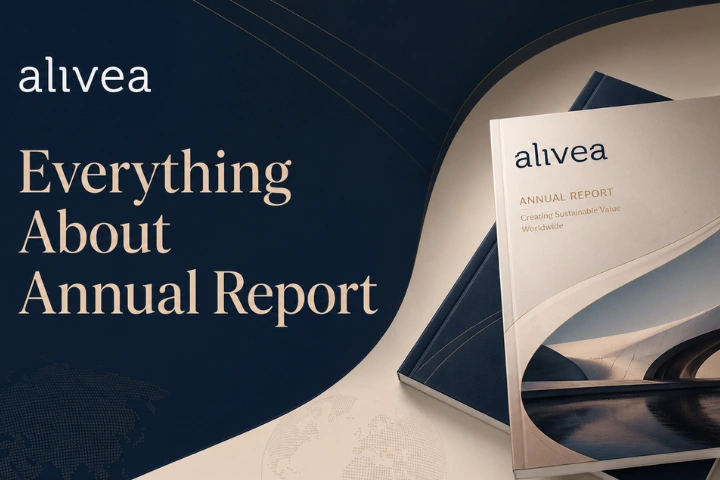
Everything About Annual Report Content, Structure, Design, and Review Flow
To understand everything about annual report preparation, companies should look at the document as a complete reporting ecosystem. A strong annual report usually includes a cover concept, corporate profile, business overview, leadership messages, performance highlights, market discussion, strategy updates, financial review, governance content, risk discussion, sustainability information, financial statements, notes, shareholder information, and corporate directory details. The exact structure depends on company type, listing status, industry, and stakeholder expectations.
The cover and opening pages shape the first impression. They should communicate the annual theme clearly and professionally. A company focused on innovation may use visual language that suggests progress and transformation. A company focused on stability may choose a more conservative design direction. The opening pages should also help readers understand the company quickly through short profile content, operational facts, geographic presence, service areas, or year-in-review highlights.
The leadership message is another important section. A chairman’s statement or CEO message should avoid vague corporate language. It should explain what happened during the year, what the company learned, how leadership responded to challenges, and what priorities will guide the next phase. Readers value honesty, context, and direction more than generic optimism.
The business review should connect operations with results. Instead of simply listing products or services, it should explain business segments, customer markets, competitive advantages, operational progress, digital initiatives, talent development, and future opportunities. This is where annual report guide singapore strategy becomes useful because it helps teams decide which information deserves prominence.
Financial content should be structured for clarity. Charts, summaries, and management commentary can help readers interpret detailed statements. Governance and risk content should demonstrate accountability. Sustainability sections should avoid empty claims and focus on measurable policies, practices, performance indicators, and future commitments.
Finally, the review process is critical. Annual reports often require input from finance teams, directors, auditors, corporate secretaries, sustainability leads, legal reviewers, and designers. A clear review flow prevents conflicting edits, outdated figures, duplicated statements, and inconsistent terminology. When companies plan this workflow early, annual report design singapore projects become smoother, more accurate, and more credible.
Business Reporting Guide for Better Decisions, Trust, and Long-Term Value
A high-quality business reporting guide should help companies understand that annual reports are not only for external communication. They can also improve internal decision-making. When a company prepares a report properly, it must review performance, examine risks, organise data, clarify strategy, and explain priorities. This process can reveal operational gaps, communication weaknesses, and areas where leadership alignment needs improvement.
For management teams, the annual reporting process can become a strategic reflection exercise. It asks important questions: What did the company achieve? Which initiatives created value? Which targets were missed? What risks became more visible? What investments should continue? What concerns should be explained transparently? These questions make the report more useful because they move it beyond compliance into business learning.
For investors and lenders, a structured annual report reduces uncertainty. Clear reporting helps them assess financial health, governance quality, risk exposure, market direction, and management capability. This does not mean the report must present only positive information. In fact, responsible reporting often earns more trust when it explains challenges honestly and shows how the company is addressing them.
For employees, annual reports can strengthen organisational alignment. Many employees do not see the full picture of company performance during the year. A well-written report can explain how departments contribute to broader goals, why certain strategies matter, and what the company is building toward. This makes the annual report a useful internal communication asset as well.
For clients and business partners, the report can support credibility. A company that presents its performance, governance, sustainability direction, and long-term plans professionally appears more mature and reliable. This is especially important in B2B industries where procurement decisions may involve risk assessment, vendor evaluation, or partnership review.
A complete annual report guide singapore framework should therefore connect reporting quality with business value. Compliance keeps the company responsible. Design improves understanding. Storytelling creates meaning. Accurate data supports trust. Strategic structure helps the report serve different readers. When these elements work together, annual reporting becomes a long-term reputation asset rather than a yearly administrative burden. Top pick everything you need to know about annual report design in singapore.
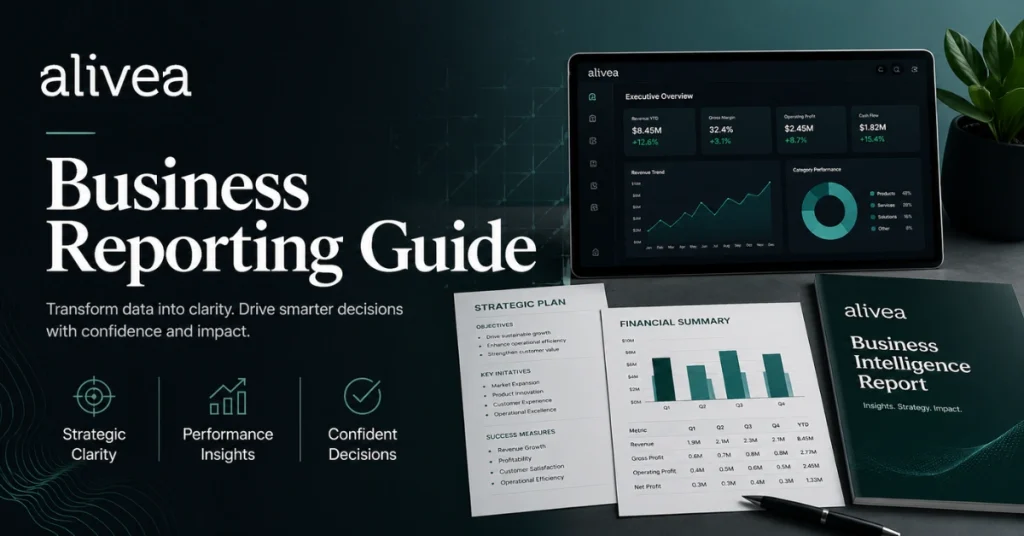
What Is an Annual Report Guide Singapore Companies Can Use With Confidence?
An annual report guide singapore companies can use with confidence is a practical framework for planning, writing, designing, reviewing, and publishing a company’s yearly report. It explains how to combine compliance content, financial information, business performance, leadership messages, governance details, sustainability updates, and visual design into one professional document.
The “what” is important because many companies treat the annual report as a collection of mandatory pages. A better approach is to see it as a structured communication asset. It should answer what happened during the financial year, what results were achieved, what risks were managed, what direction leadership is taking, and what stakeholders should understand about the company’s condition.
A complete guide also helps teams avoid weak reporting habits, such as unclear charts, repeated statements, inconsistent terminology, missing context, and last-minute design. When used properly, it supports annual report design singapore, improves readability, and aligns the report with corporate reporting requirements.
Who Needs Annual Report Design Singapore Support for Better Reporting Results?
Annual report design singapore support is useful for companies that want their report to be accurate, professional, visually organised, and easy to understand. This may include listed companies, private companies, growing SMEs, regional headquarters, non-profit organisations, corporate groups, and businesses preparing for investors, lenders, partners, or public stakeholders.
The “who” also includes internal teams. Directors need confidence that the report reflects governance responsibility. Finance teams need accurate presentation of figures. Corporate secretaries need statutory consistency. Marketing or communications teams need brand alignment. Sustainability officers need clear ESG disclosure. Designers need a reliable content structure before they create layouts.
External readers also matter. Shareholders, analysts, banks, clients, employees, regulators, and suppliers may all use the annual report for different reasons. A strong business reporting guide helps the company speak to these audiences without making the report confusing. The goal is not to impress everyone with complexity, but to help each reader find relevant information quickly.
Where Should Companies Apply This Business Reporting Guide in Singapore?
Companies should apply this business reporting guide across every stage of annual report preparation in Singapore. It begins before writing, when the team confirms the financial year timeline, filing obligations, report objectives, required sections, contributors, approval process, and design direction. Early planning helps prevent confusion when deadlines become closer.
During content development, the guide should shape how information is selected and organised. Business units should provide accurate updates, not promotional filler. Finance teams should align commentary with actual results. Leadership messages should reflect real conditions and future priorities. Governance and sustainability sections should use clear explanations supported by relevant data.
During design, the guide should influence layout, page hierarchy, chart style, typography, image selection, icons, spacing, and accessibility. The report may be used on a website, sent to stakeholders, printed for meetings, or submitted as part of formal communication. Therefore, the report should work across multiple environments.
In Singapore, companies should also apply the guide when coordinating with corporate secretaries, auditors, accountants, legal reviewers, and reporting agencies to ensure corporate reporting requirements are properly considered.
When Should Teams Start Everything About Annual Report Preparation Work?
Teams should start everything about annual report preparation well before the financial year closes, especially if the company has many stakeholders, complex financial statements, multiple business units, audit requirements, sustainability content, or board approvals. Waiting until the final weeks often leads to rushed writing, weak design, inconsistent data, and unnecessary compliance pressure.
A good timeline starts with planning the report structure, confirming responsibilities, collecting previous-year references, and identifying new reporting needs. After the financial year ends, teams can begin finalising performance commentary, financial summaries, governance updates, and sustainability disclosures. Design can begin once the annual theme, section structure, and key messages are clear.
The review stage should not be underestimated. Annual reports often move through several rounds of checking. Figures, names, dates, director information, charts, captions, and legal statements must be reviewed carefully. Listed companies and larger organisations may also need more time for sustainability reporting and assurance-related preparation. Starting early supports better annual report design singapore outcomes and reduces the risk of last-minute errors.
Why Do Corporate Reporting Requirements Matter Beyond Compliance for Growth?
Corporate reporting requirements matter beyond compliance because they influence how a company is perceived by stakeholders. Filing obligations and statutory information help maintain business transparency, but the broader reporting process also shows whether a company is disciplined, accountable, and professionally managed. A company that reports clearly is easier to evaluate and often easier to trust.
For Singapore businesses, annual reporting can support growth by improving access to investors, lenders, partners, clients, and corporate opportunities. Stakeholders usually want more than attractive branding. They want to know whether the company understands its risks, tracks performance, follows governance practices, and communicates responsibly.
A complete annual report guide singapore approach also protects reputation. Poorly prepared reports can create confusion, raise doubts, or make the company appear disorganised. Strong reporting, on the other hand, can strengthen corporate identity, show maturity, and support long-term stakeholder relationships. This is why annual reporting should be treated as a strategic business function, not merely an administrative task.
How Can Firms Build an Annual Report Design Singapore Workflow That Works?
Firms can build an annual report design singapore workflow by creating a clear process before content and design begin. The first step is to define the report objective. Is the report primarily for shareholders, regulatory submission, investor communication, brand positioning, sustainability disclosure, internal alignment, or all of these? The answer shapes the structure.
The second step is assigning ownership. Every section should have a responsible contributor and reviewer. Finance should own financial data. Leadership should approve strategic messages. Corporate secretaries should verify statutory content. Sustainability teams should confirm ESG information. Designers should manage layout consistency and visual clarity.
The third step is creating a content map. This map should include all major sections, estimated page counts, required tables, charts, images, and approval checkpoints. The fourth step is using a controlled review system so feedback does not become scattered across emails, documents, and outdated drafts.
Finally, companies should test readability before publication. A strong business reporting guide workflow checks whether the report is accurate, visually clear, accessible, and aligned with the company’s communication goals.
Business Reporting Guide Singapore Companies Can Use for Better Annual Reports
A complete business reporting guide helps Singapore companies build annual reports that are compliant, credible, readable, and strategically valuable. The annual report should never be treated as a last-minute document assembled only to satisfy formal obligations. It should be developed as a complete communication asset that reflects governance quality, business performance, financial discipline, sustainability awareness, and long-term direction.
The most effective reports begin with planning. Companies should understand their filing timelines, confirm which sections are required, organise financial and non-financial data, align internal contributors, and set a realistic design schedule. This foundation reduces confusion and supports better decision-making throughout the project.
The next priority is clarity. A good annual report explains the business in a way that stakeholders can understand. It does not overwhelm readers with unnecessary jargon or hide important points inside dense paragraphs. Instead, it uses structured writing, useful charts, meaningful visuals, and logical page flow to make information easier to absorb.
Compliance remains essential. Singapore companies must understand their annual return obligations, financial statement requirements, and sustainability reporting responsibilities where applicable. Because requirements may vary by company type, size, listing status, and financial year, professional advice from corporate secretaries, accountants, auditors, or legal experts is valuable.
Design is the final layer that turns information into an engaging experience. Strong annual report design singapore practice improves hierarchy, readability, navigation, and brand consistency. It allows stakeholders to move through the report with confidence and remember the company’s key messages.
In summary, the best annual report guide singapore companies can follow combines compliance, storytelling, design, governance, and strategic communication. When companies understand everything about annual report planning and execution, they create reports that do more than document the past. They build trust, explain value, support growth, and strengthen the company’s professional reputation.
