
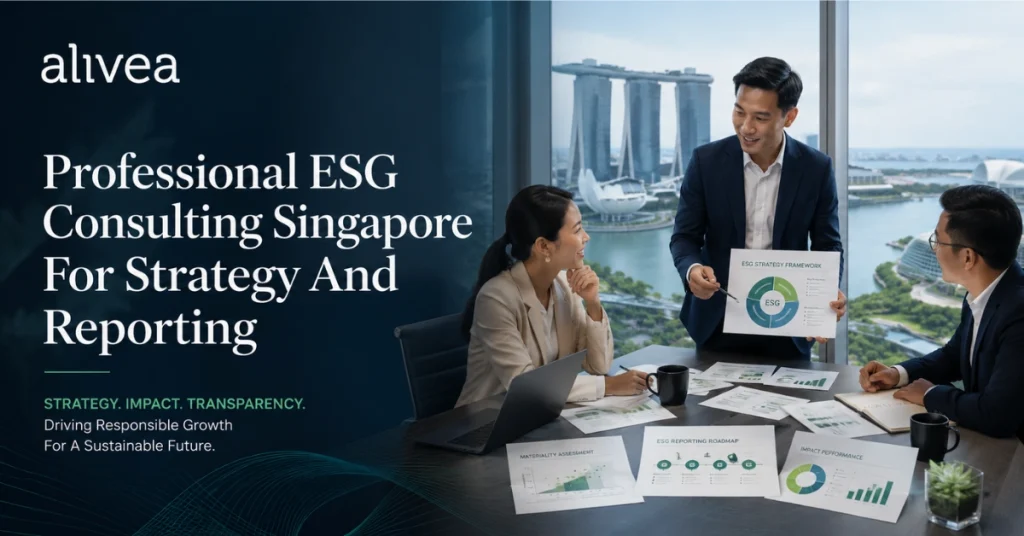
ESG Audit Process Singapore For Stronger Strategy And Reporting Control
ESG audit process singapore gives companies a structured way to evaluate sustainability information before it becomes part of annual reports, ESG reports, investor updates, tender submissions, or public-facing communication. In a business environment where sustainability claims are increasingly reviewed by regulators, investors, clients, lenders, employees, and supply chain partners, companies need more than general ESG statements. They need a repeatable process that confirms whether environmental, social, and governance data is accurate, complete, traceable, and aligned with the chosen reporting basis.
A professional esg audit singapore workflow usually begins with scope definition. This includes the reporting period, entities covered, business locations, operational boundaries, material ESG topics, responsible departments, and intended disclosure outputs. When scope is unclear, the report may unintentionally omit relevant facilities, double-count activities, use inconsistent employee definitions, or compare performance across unequal periods. A clear process helps prevent those weaknesses before the drafting stage begins.
Singapore’s sustainability reporting requirements make this discipline even more important. SGX states that sustainability reports should include primary components such as material ESG factors, climate-related disclosures, policies, practices and performance, targets, a sustainability reporting framework, and a board statement with the associated governance structure. SGX also states that issuers must not exclude the climate-related disclosure component for financial years commencing on or after 1 January 2025.
A strong sustainability audit process sg helps companies build evidence around these requirements. It checks source documents, calculation files, review records, data ownership, internal approvals, and disclosure language. This makes the esg reporting process singapore more dependable because the company can explain how information was collected and why it is suitable for publication.
For businesses working with alivea, an audit-ready foundation also improves communication quality. Verified ESG data can support clearer report writing, stronger visual storytelling, more responsible sustainability messaging, and better stakeholder confidence. The goal is not simply to publish a polished report. The deeper objective is to build an audit framework singapore companies can use to improve governance, reporting accuracy, compliance readiness, and long-term corporate trust.
ESG Audit Process Singapore Builds Clear Governance From Planning To Review
ESG audit process singapore begins with governance because reliable sustainability reporting depends on clear responsibility. A company may have strong ESG initiatives, but if no one owns the data, reviews the evidence, approves the calculation, or explains the final disclosure, reporting quality becomes fragile. Governance turns ESG from a loose collection of activities into a managed corporate process.
The first planning step is to define who is responsible for each ESG topic. Operations may manage energy consumption, water use, waste records, fuel data, and safety indicators. Human resources may manage employee headcount, training hours, diversity data, wellbeing programmes, grievance channels, and turnover information. Procurement may manage supplier screening, responsible sourcing, vendor codes, and supply chain documentation. Finance may support invoice validation, cost records, and calculation checks. Legal, compliance, risk, and company secretarial teams may provide governance policies, board papers, risk registers, and approval records.
A strong esg audit singapore review then connects each responsibility to a clear workflow. Data owners should know what they must submit, which source files are required, what reporting period applies, and when management review will happen. Reviewers should know how to test completeness, consistency, and calculation logic. Senior leaders should understand which assumptions require approval before disclosure.
This is where sustainability audit process sg becomes practical. It creates a route from raw data to final ESG reporting. For example, energy invoices are collected by facilities, checked against the reporting period, converted into emissions data, reviewed by finance or sustainability teams, approved by management, and then presented in the report. When each step is documented, the company can explain its process more confidently.
A good audit framework singapore should also include escalation rules. If evidence is missing, if a figure changes significantly, or if a claim cannot be supported, the issue should move to the right reviewer before publication. This protects the final report and helps the esg reporting process singapore remain accurate, balanced, and defensible.
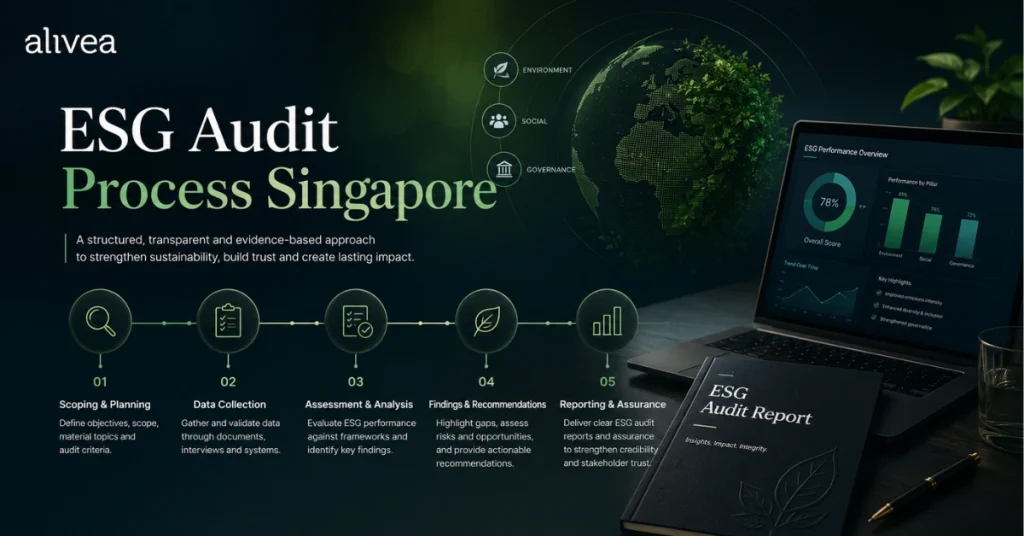
ESG Audit Singapore Validates Data Quality, Boundaries, And Evidence Trails
ESG audit singapore validates whether sustainability information is reliable enough to support internal decisions and public reporting. Data quality is not only about correct numbers. It also depends on clear definitions, consistent boundaries, dependable source records, proper calculation methods, and evidence trails that can be reviewed later.
Reporting boundaries are one of the most important parts of the audit. A company should define which entities, branches, subsidiaries, leased spaces, offices, factories, warehouses, or regional operations are included. It should also explain whether outsourced activities, contractors, suppliers, or joint operations are part of the reporting scope. If boundaries are not clear, year-on-year ESG performance can become misleading.
The esg audit process singapore should then test the evidence behind each major disclosure. Environmental evidence may include electricity bills, meter readings, fuel receipts, waste contractor reports, water invoices, logistics records, refrigerant logs, business travel summaries, and greenhouse gas calculation files. Social evidence may include HR system exports, training attendance, safety logs, employee survey data, grievance records, and policy acknowledgements. Governance evidence may include board minutes, committee papers, codes of conduct, anti-bribery policies, whistleblowing procedures, risk registers, and supplier due diligence records.
A mature sustainability audit process sg also reviews data definitions. For example, the company should define whether headcount includes full-time employees, part-time employees, contractors, interns, or temporary staff. Training hours should be measured consistently. Safety incidents should follow a standard classification. Waste data should use comparable units. These details may seem operational, but they directly affect disclosure quality.
An effective audit framework singapore also checks calculations. Spreadsheet formulas, emission factors, conversion units, assumptions, and manual adjustments should be reviewed before reporting. If an estimate is used, the basis should be documented. If data is unavailable, the limitation should be explained responsibly.
For esg reporting process singapore, evidence trails improve credibility. They allow report writers, management, boards, and assurance reviewers to understand how each disclosure was produced. This reduces the risk of unsupported claims, weak comparisons, and last-minute reporting corrections.
Sustainability Audit Process SG Connects Teams, Controls, And Reporting
Sustainability audit process sg is most effective when it connects teams, controls, and reporting outputs into one coordinated system. ESG reporting often becomes difficult because data is spread across functions. Each team may understand its own records, but the final sustainability report must present those records as a coherent corporate story. A structured process helps bridge that gap.
The first connection is between departments. Operations, HR, procurement, finance, legal, compliance, risk, investor relations, and communications should not work in isolation. Each team contributes a different part of ESG performance. If those teams use different cut-off dates, measurement methods, or definitions, the report may appear complete but remain inconsistent. A formal audit process helps align those differences early.
The second connection is between controls and data. Controls are the checks that make ESG information reliable. They may include standard templates, evidence folders, calculation notes, reviewer sign-offs, version tracking, management approvals, and board review. Without controls, sustainability reporting may rely too heavily on manual effort or individual memory. With controls, the company can repeat the process more easily every year.
The third connection is between evidence and disclosure. The esg audit process singapore should compare report language with actual proof. If the company claims progress in climate action, the audit should confirm whether there is supporting data, governance, strategy, risk review, or measurable action. If the company highlights employee development, there should be training records, participation data, or programme evidence. If the company presents supplier responsibility, there should be supplier codes, screening records, onboarding procedures, or corrective action documentation.
A professional esg audit singapore approach also helps teams understand how their work affects stakeholder trust. Accurate operations data can strengthen climate sections. Clear HR data can improve social reporting. Strong governance records can support board statements. Responsible communication can reduce greenwashing risk.
For companies using alivea for reporting or sustainability communication, this connected workflow is valuable. The design and writing process becomes stronger when it is based on reviewed information. A reliable audit framework singapore gives the creative team clearer facts, better data hierarchy, and stronger material for charts, summaries, governance pages, climate sections, and executive messages.
ESG Reporting Process Singapore Turns Audit Findings Into Better Disclosure
ESG reporting process singapore becomes stronger when audit findings are translated into better disclosure, not simply stored as internal observations. The purpose of audit work is not only to identify problems. It should help the company improve the quality, clarity, and usefulness of its ESG report.
Audit findings may reveal missing source evidence, unclear reporting boundaries, inconsistent data definitions, weak review procedures, unsupported claims, outdated policies, or insufficient board oversight records. Each finding should be assessed by risk and importance. Some issues may need correction before publication. Others may become improvement priorities for the next reporting cycle.
A strong esg audit process singapore helps companies decide how to communicate gaps responsibly. Good sustainability reporting does not require perfection. It requires honesty, context, and measurable progress. If data is incomplete, the company can explain the limitation and describe how it will improve collection. If targets are new, the company can explain the baseline and methodology. If performance declined, the report can provide operational context rather than hiding the issue.
Singapore’s climate reporting roadmap makes disclosure quality especially important. ACRA states that Singapore’s roadmap takes a climate-first approach with phased implementation from FY2025, and all SGX-listed companies need to report based on company type and market capitalisation. ACRA and SGX RegCo also announced in August 2025 that Scope 1 and Scope 2 greenhouse gas emissions reporting remains mandatory from FY2025 for all listed companies, while external limited assurance for Scope 1 and Scope 2 emissions is deferred to FY2029 for all listed companies.
This means companies have time to strengthen their sustainability audit process sg, but they should not delay. Better evidence, stronger controls, and clearer explanations will make future reporting and assurance preparation easier.
For audit framework singapore, the best outcome is a report that stakeholders can understand and trust. Audit findings should improve data tables, performance commentary, climate disclosures, governance descriptions, target explanations, and management commitments. With alivea, these improvements can also become clearer design, stronger narrative flow, and more credible sustainability storytelling.
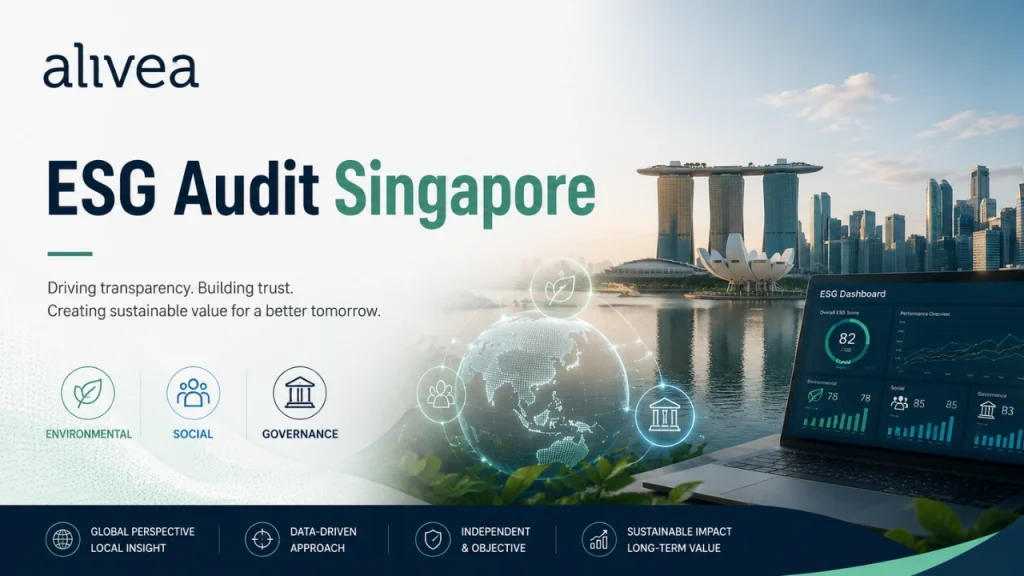
Audit Framework Singapore Supports Assurance Readiness And Decision-Making
Audit framework singapore supports assurance readiness by creating a repeatable system for ESG data collection, review, approval, and disclosure. Assurance readiness is not built at the end of a report. It is built throughout the reporting cycle by maintaining evidence, documenting assumptions, testing calculations, and recording approvals.
A practical framework should include several core elements. First, it should define the reporting scope and material ESG topics. Second, it should map each metric to a data owner and evidence source. Third, it should include standardised templates so teams provide information consistently. Fourth, it should require calculation review and version control. Fifth, it should include management approval before information is used in public communication.
This type of esg audit process singapore also supports better decision-making. When ESG information is reviewed properly, leadership can identify operational risks, governance gaps, resource inefficiencies, workforce concerns, supplier weaknesses, and climate-related exposures. The audit then becomes more than a reporting exercise. It becomes a management tool.
International reporting direction also supports the need for structured frameworks. IFRS states that IFRS S1 and IFRS S2 include reporting requirements across four content areas: governance, strategy, risk management, and metrics and targets. IFRS also states that the objective of IFRS S1 is to require disclosure of sustainability-related risks and opportunities that is useful to users of general-purpose financial reports when making decisions about providing resources to the entity.
A strong sustainability audit process sg can help companies organise ESG data around these decision-useful areas. Governance shows who oversees sustainability. Strategy explains how ESG affects business direction. Risk management shows how risks are identified and addressed. Metrics and targets show how performance is measured.
For esg reporting process singapore, this framework improves clarity. Stakeholders can see not only what the company achieved, but how ESG is managed. For esg audit singapore, the framework improves consistency. For alivea, it provides a stronger foundation for sustainability reports that are structured, credible, and aligned with stakeholder expectations. Learn more from this article professional esg audit singapore for compliance and transparency.
What Does ESG Audit Process Singapore Review Before Reporting Begins Today?
An esg audit process singapore reviews the systems, data, evidence, and controls that support sustainability reporting before disclosure begins. It usually covers reporting scope, material ESG topics, data ownership, source records, calculation methods, internal reviews, management approvals, and final report language.
A practical esg audit singapore may examine energy use, greenhouse gas emissions, water data, waste records, employee indicators, safety information, supplier practices, governance policies, board oversight, and risk management documentation. The review checks whether information is complete, consistent, and traceable.
A strong sustainability audit process sg also reviews whether claims match evidence. For esg reporting process singapore, this prevents overstatement and improves report clarity. For audit framework singapore, it creates repeatable controls that make future reporting easier, more accurate, and more assurance-ready.
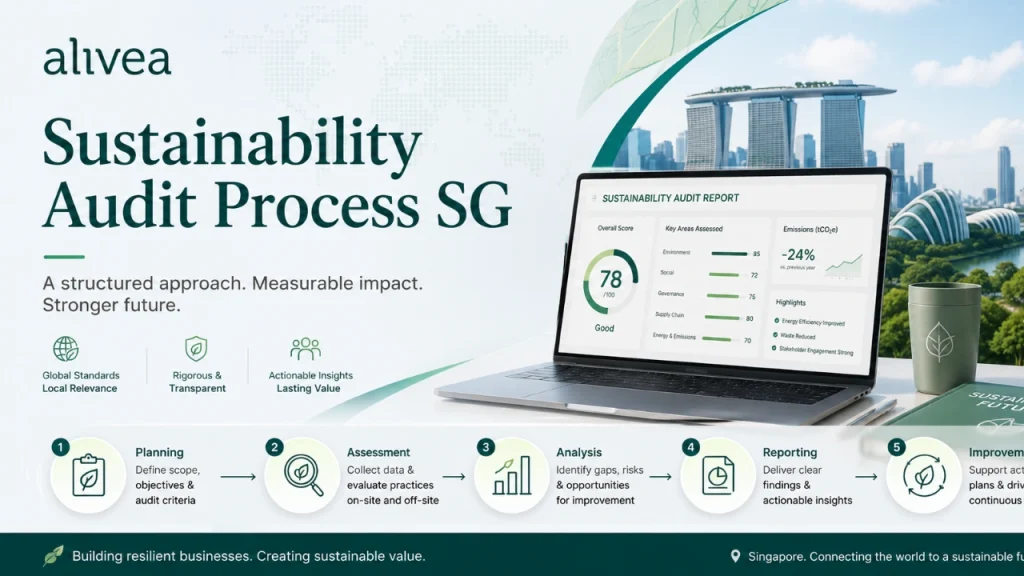
Who Should Manage ESG Audit Singapore Roles Across Corporate Teams Today?
ESG audit singapore roles should be managed by a cross-functional team because ESG information rarely sits in one department. Operations, HR, procurement, finance, legal, compliance, risk, investor relations, corporate communications, and senior leadership may all contribute to the final sustainability report.
In a structured esg audit process singapore, each team should understand its responsibility. Data owners collect and explain information. Reviewers check evidence and calculations. Management approves assumptions and final figures. The board or senior leadership provides governance oversight.
A mature sustainability audit process sg reduces confusion because everyone knows what to provide, when to provide it, and how it will be reviewed. For esg reporting process singapore, clear roles improve efficiency and accountability. For audit framework singapore, role clarity makes ESG reporting more scalable, especially for companies with multiple sites, growing operations, or rising stakeholder scrutiny.
Where Does Sustainability Audit Process SG Improve Reporting Control Most Today?
Sustainability audit process sg improves reporting control most in areas where ESG data is manual, fragmented, or dependent on multiple teams. Common examples include emissions calculations, energy invoices, water use, waste data, workforce indicators, training hours, safety logs, supplier screening, governance policies, and board oversight evidence.
A structured esg audit process singapore is also useful for multi-location businesses. Different sites may use different formats, measurement units, cut-off dates, or definitions. Audit review helps standardise these practices before final reporting begins.
For esg audit singapore, stronger controls reduce errors and make evidence easier to review. For esg reporting process singapore, controls improve the connection between actual performance and public disclosure. For audit framework singapore, better control supports assurance readiness, investor confidence, regulatory alignment, and more reliable stakeholder communication.
When Should ESG Reporting Process Singapore Start Before Disclosure Begins?
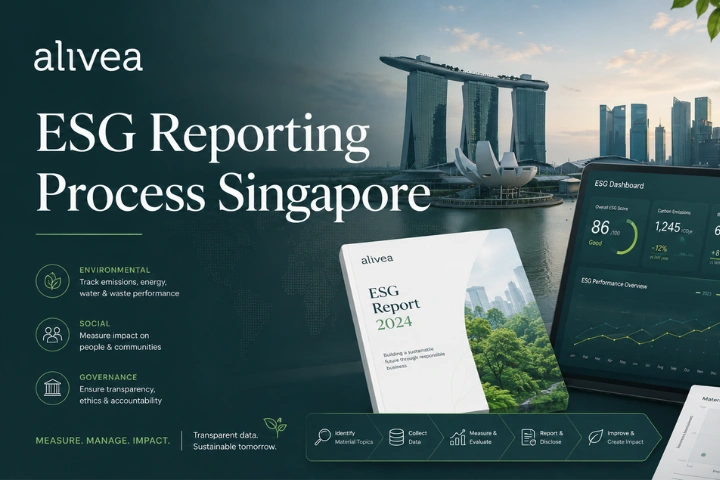
ESG reporting process singapore should start early in the reporting cycle, not when the sustainability report is already being written or designed. Early planning gives companies time to confirm scope, assign data owners, collect evidence, validate calculations, resolve gaps, and align disclosures with the selected framework.
The esg audit process singapore should ideally begin during the reporting year or soon after year-end. This timing helps teams access records while they are still current and gives management time to explain unusual changes before board approval.
An esg audit singapore should also be considered after major business changes, such as acquisitions, new facilities, supplier expansion, new climate targets, framework updates, or increased investor scrutiny. For sustainability audit process sg, early work reduces pressure. For audit framework singapore, it supports smoother review, stronger discipline, and better reporting confidence.
Why Does Audit Framework Singapore Matter For Better Stakeholder Trust Today?
Audit framework singapore matters because stakeholders want sustainability information that is evidence-based, consistent, and responsibly governed. Investors, clients, lenders, employees, regulators, and supply chain partners may use ESG disclosures to evaluate credibility, risk, climate readiness, governance quality, and long-term business resilience.
A strong esg audit process singapore helps protect trust by identifying weak records, unclear ownership, inconsistent boundaries, unsupported claims, and missing approvals before publication. This makes esg audit singapore valuable for both compliance and reputation.
A practical sustainability audit process sg also helps companies communicate progress honestly. ESG reporting does not require perfect performance. It requires transparency, measurable improvement, and accountability. For esg reporting process singapore, audit discipline shows that management takes sustainability seriously and is committed to improving disclosure quality year after year.
How Can Companies Build Audit Framework Singapore For Assurance Readiness?
Companies can build audit framework singapore readiness by documenting ESG roles, evidence sources, calculation methods, approval steps, review timelines, and disclosure controls. They should use standard templates, central evidence folders, data owner checklists, version control, and management sign-off procedures.
A practical esg audit process singapore should begin with scope confirmation and material topic review. Then each metric should be connected to source evidence, calculation notes, reviewer comments, and approval records. This makes esg audit singapore more efficient and easier to repeat.
A strong sustainability audit process sg should also convert findings into action plans. Each gap should have an owner, deadline, and follow-up review. For esg reporting process singapore, this creates continuous improvement. Over time, the company becomes better prepared for internal review, external assurance, investor questions, and evolving reporting expectations.
Final Thoughts On ESG Audit Process Singapore For Stronger Reporting Frameworks
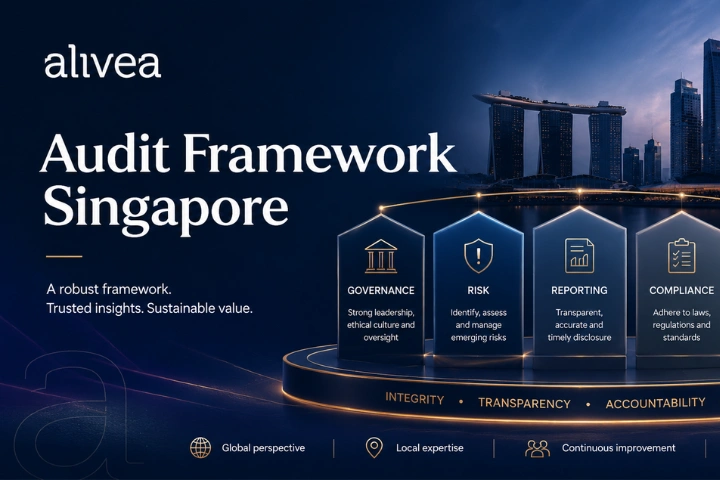
The esg audit process singapore is essential for companies that want stronger strategy, better reporting control, and more reliable sustainability disclosures. As ESG expectations continue to mature, businesses need more than attractive report pages or broad claims about responsibility. They need a clear process that proves how information is collected, reviewed, approved, and communicated.
A strong esg audit singapore review begins with scope, materiality, and ownership. Companies must know which topics matter, which entities are included, which teams own the data, and which reporting standards guide the disclosure. This foundation helps prevent confusion, incomplete evidence, and inconsistent performance comparisons.
A practical sustainability audit process sg then validates the quality of ESG information. It checks source records, calculation methods, boundaries, evidence trails, internal controls, and approval workflows. This reduces reporting errors and gives management a clearer view of what is reliable, what needs correction, and what should be improved before the next cycle.
For esg reporting process singapore, the audit should improve the final report, not only the internal files. Findings should lead to clearer performance commentary, better data tables, stronger governance explanations, more accurate climate disclosures, and balanced sustainability claims. A strong audit framework singapore also helps companies prepare for future assurance, investor review, and regulatory expectations.
Companies working with alivea can use audit-ready ESG information to create stronger sustainability reports, corporate ESG narratives, board presentations, website content, and stakeholder materials. Verified data can support sharper charts, clearer executive summaries, stronger materiality sections, and more credible climate reporting.
The final objective is not only to complete an ESG report. The deeper goal is to build a repeatable reporting framework that supports transparency, compliance readiness, assurance preparation, stakeholder trust, and long-term corporate value.
