

High Impact Annual Report Design Trends Shaping Modern Singapore Corporate Reports
In Singapore, annual reports are no longer treated as static corporate documents created solely for compliance or shareholder circulation. They have become strategic communication assets that reflect how a business wants to be understood in a competitive, credibility-driven market. As companies aim to present stronger identities, more transparent performance narratives, and better stakeholder engagement, annual report visual design trends are evolving rapidly. These trends now influence not only how a report looks, but also how it communicates value, resilience, leadership thinking, and long-term ambition.
A major shift can be seen in the way companies approach structure and storytelling. Traditional reports once emphasized dense information blocks, formal presentation, and rigid layouts. Today, many businesses in Singapore prefer a more reader-focused approach. This explains the growing relevance of high impact annual report design trends, which prioritize hierarchy, clean composition, intuitive navigation, and selective emphasis. A modern report is expected to be easier to scan, easier to understand, and more effective in guiding readers through strategic highlights, business results, and future direction.
At the same time, branding has moved closer to the center of report development. Businesses increasingly want their reports to reflect the same tone, identity, and positioning seen across websites, investor decks, ESG communications, and corporate campaigns. As a result, annual report branding trends now emphasize stronger brand consistency, more deliberate visual language, and refined corporate personality. The annual report is no longer treated as a disconnected publication. It is expected to reinforce the brand itself.
Another major development is the rise of corporate storytelling report trends. Companies recognize that stakeholders do not engage with numbers alone. They want context, explanations, and strategic continuity. Strong storytelling helps readers understand what drove the year’s performance, how management responded to challenges, and where the company is heading next. This naturally connects with business performance annual report trends, where reporting is shaped not only by disclosure standards but also by clarity, insight, and communication value.
For agencies and specialist partners such as alivea, these changes have made annual report design far more multidimensional. It now requires editorial planning, visual intelligence, data presentation discipline, and brand alignment. In the Singapore market, the companies that follow these evolving trends are often the ones that communicate with greater authority, appear more future-ready, and build stronger trust across every stakeholder touchpoint.

High Impact Annual Report Design Trends That Reflect a More Strategic Reporting Mindset
The latest high impact annual report design trends show that companies are becoming more intentional about how annual reports function within corporate communication. A report is no longer seen as a final-stage document assembled after a year ends. Instead, it is treated as a strategic platform where design, narrative, and business messaging must work together. In Singapore, where many industries place a premium on professionalism, transparency, and trust, this shift has changed how reports are planned and evaluated.
One of the clearest changes is the move away from visually overloaded reports toward more disciplined clarity. Businesses now favor layouts that reduce friction and improve readability. This aligns closely with broader annual report visual design trends, where strong grids, purposeful white space, structured section flow, and readable typography help readers absorb information more easily. The goal is not to simplify performance content artificially, but to present it with greater confidence and control.
Another important shift within annual report branding trends is the stronger integration of brand identity into formal corporate reporting. Instead of using generic design frameworks, companies increasingly build reports around a more defined visual and verbal identity. This includes tone of voice, color systems, icon styles, photography direction, and messaging rhythm. The report becomes part of the brand ecosystem rather than an isolated publication.
Narrative has also become more central. Emerging corporate storytelling report trends show that companies want their reports to explain not just results, but business logic. Stakeholders want to understand the connection between strategy and performance, leadership and outcomes, market change and operational response. Storytelling helps turn separate report sections into a continuous and credible journey.
These changes also influence business performance annual report trends, especially in how performance data is framed. Companies are increasingly selective about which insights receive emphasis and how numbers are contextualized. Instead of overwhelming readers with unprioritized information, they focus on relevance, materiality, and interpretation. As a result, high impact annual report design trends now represent a broader evolution in corporate reporting: one that values clarity, identity, usability, and strategic communication as much as formal disclosure itself.

Annual Report Visual Design Trends That Improve Clarity, Navigation, and Readability
Among the most visible changes in modern reporting are the rising annual report visual design trends that prioritize reader usability. Annual reports naturally contain a wide range of content, from chairman statements and operational reviews to financial summaries, governance disclosures, and sustainability highlights. Without a clear visual system, this depth can quickly become overwhelming. That is why companies in Singapore are increasingly adopting visual strategies that make information easier to navigate and faster to understand.
A strong trend is the use of cleaner page architecture. Reports today often feature more generous spacing, clearer section dividers, stronger typographic contrast, and more intentional alignment. These choices support high impact annual report design trends because they improve first impressions while also helping readers locate the most important insights. A clear visual hierarchy gives the report a more professional feel and reduces the fatigue often associated with dense corporate publications.
Chart design is also evolving. Businesses want performance data to be more accessible, which is why business performance annual report trends increasingly favor simplified graphs, sharper labeling, clearer comparisons, and consistent data styling. Well-designed charts no longer serve as decorative additions. They are expected to communicate trends, movement, and context with precision. This reinforces clarity and strengthens the report’s analytical value.
Visual design is also deeply connected to identity. Many current annual report branding trends show a move toward more customized design systems that reflect the company’s established brand language. This includes consistent image direction, refined iconography, branded color palettes, and page structures that mirror the tone of the wider organization. The result is a report that feels more cohesive and more distinctive.
These visual developments also support corporate storytelling report trends. When section pacing, image placement, highlight spreads, and data features are planned properly, they help guide the narrative naturally from page to page. The story feels easier to follow because the design supports the editorial flow. In practice, annual report visual design trends are no longer just about modern appearance. They are about turning complex information into a smoother, clearer, and more strategically controlled reading experience.
Annual Report Branding Trends That Make Corporate Reports Feel More Distinctive
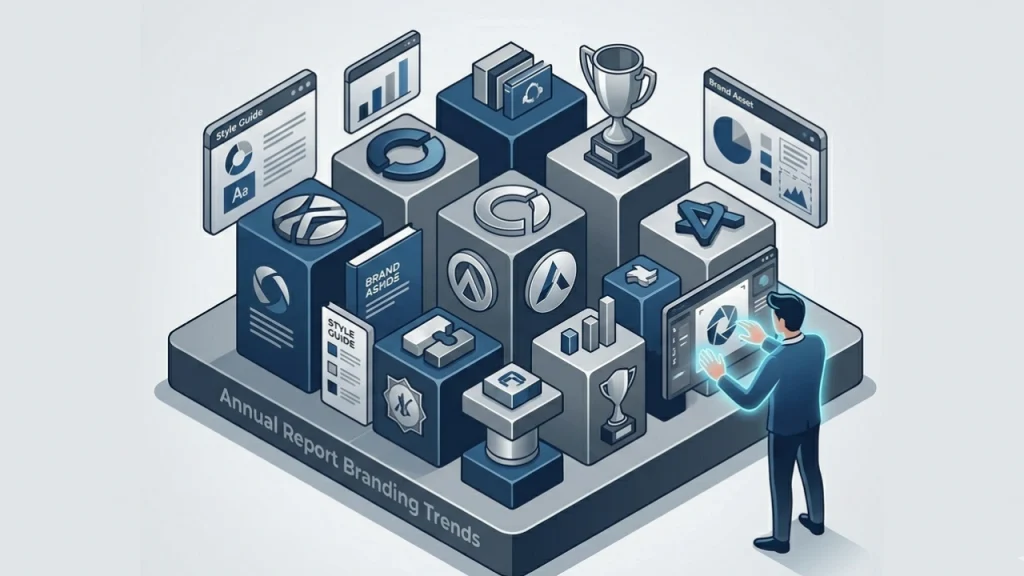
One of the strongest developments in current corporate reporting is the rise of annual report branding trends that give businesses a more recognizable and differentiated presence. In the past, many annual reports looked structurally competent but visually interchangeable. They communicated information adequately, yet they did not always reflect the organization’s identity in a meaningful way. Singapore companies are now moving away from that generic approach. They increasingly want annual reports to feel like true extensions of the business rather than standalone compliance pieces.
This trend is reshaping the way companies approach high impact annual report design trends. Instead of focusing purely on layout polish, they are investing in design systems that reflect their values, positioning, and visual identity more clearly. Brand expression shows up in more deliberate typography, stronger thematic direction, controlled color palettes, image treatment, icon systems, and a consistent tone of messaging. When these elements work together, the report feels more memorable and more aligned with the company behind it.
Branding has also become closely tied to annual report visual design trends. Visual consistency helps readers move through the document with greater confidence because recurring elements create familiarity and order. A report that uses brand cues intelligently appears more deliberate, more premium, and more trustworthy. This matters in competitive sectors where perception often influences stakeholder confidence.
At the same time, corporate storytelling report trends are influencing how branding is expressed. The brand is no longer conveyed through visual style alone. It is also communicated through narrative emphasis. A company that positions itself around innovation, resilience, sustainability, or long-term stewardship should see those qualities reflected in the way the report tells its story. This gives brand communication more depth.
These branding shifts also intersect with business performance annual report trends, as companies recognize that performance reporting itself shapes reputation. Strong results may matter, but so does the way those results are framed and presented. A branded report suggests internal confidence and communication maturity. In this sense, annual report branding trends are not superficial changes. They are part of a broader movement toward more intentional, identity-driven corporate reporting that helps Singapore businesses look more credible, more modern, and more strategically coherent.

Corporate Storytelling Report Trends That Add Context to Corporate Results and Strategy
The growth of corporate storytelling report trends reflects a wider expectation that annual reports should do more than present raw outcomes. Stakeholders increasingly want explanation, continuity, and relevance. They want to understand what shaped the year, how leadership responded to shifts in the business environment, and what future priorities now matter most. This is why storytelling has become such an important part of modern report strategy in Singapore.
A key trend is the use of stronger thematic narratives. Rather than presenting results as isolated facts, companies now build reports around themes such as transformation, resilience, digital growth, sustainability, expansion, or value creation. This supports broader high impact annual report design trends, because a clear theme gives the report stronger internal logic. It helps every section connect to a larger message rather than operating independently.
Narrative flow is also becoming more deliberate. This connects with annual report visual design trends, as the story is often supported by section pacing, opener spreads, milestone summaries, timeline structures, and well-placed performance highlights. The visual rhythm of the document helps guide readers through key moments and reinforces the meaning of the content.
Brand-led narrative is another area shaped by annual report branding trends. Companies now want storytelling to sound like them, not like a generic corporate template. Tone, message framing, leadership voice, and section emphasis are increasingly adapted to reflect the company’s identity and market stance. This strengthens recognition while also making the report feel more authentic.
These developments are especially useful in the context of business performance annual report trends, where numbers alone may not capture strategic progress. Storytelling helps explain how decisions, investments, market conditions, and internal changes influenced results. It also helps businesses communicate resilience when performance is mixed, rather than allowing isolated figures to define the narrative.
Overall, corporate storytelling report trends are changing annual reports from static summaries into more meaningful corporate narratives. They help companies present their performance with context, their leadership with clarity, and their future direction with greater credibility. In modern reporting, storytelling is no longer optional. It is an increasingly important part of how corporate identity and strategic intent are communicated.

Business Performance Annual Report Trends That Emphasize Insight Over Information Volume
Current business performance annual report trends show a clear shift away from simply providing more information and toward presenting more meaningful insight. Many annual reports in the past were built around completeness alone. They included substantial data, multiple statements, and detailed commentary, yet they were not always easy to interpret. Companies in Singapore are now recognizing that stakeholders value relevance, structure, and interpretation just as much as volume. As a result, business performance reporting is becoming more selective and strategically framed.
This change aligns closely with high impact annual report design trends, where the goal is to ensure that important signals stand out clearly. Instead of giving every metric equal emphasis, companies are increasingly prioritizing the figures, themes, and performance drivers that matter most to the business story. This helps readers focus on material developments without being distracted by unnecessary clutter.
It also connects with annual report visual design trends, especially in the way data is displayed. Tables remain essential, but companies are using more concise data summaries, better comparison tools, cleaner performance dashboards, and structured KPI highlights. These elements improve comprehension while preserving seriousness and accuracy. Good data presentation makes performance easier to trust because it appears more controlled and more intentional.
Brand positioning is now playing a larger role as well, which reflects broader annual report branding trends. A business that wants to project innovation, discipline, customer-centricity, or resilience can frame performance results in a way that reinforces those qualities. The report becomes both an evidence document and a reputation tool.
Narrative adds the final layer. Through evolving corporate storytelling report trends, companies are learning to explain performance rather than merely publish it. They give readers reasons behind revenue shifts, margin pressure, operational wins, investment decisions, and future priorities. This makes the report more useful and more persuasive.
Taken together, business performance annual report trends show that the modern annual report is becoming more strategic in every sense. It is still rooted in transparency and disclosure, but it is now expected to offer clearer interpretation, stronger structure, and a more confident explanation of how the business is performing and where it is headed next. You may also like high impact annual report design for singapore companies.
What Are the Most Important High Impact Annual Report Design Trends Today
The most important high impact annual report design trends today focus on clarity, narrative strength, and stronger brand alignment. Companies are moving toward cleaner structures, more disciplined use of space, better data visualization, and more reader-friendly section flow. These changes help reports feel more modern and easier to absorb without reducing corporate seriousness.
Many of these trends overlap with annual report visual design trends, especially the shift toward better hierarchy, simplified chart presentation, and more intuitive navigation. Businesses are also following annual report branding trends by ensuring their reports reflect the same identity found across other corporate materials. This improves consistency and makes reports feel more distinctive.
At the same time, corporate storytelling report trends are becoming more influential because businesses want to explain not just performance, but meaning. This affects broader business performance annual report trends, where stakeholders now expect deeper interpretation rather than a simple presentation of numbers. Together, these trends show that the best reports are no longer only accurate. They are also structured, strategic, and highly communicative.
Who Is Driving Annual Report Visual Design Trends in Singapore Companies
The main drivers behind annual report visual design trends in Singapore are corporate leadership teams, investor relations professionals, brand teams, and specialist design agencies. Leadership teams want reports that reflect the company’s credibility and direction more effectively. Investor-facing teams want reports that are easier for stakeholders to interpret. Brand teams want a stronger connection between the report and the wider corporate identity.
Specialist partners also influence these changes by introducing broader high impact annual report design trends into report development. They often help organizations refine page systems, storytelling flow, and visual consistency. In addition, annual report branding trends are increasingly guided by companies that view reports as brand assets rather than standalone publications.
The rise of corporate storytelling report trends also means content strategists and editorial planners now have a larger role. They help shape how the report communicates meaning, not just information. This contributes directly to business performance annual report trends, where the expectation has shifted toward clarity, usability, and strategic interpretation across every part of the report.
Where Do Annual Report Branding Trends Have the Greatest Strategic Effect
Annual report branding trends have the greatest strategic effect in places where perception matters most. This includes investor communications, stakeholder reporting, public corporate websites, annual general meeting materials, and brand-sensitive industries such as finance, property, healthcare, technology, and professional services. In these environments, a report becomes more than a compliance tool. It becomes a visible signal of professionalism and business maturity.
Their influence also appears strongly wherever high impact annual report design trends are used to shape a more memorable stakeholder experience. Consistent branding improves how the report is recognized and remembered. Combined with annual report visual design trends, it creates a smoother and more polished document that reflects greater internal control.
These effects become even stronger when paired with corporate storytelling report trends, which help explain performance in a branded and distinctive voice. This also supports broader business performance annual report trends, where results need to feel connected to strategy and corporate identity. In practice, branding trends matter most wherever trust, differentiation, and long-term corporate reputation are key business priorities.
When Should Companies Start Following Business Performance Annual Report Trends
Companies should start following business performance annual report trends as soon as they recognize that their reporting no longer reflects the quality, identity, or direction of the business. This often becomes clear when reports feel outdated, visually crowded, difficult to navigate, or disconnected from current brand standards. Waiting too long can reduce the report’s effectiveness as a communication tool.
Periods of business change are especially important moments to update reporting. Rebranding, expansion, leadership transitions, sustainability positioning, digital transformation, or shifts in investor expectations are all strong reasons to follow newer high impact annual report design trends. These changes usually require better storytelling, clearer design, and stronger content prioritization.
Companies should also adapt when annual report visual design trends and annual report branding trends are advancing faster than their internal materials. If competitors are communicating more clearly and more confidently, the gap becomes visible. Following corporate storytelling report trends at the right time helps companies stay relevant, credible, and better aligned with modern stakeholder expectations.
Why Are Corporate Storytelling Report Trends Becoming More Important Now
Corporate storytelling report trends are becoming more important because stakeholders no longer accept numbers without context as sufficient corporate communication. They want to know what shaped the year, what influenced the results, how management responded, and what the future direction looks like. Storytelling answers these questions by linking performance to decisions, context, and strategy.
This matters even more as high impact annual report design trends continue to evolve toward stronger reader engagement and more strategic structure. A well-told narrative helps the report feel coherent rather than fragmented. It also complements annual report visual design trends, since layout and pacing can reinforce the story being told.
The trend is also linked to annual report branding trends, because companies want their reports to sound and feel more aligned with their identity. In addition, business performance annual report trends increasingly demand interpretation rather than raw disclosure alone. That is why storytelling now plays a larger role. It helps businesses communicate not only what happened, but why it matters.
How Can Companies Apply High Impact Annual Report Design Trends Effectively
To apply high impact annual report design trends effectively, companies should begin by clarifying the purpose of the report and the themes that matter most for the year. Once those priorities are defined, the structure can be built around them. This ensures the report has a strong editorial foundation before design begins.
The next step is aligning the document with current annual report visual design trends. This means improving hierarchy, simplifying layouts, refining chart presentation, and making navigation easier for different stakeholder groups. Companies should also review annual report branding trends so the report reflects the same visual and verbal identity used elsewhere in the brand ecosystem.
From there, they should incorporate corporate storytelling report trends by shaping a clear narrative that explains business performance with logic and credibility. This supports broader business performance annual report trends, where reports are expected to offer insight and interpretation rather than information overload. When these elements are planned together, trend adoption becomes more strategic and far more effective.
Annual Report Design Trends Are Redefining How Singapore Companies Communicate
The latest evolution in annual reporting shows that companies in Singapore are no longer satisfied with reports that simply meet formal requirements. They want reports that communicate with more clarity, stronger identity, and greater strategic value. This explains why high impact annual report design trends have become so important. These trends reflect a broader shift in mindset, where annual reports are now expected to support corporate reputation, strengthen stakeholder trust, and present business direction with greater confidence.
One of the most visible changes is the rise of annual report visual design trends that make reports easier to read and easier to navigate. Cleaner structure, stronger hierarchy, more effective chart systems, and better pacing help transform complex information into a more accessible experience. At the same time, annual report branding trends ensure that reports look and feel more connected to the company’s overall identity. Instead of being generic documents, they become recognizable extensions of the brand.
The influence of corporate storytelling report trends is equally significant. Companies now understand that performance data alone does not create confidence. Stakeholders need context, explanation, and a credible narrative that connects decisions with results and results with future direction. This narrative depth improves the usefulness of the report and makes the business appear more transparent and strategically mature.
These shifts are also changing business performance annual report trends, where the emphasis is moving away from sheer information volume and toward more thoughtful interpretation. Reports are becoming more selective, more structured, and more focused on what truly matters. That makes them more effective for investors, partners, boards, and other decision-makers.
For Singapore companies, following these trends is not about design fashion. It is about communicating more effectively in a market where trust, professionalism, and clarity matter. Agencies like alivea and other specialists often help bridge the gap between reporting requirements and strategic presentation. When these trends are applied with discipline, the annual report becomes far more than a yearly document. It becomes a clear, branded, and persuasive expression of corporate identity and business confidence.
