
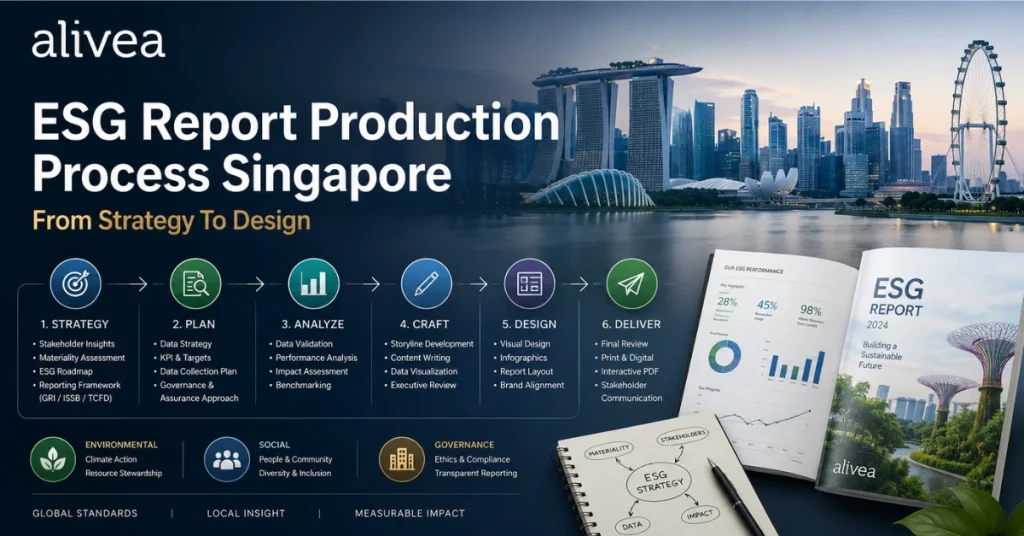
ESG Report Production Singapore For Strategy, Workflow, And Final Design
ESG report production singapore is a structured process that helps companies turn sustainability strategy, data, governance, disclosure requirements, and visual communication into a professional corporate report. A strong ESG report is not created only during the final design stage. It is built through a complete ESG reporting process that begins with strategic planning, continues through materiality review, data collection, content development, internal validation, design production, stakeholder review, and final publication.
For Singapore companies, the sustainability report workflow must support both communication quality and reporting discipline. SGX explains that sustainability reports should include primary components such as material ESG factors, climate-related disclosures, policies, practices and performance, targets, reporting framework, and board statement. This means ESG report development needs more than attractive pages. It requires a clear system for identifying what matters, collecting reliable evidence, explaining policies, presenting performance, tracking targets, and showing governance accountability.
The ESG reporting lifecycle also needs to respond to climate disclosure expectations. ACRA’s sustainability reporting timeline states that all listed companies must report Scope 1 and Scope 2 greenhouse gas emissions for financial years starting on or after 1 January 2025, while additional ISSB-based climate-related disclosure requirements apply according to company category and timeline. This makes early planning important because emissions data, methodology, boundaries, and review processes cannot be prepared properly at the last minute.
Professional ESG report production Singapore support can help companies manage complexity. Sustainability information often comes from operations, finance, human resources, procurement, legal, risk, compliance, facilities, investor relations, and leadership teams. Each department may provide different data formats, evidence quality, and writing styles. A proper sustainability report workflow brings these inputs together into one consistent report.
For brands such as alivea and corporates that want premium ESG communication, the goal is to produce a report that is accurate, readable, visually strong, and stakeholder-focused. The best ESG reporting process does not separate strategy from design. It connects business priorities, ESG data, disclosure content, and report layout into a complete corporate communication asset that supports transparency, trust, and long-term responsible growth.
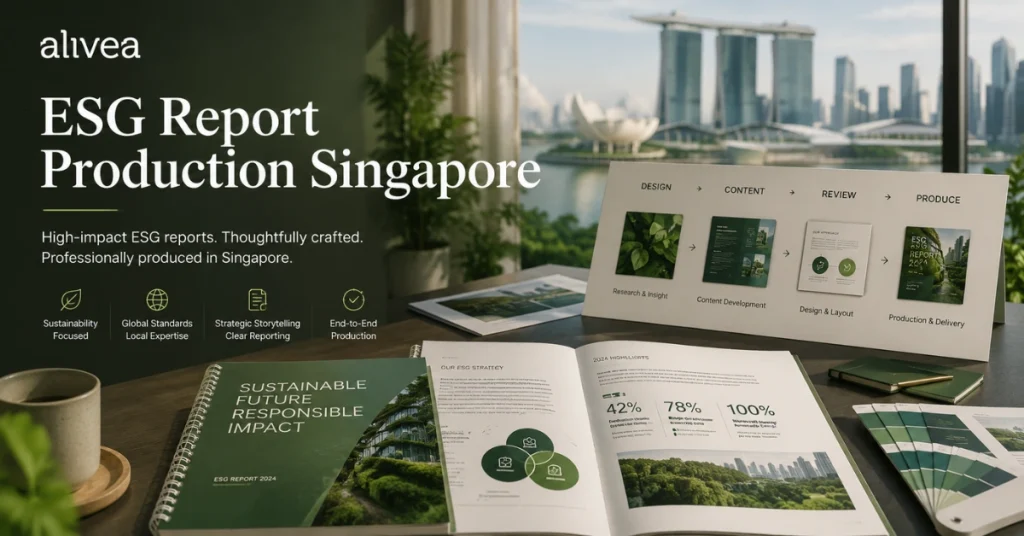
ESG Report Production Singapore For Complete Corporate Reporting Control
ESG report production Singapore works best when companies treat the report as a controlled corporate project rather than a final-year publication task. A sustainability report often involves many contributors, multiple approval layers, technical data, formal disclosures, leadership messages, and design deliverables. Without clear project control, the report can become delayed, inconsistent, or difficult to verify.
The first production control is scope definition. Companies need to decide what the report covers, which entities are included, which reporting period applies, which ESG topics are material, and which frameworks guide disclosure. This step creates the foundation for the full ESG reporting process. If scope is unclear, later stages such as data collection, writing, review, and design can become confusing.
The second control is timeline management. A sustainability report workflow should begin well before publication. Teams need time to gather data, confirm methodologies, prepare narratives, review claims, design pages, proofread content, and secure leadership approval. A rushed process can result in weak explanations, inconsistent figures, missing evidence, or design compromises. A good production schedule includes milestones for data submission, content draft, internal review, design layout, final proofreading, and publication readiness.
The third control is responsibility mapping. ESG report development depends on many departments. Operations may provide energy, emissions, waste, and safety data. Human resources may provide workforce, training, diversity, and wellbeing information. Procurement may provide supplier data. Legal and risk teams may review governance, ethics, and compliance content. Finance may help with controls and assurance readiness. Each input should have an owner and reviewer.
SGX Practice Note 7.6 highlights that sustainability reporting should identify material ESG factors and explain both the reasons for and process of selecting them, considering relevance to business strategy, financial planning, business model, and key stakeholders. This makes early production planning especially important.
The ESG reporting lifecycle becomes smoother when project control is established from the beginning. Companies can avoid last-minute corrections, improve data reliability, and create a final report that is both polished and credible.
ESG Reporting Process For Materiality, Data, Content, And Review
The ESG reporting process usually starts with materiality, because material topics guide the entire report. A company should first identify which environmental, social, and governance issues matter most to its business and stakeholders. These may include climate risk, greenhouse gas emissions, energy use, water management, waste reduction, workplace safety, employee development, diversity, customer responsibility, supplier standards, data protection, anti-corruption, and board oversight.
Materiality should not be treated as a decorative section. It determines what the report should focus on, which data must be collected, which departments need involvement, and which targets should be explained. In a strong ESG report production Singapore process, materiality connects strategy to reporting. It helps the company avoid producing a long report filled with disconnected activities.
After materiality, the next stage is data collection. ESG data may come from utility bills, HR systems, training records, safety logs, procurement platforms, risk registers, board documents, policy files, emissions calculations, and operational reports. Each metric should have a definition, owner, source, reporting boundary, calculation method, and supporting evidence. This is especially important for ESG reporting compliance because stakeholders increasingly expect clear, comparable, and decision-useful information.
IFRS S1 and IFRS S2 prescribe how companies prepare and report sustainability-related financial disclosures and climate-related disclosures, supporting clearer information for users of general purpose financial reports. Because of this, companies should build data quality into the sustainability report workflow rather than trying to fix issues after writing is complete.
Content development follows data collection. Writers translate policies, actions, performance results, stakeholder engagement, and governance processes into clear report narratives. Strong ESG report development avoids vague claims and explains what was done, why it matters, how progress is measured, and what comes next.
Review is the final discipline before design completion. Sustainability teams, data owners, finance, legal, risk, management, and board-level reviewers may all need to examine different sections. The ESG reporting lifecycle becomes more credible when every major claim is checked before publication. Review protects the company from unsupported statements and improves stakeholder confidence.
Sustainability Report Workflow For Smooth Collaboration Across Departments
A sustainability report workflow should make collaboration easier across departments. ESG reports often fail not because companies lack sustainability activity, but because information is scattered across teams. One department may provide strong metrics but weak explanation. Another may provide detailed narratives but no evidence. Another may respond late because reporting requirements were not clearly communicated. A structured workflow solves these issues.
The workflow should begin with a reporting brief. This brief explains the report objective, target audience, reporting period, key standards, material topics, required data, writing tone, design expectations, review responsibilities, and final deliverables. When all contributors understand the same brief, the ESG reporting process becomes more efficient.
The next stage is contributor onboarding. Data owners should know exactly what they need to provide. Instead of asking departments for general updates, the sustainability team can use templates. These templates may request metric name, reporting boundary, current-year result, previous-year result, source document, explanation of change, target status, and owner confirmation. This improves consistency and reduces back-and-forth clarification.
A strong sustainability report workflow also includes content interviews. Some ESG stories cannot be captured through spreadsheets alone. Interviews with operations leaders, HR managers, procurement teams, risk officers, and sustainability champions can reveal context behind the data. For example, energy reductions may result from equipment upgrades, process improvements, or behavioural programmes. Training increases may reflect leadership development or technical capability building. These details strengthen ESG report development.
Design collaboration should begin before final copy is locked. If the report needs dashboards, charts, timelines, governance diagrams, materiality visuals, and case study pages, designers should understand content requirements early. This prevents the design stage from becoming a rushed formatting exercise.
The ESG reporting lifecycle works best when teams follow a shared calendar. Data collection, content writing, review, design, proofreading, and publication should have clear deadlines. A managed workflow reduces stress, improves accountability, and helps the final report feel coherent. For Singapore companies, this collaborative approach supports both compliance and premium corporate communication.
ESG Report Development For Strategy, Storytelling, And Disclosure Quality
ESG report development is where raw sustainability information becomes a meaningful corporate narrative. A company may have policies, data, programmes, and governance structures, but these elements must be organized into a report that stakeholders can understand. The development stage connects strategy, evidence, storytelling, and disclosure quality.
The first part of ESG report development is content architecture. This means planning the report structure before writing begins. A complete structure may include leadership message, reporting scope, ESG highlights, sustainability strategy, materiality assessment, stakeholder engagement, environmental performance, climate-related disclosure, social impact, governance, targets, framework references, and appendices. The order should create a logical journey for readers.
The second part is narrative development. ESG storytelling should not exaggerate achievements or hide challenges. It should explain context. If emissions decreased, the report should explain what contributed to the result. If a target is still in progress, the report should explain the next steps. If a metric changed because of improved data coverage, the report should say so. Good ESG reporting process discipline turns narrative into trust, not promotion.
The third part is disclosure alignment. SGX states that sustainability reports should include policies, practices and performance, as well as targets and reporting framework details. This means the report should not only describe initiatives. It should show how the company manages material ESG factors and tracks progress.
The fourth part is visual readiness. Content should be prepared with design in mind. Long explanations may need summary boxes. Technical data may need charts. Governance content may need diagrams. Target progress may need scorecards. Climate information may need tables, definitions, and methodology notes. A strong sustainability report workflow allows writers and designers to work together so the final report is readable and visually balanced.
For alivea and companies seeking premium reporting, ESG report development should combine professional writing with strategic structure. The final output should feel specific, credible, and aligned with the company’s business identity.
ESG Reporting Lifecycle For Continuous Improvement And Future Readiness
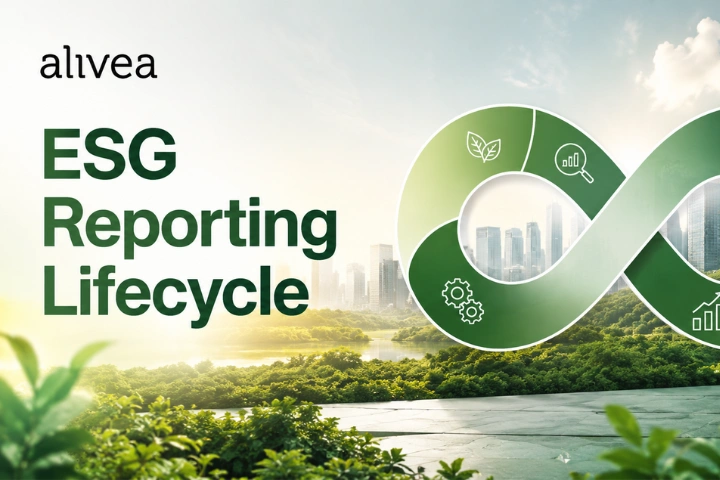
The ESG reporting lifecycle does not end when the report is published. A mature company treats ESG reporting as a continuous cycle of planning, measurement, disclosure, review, learning, and improvement. This mindset helps companies strengthen reporting quality year after year.
The lifecycle begins with strategy. Leadership and sustainability teams define ESG priorities, material topics, reporting standards, business goals, stakeholder needs, and disclosure expectations. This stage guides the rest of the ESG report production Singapore process. Without strategic direction, the report may become a collection of unrelated updates.
The next stage is implementation and data tracking. Companies should collect ESG information throughout the year, not only during report production. Regular tracking makes it easier to monitor performance, identify gaps, and prepare evidence. For example, emissions data, training hours, safety incidents, supplier screening, and governance activities can be reviewed periodically before the reporting deadline.
The third stage is report preparation. This includes data consolidation, content writing, design planning, internal review, and approval. A structured sustainability report workflow improves efficiency because every contributor understands their responsibilities.
The fourth stage is publication and communication. The final ESG report may be published as a PDF, annual report section, website page, investor relations resource, or digital sustainability summary. Companies should ensure consistency across all channels. Approved report data should not be reworded in a way that changes meaning.
The final stage is post-report learning. After publication, teams should review what worked, what caused delays, which data was difficult to verify, and which stakeholder questions appeared. This feedback improves the next ESG reporting process.
ACRA’s sustainability reporting and assurance page notes that listed companies and large non-listed companies need to comply from FY2025 and FY2030 respectively, showing why future readiness matters for different company types. A strong ESG reporting lifecycle helps companies prepare early instead of reacting late. Over time, the report becomes more accurate, more efficient, and more useful for strategic decision-making.
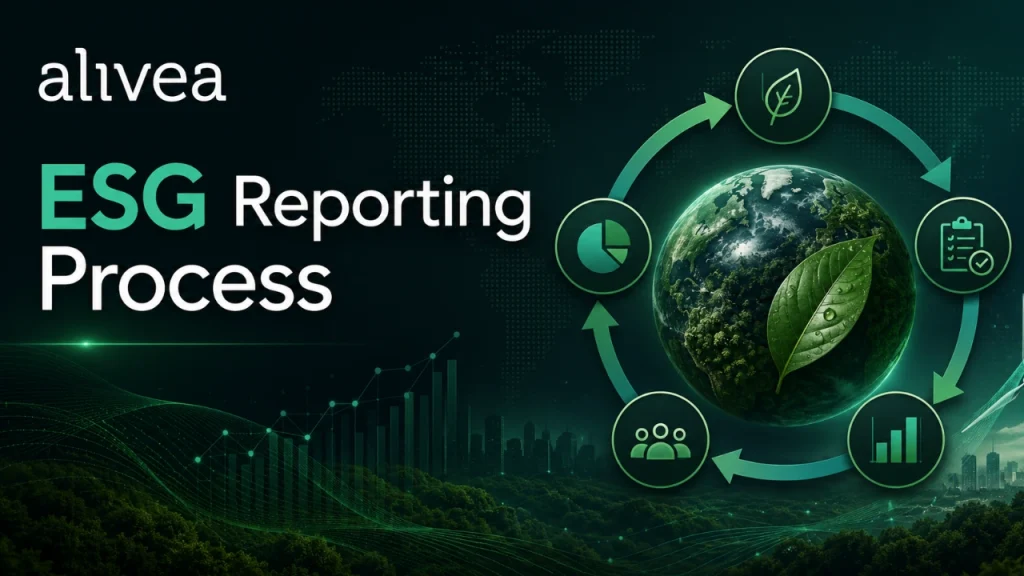
ESG Data Collection Process For Reliable Metrics And Evidence Control
The ESG data collection process is one of the most sensitive parts of report production. Design and writing may shape the final presentation, but data quality determines credibility. A visually impressive ESG report can lose trust quickly if figures are inconsistent, unsupported, or poorly explained. This is why ESG report production Singapore should include a disciplined data collection and evidence control stage.
Data collection should begin with a metric inventory. The company lists all required ESG indicators, including environmental, social, and governance metrics. Environmental indicators may include Scope 1 and Scope 2 greenhouse gas emissions, energy consumption, water use, waste generated, recycling rates, emissions intensity, and renewable energy use. Social indicators may include employee headcount, training hours, diversity, workplace safety, retention, wellbeing activities, and community investment. Governance indicators may include board composition, ethics training, whistleblowing cases, supplier screening, policy coverage, and compliance reviews.
Each metric should have a data owner. This prevents confusion when figures need verification. A data owner should understand where the number comes from, how it is calculated, which period it covers, and what evidence supports it. The ESG reporting process becomes stronger when every metric has traceability.
Evidence control is equally important. Supporting documents may include invoices, system exports, calculation worksheets, HR records, training logs, meeting minutes, risk registers, supplier documents, and policy files. A clear evidence folder helps internal reviewers and future assurance providers understand how the report was built.
ACRA’s requirements timeline shows that external limited assurance for Scope 1 and Scope 2 greenhouse gas emissions applies in later phases for listed and large non-listed companies. Even before assurance applies, companies benefit from keeping organized evidence.
A strong sustainability report workflow also includes variance analysis. If a metric changes significantly from the previous year, teams should understand why. Business growth, operational changes, improved methodology, new facilities, or reporting boundary changes may affect results. ESG report development should explain these changes clearly in the final report.
ESG Content Creation Process For Clear Narratives And Stakeholder Meaning
ESG content creation turns structured data into meaningful communication. A report should not only display figures. It should explain why the figures matter, how the company manages sustainability priorities, and what actions support future progress. This stage is essential because stakeholders need both evidence and context.
The content creation process begins with a report outline. Writers map the report into logical sections, such as strategy, materiality, stakeholder engagement, climate, environment, people, community, governance, targets, and appendices. Each section should have a clear purpose. The ESG reporting process becomes easier when writers know which questions each section must answer.
A strong ESG narrative usually follows a simple logic: issue, relevance, action, performance, and next step. For example, a climate section may explain why emissions matter to the company, what data was measured, what initiatives were implemented, what results were achieved, and what improvements are planned. This structure prevents content from becoming vague.
Sustainability report workflow teams should also avoid repetitive corporate phrases. ESG reports often overuse words such as commitment, sustainability, innovation, responsibility, impact, and excellence. These words are not wrong, but they become weak when used without evidence. Good ESG report development uses specific actions, measurable outcomes, and clear explanations.
Another important part of content creation is tone. The report should sound professional, balanced, and honest. It should highlight achievements without exaggeration and discuss challenges without defensiveness. Stakeholders are more likely to trust companies that explain progress with maturity.
The content stage should also support design. Writers can create short highlight statements, metric captions, chart explanations, case study summaries, and leadership messages that fit page layouts. This reduces design friction later.
For alivea-style premium ESG reporting, content should be both strategic and readable. It should help investors, employees, customers, regulators, and partners understand the company’s sustainability journey clearly. When content creation is handled well, the report becomes more than a disclosure document. It becomes a corporate trust asset.
ESG Design Production Process For Layout, Data Visualization, And Branding
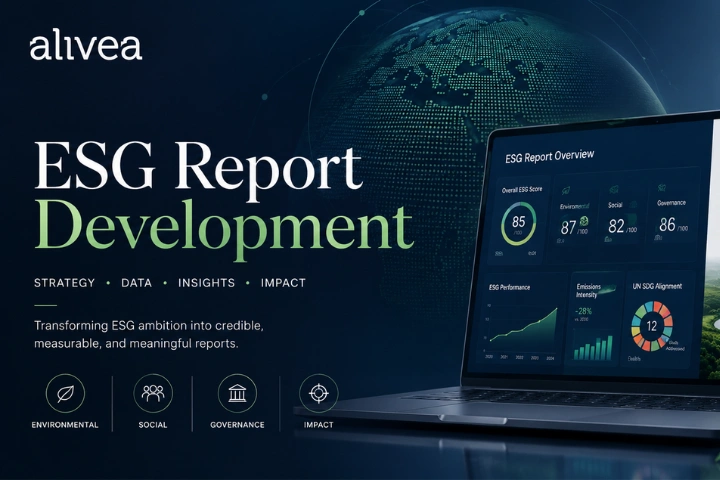
The ESG design production process transforms approved content into a professional report experience. Good design does not simply make pages attractive. It improves navigation, readability, hierarchy, data comprehension, and brand consistency. In a high-quality ESG report production Singapore workflow, design begins with communication objectives, not decoration.
The first design step is creating a visual system. This includes typography, colour palette, grid structure, chart style, icon system, section divider treatment, table formatting, caption style, and image direction. A consistent system helps the report feel polished and easier to read. It also allows future reports to be updated more efficiently.
The second step is page architecture. ESG reports often include different content types: leadership letters, strategy pages, dashboards, data tables, materiality matrices, case studies, climate sections, governance diagrams, and appendix references. Each content type needs a suitable layout. A dense emissions table should not be treated like a storytelling spread. A governance structure should not be buried inside a long paragraph. Design helps each information type serve its purpose.
Data visualization is especially important. ESG reporting process outputs often include technical metrics that need visual clarity. Charts should have honest scales, visible labels, clear units, and concise captions. Dashboards should prioritize the most important information. Tables should be readable and consistent. Visuals should never distort data or hide context.
Branding is another design consideration. The report should reflect the company’s identity while respecting the seriousness of sustainability disclosure. For alivea and corporate brands, premium ESG design may include refined layouts, professional imagery, clean icons, strong visual hierarchy, and digital-ready assets. However, design should not overpower the information.
The final design stage includes proofreading and quality control. Teams should check page numbers, headings, captions, cross-references, charts, tables, data labels, citations, and PDF accessibility basics. The ESG reporting lifecycle becomes stronger when design review is integrated into the overall approval process.
Internal Review And Approval Process For ESG Reporting Quality
Internal review and approval are crucial to ESG report quality. A sustainability report often includes strategic statements, technical data, governance descriptions, future targets, and public claims. If these elements are not reviewed carefully, the company may publish information that is unclear, inaccurate, or inconsistent. A structured review stage protects credibility.
The first review layer is departmental review. Each data owner checks the information related to their function. Operations may confirm energy, emissions, water, waste, or safety data. Human resources may review workforce, training, diversity, and wellbeing information. Procurement may check supplier content. Legal and compliance may review policy, ethics, and risk sections. This ensures subject matter accuracy.
The second review layer is sustainability team consolidation. This team checks whether the report aligns with material topics, selected frameworks, stakeholder expectations, and the overall ESG strategy. They also look for gaps, duplicated statements, missing explanations, and inconsistent language.
The third review layer is management review. Senior leaders evaluate whether the report reflects the company’s business priorities, performance, and future direction accurately. Leadership messages, targets, and sensitive disclosures often require this level of review.
The fourth review layer may involve board visibility or approval depending on the company’s governance process. SGX guidance places ultimate responsibility for sustainability reporting with the board, while management is responsible for monitoring and managing material ESG factors. This makes governance review an important part of ESG report development.
The final review layer is editorial and design quality control. This includes checking grammar, consistency, chart labels, metric units, footnotes, page references, digital links, and final PDF formatting. The sustainability report workflow should include enough time for these checks.
A strong internal review process does not make reporting slower when planned properly. It makes reporting safer and more credible. Companies that review early and often can avoid major corrections near publication and build stronger confidence in the final report.
Digital Publication Workflow For ESG Reports, Websites, And Investor Channels
Digital publication is now a major stage in the ESG reporting lifecycle. Many stakeholders read ESG reports online, download PDFs, visit sustainability webpages, review investor presentations, or share report highlights internally. This means companies should plan digital output from the beginning of ESG report production Singapore, not after the PDF is finished.
The first digital publication decision is format. Some companies produce a standalone PDF report. Others include ESG information inside an annual report. Some create sustainability microsites, HTML report pages, interactive dashboards, or investor-focused summaries. The right format depends on the company’s audience, resources, reporting maturity, and communication goals.
The second decision is content adaptation. A full report may be detailed, but website users often need shorter summaries. ESG report development can prepare approved content modules for digital use, such as sustainability highlights, strategy summaries, climate metrics, materiality topics, governance diagrams, and downloadable charts. This allows companies to reuse content without changing its meaning.
Consistency is critical. Figures in a website summary should match the official ESG report. Targets should be worded consistently. Charts should use the same definitions. A sustainability report workflow should include digital content review so that online materials remain aligned with final approved disclosures.
Digital accessibility should also be considered. PDF reports should be searchable, easy to navigate, and structured with clear headings. Website content should use readable typography, sufficient contrast, logical page flow, and meaningful labels. These details improve stakeholder experience and support responsible communication.
Search visibility is another benefit of digital ESG reporting. Terms such as esg report production singapore, esg reporting process, sustainability report workflow, esg report development, and esg reporting lifecycle can appear naturally in corporate ESG pages. Search-friendly content helps stakeholders find relevant information more easily.
For alivea and premium corporate brands, digital publication turns ESG reporting into a broader communication ecosystem. The report becomes a source for websites, investor decks, internal updates, and stakeholder engagement materials.
Common Production Mistakes That Reduce ESG Report Credibility
Even companies with strong ESG initiatives can weaken report credibility through poor production processes. One common mistake is starting too late. ESG report production Singapore requires data collection, interviews, writing, review, design, proofreading, and approval. When companies begin close to the deadline, they often rush important steps and publish weaker disclosures.
Another mistake is collecting data without definitions. If teams do not agree on metric boundaries, reporting periods, or calculation methods, the final report may contain inconsistent figures. For example, training hours may be counted differently across departments, or emissions data may exclude certain facilities without explanation. The ESG reporting process should define metrics before collection begins.
A third mistake is treating design as the final cosmetic stage. Design should help shape readability, data visualization, and stakeholder navigation. If designers receive content too late, they may only format pages instead of improving communication. A strong sustainability report workflow brings design into planning earlier.
Another common issue is weak review. Reports may include statements that sound good but are not supported by evidence. Claims such as “industry-leading,” “fully sustainable,” or “best practice” should be avoided unless substantiated. ESG report development should use careful, evidence-based language.
Companies also make mistakes by separating the report from strategy. If the report lists initiatives without explaining materiality, governance, targets, or business relevance, stakeholders may struggle to understand its importance. The ESG reporting lifecycle should connect reporting to management priorities.
Digital inconsistency is another risk. A company may publish one figure in the report and another on the website. This can damage trust. Digital content should be reviewed against final approved disclosures.
Avoiding these mistakes requires planning, accountability, documentation, and collaboration. The best ESG reports are not built by chance. They are produced through a disciplined workflow that respects both sustainability substance and communication quality.
Alivea Approach To ESG Report Production Singapore For Premium Results
An alivea-style approach to ESG report production Singapore combines strategy, workflow, writing, data visualization, design, and publication into one integrated service. The goal is not only to produce a beautiful document. The goal is to create a sustainability report that is credible, clear, brand-aligned, and useful for stakeholders.
The process begins with strategic discovery. This includes understanding the company’s industry, ESG maturity, reporting obligations, business goals, stakeholders, brand identity, and available data. This stage helps define the report’s direction and prevents generic sustainability communication.
Next comes report planning. The team creates a structure that supports the ESG reporting process, including sections for strategy, materiality, stakeholder engagement, climate, environment, social performance, governance, targets, and framework references. A clear outline makes writing and review more efficient.
The third stage is data and content development. Data owners provide metrics and evidence, while writers transform information into professional narratives. The sustainability report workflow should ensure that every major claim is checked and every metric is explained. Content should be written for readers, not only for internal teams.
The fourth stage is design production. Alivea-style ESG report development can include visual systems, dashboards, charts, infographics, governance diagrams, case study pages, and digital-ready layouts. Premium design helps stakeholders navigate the report and understand information more easily.
The final stage is review, publication, and content repurposing. The report may become a PDF, website content, investor presentation material, internal communication asset, or social media highlight. The ESG reporting lifecycle becomes more valuable when approved content supports multiple channels.
For companies seeking stronger corporate trust, this approach turns ESG reporting into a strategic communication platform. It combines compliance awareness with creative quality, making sustainability information easier to understand and more powerful for stakeholder engagement.
Building A Future-Ready ESG Reporting Lifecycle For Singapore Companies
A future-ready ESG reporting lifecycle helps Singapore companies prepare for changing expectations, stronger data needs, and more mature sustainability communication. ESG reporting will continue to become more integrated with business strategy, climate disclosure, governance, risk management, investor relations, and digital communication. Companies that build strong processes now will be better prepared for future requirements.
Future readiness starts with internal capability. Companies should train data owners, define metrics, improve evidence collection, and create repeatable workflows. This reduces reliance on last-minute reporting and makes ESG report production Singapore more efficient each year.
The next priority is climate readiness. ACRA’s timeline shows phased climate-related disclosure and greenhouse gas reporting expectations for different categories of companies. Companies should prepare early by improving emissions data, documenting methodologies, and understanding climate risks and opportunities.
Another priority is assurance readiness. Even when external assurance is not yet required for a company, organized evidence and internal controls make reporting more reliable. Future assurance preparation should be built into the ESG reporting process gradually.
Digital readiness is also important. Stakeholders increasingly expect sustainability information to be easy to find online. A future-ready sustainability report workflow should create content that can be adapted for websites, investor channels, dashboards, and internal reporting without losing consistency.
Design readiness matters too. Companies can build reusable templates, chart styles, icon systems, and report modules. This improves efficiency and creates stronger brand consistency across future reports.
The ESG reporting lifecycle should also include annual learning. After each report, teams should review delays, data challenges, stakeholder questions, and improvement opportunities. This feedback helps the next report become better.
Future-ready ESG reporting is not about perfection. It is about building a stronger system each year. Companies that invest in lifecycle discipline can produce reports that are more accurate, more strategic, and more trusted. Featured article trusted esg report agency singapore for professional reporting design.
What Is ESG Report Production Singapore In Corporate Sustainability Reporting?
ESG report production Singapore is the complete process of planning, developing, designing, reviewing, and publishing a company’s ESG or sustainability report. It includes strategy, materiality review, data collection, content writing, data visualization, design layout, internal approval, digital publication, and post-report improvement.
A strong ESG reporting process begins before the report is written. Companies need to define the report scope, audience, framework, material topics, timeline, data owners, and review structure. The sustainability report workflow then guides teams through data collection, evidence management, writing, design, and publication.
ESG report development is important because sustainability information can be complex. Companies need to explain climate data, workforce metrics, governance responsibilities, policies, performance, and targets clearly. The ESG reporting lifecycle helps companies improve each year by learning from previous reporting cycles. For brands such as alivea, professional production turns ESG information into a premium corporate communication asset.
Who Should Join The ESG Reporting Process Inside A Company?
The ESG reporting process should involve all teams that own sustainability information, governance decisions, data, content, or communication. This usually includes sustainability teams, finance, operations, human resources, procurement, legal, risk, compliance, facilities, investor relations, corporate communications, senior management, and board-level reviewers.
ESG report production Singapore is cross-functional because ESG data comes from many sources. Operations may provide energy, emissions, waste, and safety information. HR may provide workforce and training data. Procurement may provide supplier details. Legal and risk teams may review governance, ethics, and compliance content.
A clear sustainability report workflow assigns responsibilities early. Each department should know what information to provide, when to provide it, and how it will be reviewed. ESG report development becomes more efficient when teams collaborate from the start. The ESG reporting lifecycle is strongest when accountability is shared across the organization, not placed only on one sustainability manager.
Where Does Sustainability Report Workflow Improve Report Quality Most?
A sustainability report workflow improves report quality most in data collection, content structure, internal review, design coordination, and publication consistency. These areas often create the biggest challenges when companies produce ESG reports without a clear process.
During data collection, workflow ensures that metrics have owners, definitions, sources, and evidence. During content development, workflow helps writers organize ESG information into a clear structure. During review, workflow allows sustainability, finance, legal, risk, management, and board-level teams to check accuracy before publication.
ESG report production Singapore also benefits when design is integrated early. Designers can plan dashboards, charts, case studies, and report layouts before content becomes too rigid. ESG reporting process discipline also improves digital publication because website summaries, investor materials, and PDF reports can remain consistent. ESG report development becomes more professional when every stage is managed, documented, and reviewed.
When Should ESG Report Development Begin Before Publication?
ESG report development should begin early in the reporting year, not only near the publication deadline. Companies should start by confirming scope, material topics, reporting requirements, project timeline, data owners, and content structure. Data tracking should happen throughout the year so teams are not forced to collect everything at the end.
The ESG reporting process should include periodic check-ins. Mid-year reviews can help identify missing data, unclear definitions, delayed initiatives, and content gaps. A sustainability report workflow should allow enough time for writing, editing, design, internal review, leadership approval, and final proofreading.
For companies with complex operations, ESG report production Singapore may require even earlier preparation, especially when climate data, assurance readiness, or multi-department review is involved. The ESG reporting lifecycle becomes stronger when report development is treated as an ongoing process. Starting early reduces mistakes, improves data quality, and gives the final report more strategic depth.
Why Does ESG Reporting Lifecycle Planning Matter For Trust?
ESG reporting lifecycle planning matters because trust depends on consistency, accuracy, and continuous improvement. A company that treats ESG reporting as a one-time annual task may struggle with rushed data collection, weak review, inconsistent claims, and unclear disclosures. Lifecycle planning creates a repeatable system that improves every year.
In ESG report production Singapore, lifecycle planning connects strategy, data, content, design, review, publication, and post-report learning. It helps teams track sustainability information throughout the year, not only during report preparation. It also allows companies to review what worked and what needs improvement after each reporting cycle.
A mature ESG reporting process supports stronger governance and stakeholder confidence. The sustainability report workflow becomes more reliable because responsibilities, timelines, and evidence requirements are clear. ESG report development also becomes more useful because the report reflects real management processes. When the ESG reporting lifecycle is planned well, stakeholders can trust that the company takes sustainability reporting seriously.
How Can Companies Improve ESG Report Production Singapore Effectively?
Companies can improve ESG report production Singapore by creating a structured workflow that starts with strategy and ends with review, publication, and learning. The first step is defining report scope, audience, standards, material topics, and timeline. The second step is assigning data owners and creating templates for metrics, evidence, and explanations.
The ESG reporting process should include early data validation, clear content architecture, balanced writing, and design planning. A sustainability report workflow should also include review checkpoints for sustainability, finance, legal, risk, management, and board-level stakeholders where appropriate.
ESG report development becomes stronger when writers and designers collaborate early. Data-heavy sections can become charts, governance details can become diagrams, and strategy content can become clear executive summaries. The ESG reporting lifecycle should also include post-publication review. Companies should learn from each report cycle and improve data quality, workflow efficiency, and stakeholder communication every year.
Building Stronger ESG Report Production Singapore From Strategy To Design
ESG report production Singapore is a complete corporate reporting process that connects strategy, materiality, data, content, design, review, and publication. A strong ESG report is not created at the final layout stage. It begins with planning and continues through every part of the ESG reporting process. Companies that manage this process carefully can produce reports that are clearer, more credible, and more useful for stakeholders.
The sustainability report workflow starts with defining purpose, audience, scope, material topics, reporting standards, and responsibilities. It then moves into data collection, where metrics must be supported by definitions, sources, evidence, and review. ESG report development turns this information into structured narratives that explain actions, performance, governance, targets, and future direction.
Design gives the report professional clarity. Dashboards, charts, tables, case studies, icons, diagrams, and digital layouts help stakeholders understand complex information. However, design must support the data rather than distract from it. Premium ESG communication requires both visual quality and disclosure discipline.
The ESG reporting lifecycle also extends beyond publication. Companies should review what worked, identify bottlenecks, improve evidence systems, strengthen climate readiness, and prepare for future reporting expectations. This continuous improvement mindset helps ESG reporting become more efficient and more strategic over time.
For Singapore companies, this approach is increasingly important as sustainability disclosure becomes more structured and climate-related reporting expectations continue to mature. Early planning allows companies to build better data systems, stronger governance, clearer communication, and more confident stakeholder engagement.
For brands such as alivea and corporates seeking professional ESG communication, the opportunity is to transform ESG reporting from an annual requirement into a trust-building asset. A well-produced report can support investor relations, employee engagement, customer confidence, regulatory readiness, and corporate reputation. When strategy, workflow, content, design, and lifecycle planning work together, ESG reporting becomes a powerful platform for responsible business growth.
