
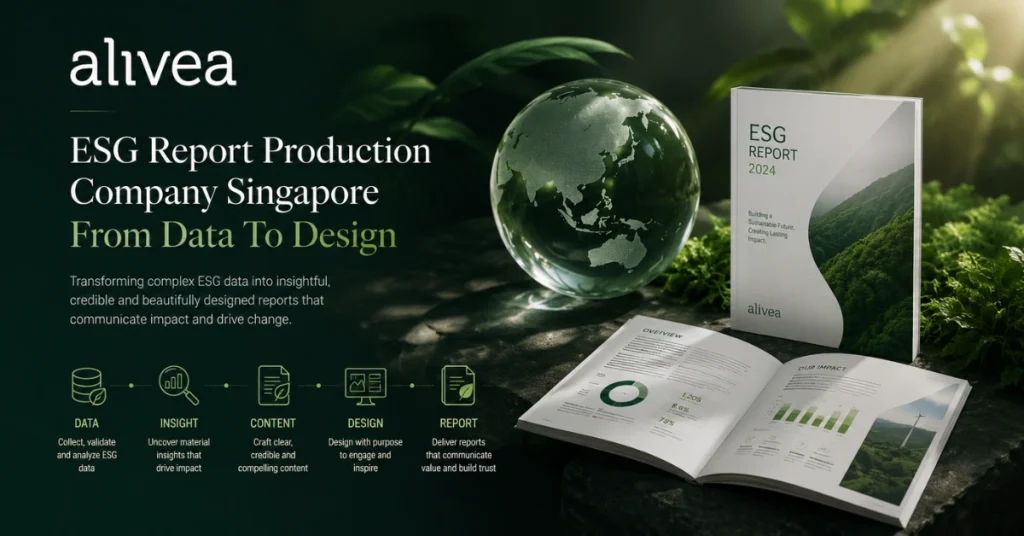
ESG Report Production Singapore From Data Collection To Final Report Design
ESG report production Singapore is the complete process of transforming sustainability information into a professional, structured, and stakeholder-ready publication. It begins long before the final design stage. A strong report requires data collection, topic planning, content strategy, writing, review, visual hierarchy, layout development, and final publication preparation. When these stages are managed carefully, the report becomes more than a formal document. It becomes a clear communication asset that helps businesses explain environmental, social, and governance performance with confidence.
A successful ESG reporting process Singapore should connect multiple internal functions. Sustainability teams may provide strategic direction, operations may contribute environmental data, human resources may share workforce information, finance may support performance validation, and leadership may approve governance messaging. Without a clear production workflow, these inputs can become scattered, delayed, or inconsistent. This may weaken the final report and reduce stakeholder trust.
Professional sustainability report production Singapore helps companies organize every stage into a manageable sequence. The process may begin with defining report objectives, identifying key ESG themes, collecting evidence, drafting content, reviewing data accuracy, developing design concepts, and preparing digital or print-ready files. Each stage needs coordination because ESG reporting involves both technical information and corporate storytelling.
Effective ESG report development Singapore also requires balance. The report should be detailed enough to show accountability, but clear enough for readers to understand. Data should be presented with context, while narrative sections should be supported by evidence. Design should improve readability, not distract from the information.
A strong ESG reporting lifecycle Singapore allows brands such as alivea to manage sustainability communication more professionally from beginning to end. By treating ESG report production as a strategic lifecycle, businesses can reduce last-minute pressure, improve disclosure quality, and create reports that support transparency, credibility, and long-term corporate value.
ESG Report Production Singapore Builds A Clear Path From Inputs To Publication
ESG report production Singapore builds a clear path from raw information to a polished corporate publication. Many companies begin with useful ESG activities, but those activities must be gathered, organized, explained, reviewed, and designed before they become an effective report. Production is the bridge between internal sustainability work and external stakeholder communication.
A strong production process starts with report planning. Before writing begins, companies should clarify the purpose of the report, target audiences, reporting scope, key sustainability themes, and preferred communication style. This planning stage helps the business avoid a generic document. It also ensures that the report reflects the company’s real priorities rather than simply listing activities.
The next stage in the ESG reporting process Singapore is information gathering. ESG data may come from several departments, including operations, procurement, finance, legal, human resources, risk management, and corporate communications. Each team may use different formats, timelines, and definitions. A structured production workflow helps align these inputs so the report can maintain consistency.
Professional sustainability report production Singapore also includes content mapping. This means deciding where each topic belongs, how sections should flow, and how supporting evidence should be positioned. Environmental content may need data tables and action summaries. Social content may require employee stories, policy explanations, and program outcomes. Governance content may need oversight descriptions, risk controls, and ethical conduct statements.
A disciplined ESG report development Singapore process also creates checkpoints for review. Drafts should be assessed for accuracy, tone, clarity, and completeness. Data should be checked against reliable sources. Claims should be supported by evidence. Visual elements should be aligned with the content rather than added after the message is complete.
The final stage of the ESG reporting lifecycle Singapore brings content and design together. The report is refined into a professional format with readable layouts, structured navigation, charts, tables, icons, and brand-consistent visuals. When this path is managed clearly, the final ESG report becomes easier to read, easier to trust, and more valuable for corporate communication.
ESG Reporting Process Singapore Turns Complex Workflows Into Managed Stages
The ESG reporting process Singapore turns a complex corporate workflow into a series of organized stages. ESG reports often involve many contributors, technical topics, performance indicators, and approval requirements. Without a managed process, the project can become confusing. Teams may miss deadlines, submit inconsistent information, or revise content repeatedly because the report direction is unclear.
A practical process begins with preparation. The company should identify who owns each ESG topic, what information is needed, when data should be submitted, and who will review the final content. This creates accountability before the project becomes urgent. It also helps prevent ESG reporting from becoming a last-minute activity handled only by communications teams.
Strong ESG report production Singapore also depends on content sequencing. A report should guide readers through the company’s sustainability direction logically. It may begin with leadership perspective, business context, sustainability strategy, stakeholder engagement, material topics, environmental performance, social responsibility, governance practices, and future priorities. This sequence helps readers understand the relationship between strategy, action, and outcomes.
Professional sustainability report production Singapore also requires careful coordination between writing and data presentation. Numbers alone rarely explain progress. If energy consumption changes, the report should explain why. If training hours increase, the content should show how this supports workforce development or compliance awareness. If governance practices improve, the report should explain how oversight strengthens accountability.
A strong ESG report development Singapore workflow includes review cycles that are clear but not excessive. Internal stakeholders should review the sections relevant to their expertise, while editors ensure the full report reads with one consistent voice. This avoids a document that feels like many separate departments wrote it independently.
A structured ESG reporting lifecycle Singapore also improves future reporting. Once a company has a stable process, it can repeat and refine the workflow each year. This creates better data readiness, smoother collaboration, and stronger reporting maturity over time. Managed stages turn ESG reporting from a stressful production task into a professional business communication system.
Sustainability Report Production Singapore Aligns Content, Data, And Design
Sustainability report production Singapore is most effective when content, data, and design are developed as connected parts of the same reporting system. If these elements are treated separately, the final report may feel inconsistent. Strong content may be weakened by poor layout, accurate data may be difficult to understand, and beautiful design may lack credibility if the message is not supported by evidence.
Content is the foundation of the report. It explains the company’s sustainability direction, actions, policies, challenges, performance, and future commitments. In the ESG reporting process Singapore, content should not be written only to fill pages. Every section should serve a purpose. It should help stakeholders understand what the company is doing, why it matters, and how progress is being managed.
Data gives the report substance. Strong ESG report production Singapore requires metrics that are relevant, accurate, and clearly explained. Environmental indicators may include energy use, emissions, water consumption, waste reduction, and resource efficiency. Social indicators may cover training, safety, employee engagement, diversity, customer responsibility, and community contribution. Governance indicators may include policy coverage, leadership oversight, ethics training, compliance reviews, and risk management.
Design makes the report accessible. Professional sustainability report production Singapore uses layout, typography, charts, tables, icons, section dividers, visual summaries, and brand elements to improve understanding. Design should never hide weak content. Instead, it should help readers navigate information with less effort. Good design makes complex sustainability topics easier to scan, compare, and remember.
Effective ESG report development Singapore also connects the emotional and analytical sides of reporting. Case studies, leadership messages, and human-centered stories can make the report relatable. Data visuals, disclosure tables, and governance explanations make the report credible. Both are needed for balanced sustainability communication.
A mature ESG reporting lifecycle Singapore ensures these elements are aligned from the beginning. When writers, data owners, reviewers, and designers work from the same structure, the final report feels more coherent. This alignment strengthens readability, credibility, and stakeholder engagement.
ESG Report Development Singapore Improves Drafting, Review, And Refinement
ESG report development Singapore improves the quality of sustainability communication by creating a disciplined approach to drafting, review, and refinement. A strong ESG report is rarely produced in a single draft. It needs multiple stages of development so that information becomes clearer, more accurate, and more aligned with corporate messaging.
The drafting stage translates internal information into stakeholder-ready language. In ESG report production Singapore, this means converting data, policies, programs, and interviews into content that is readable and meaningful. The writing should avoid vague claims and explain sustainability progress with enough detail for readers to evaluate. It should also maintain a professional tone that feels credible, not promotional.
Review is another important part of the ESG reporting process Singapore. Different stakeholders may need to check different parts of the report. Operations teams may validate environmental data, human resources may review workforce content, legal or compliance teams may assess sensitive statements, and leadership may approve strategic direction. This review process helps reduce errors and strengthens the reliability of the final publication.
Professional sustainability report production Singapore also includes editorial refinement. This stage improves flow, removes repetition, sharpens section transitions, and ensures terminology remains consistent. ESG reports can become difficult to read when every department writes in a different style. Editorial refinement helps the report sound unified.
A strong ESG reporting lifecycle Singapore also allows design refinement after content review. Once the written content is stable, the design team can improve visual structure, chart clarity, image placement, page balance, and navigation. This helps the report look professional while keeping the message clear.
Development is not only about making a report longer or more visually attractive. It is about making the report more useful. A well-developed ESG report helps stakeholders understand the company’s priorities, actions, progress, and future direction. It also helps internal teams communicate sustainability with more confidence and consistency.
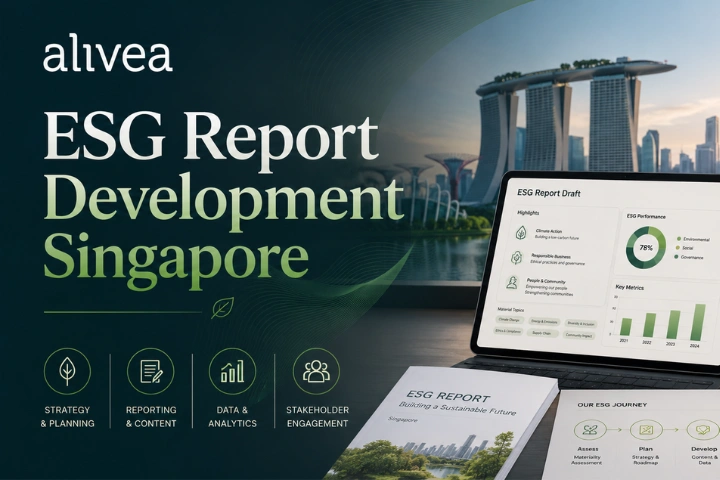
ESG Reporting Lifecycle Singapore Keeps Every Stage Consistent And Accountable
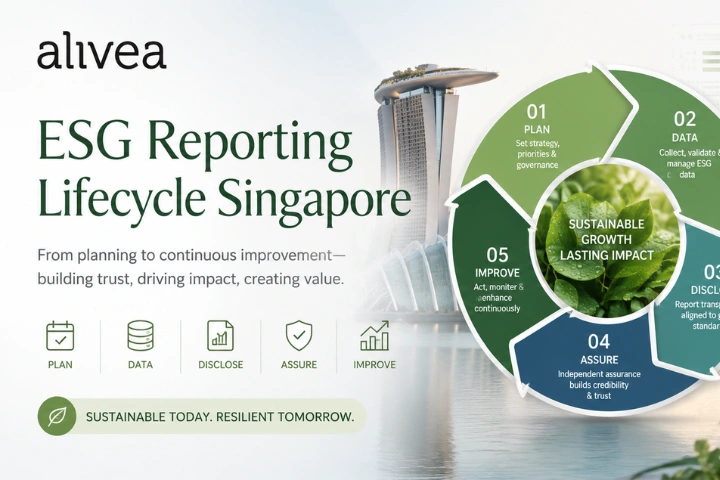
The ESG reporting lifecycle Singapore keeps every reporting stage consistent and accountable by treating sustainability reporting as an ongoing process, not a one-time project. A lifecycle approach begins before data is collected and continues after the report is published. This helps companies improve reporting maturity year after year.
A complete lifecycle may include planning, data preparation, stakeholder alignment, content drafting, internal review, design production, publication, feedback, and future improvement. Each phase has its own purpose. Planning defines direction. Data preparation builds evidence. Drafting creates the report narrative. Review strengthens accuracy. Design improves accessibility. Publication delivers the report to stakeholders. Feedback helps the next cycle become stronger.
Strong ESG report production Singapore benefits from this lifecycle because it reduces disorder. If companies wait until the end of the year to start gathering information, they may face missing data, unclear responsibilities, and rushed approvals. A lifecycle approach encourages teams to collect and review ESG information throughout the year.
In the ESG reporting process Singapore, accountability is important. Each ESG topic should have a responsible owner, data source, review step, and approval pathway. This helps ensure that the report is not built on assumptions. It also supports stronger governance because teams understand their role in the final disclosure.
Professional sustainability report production Singapore also uses the lifecycle to improve consistency. When report structures, definitions, metrics, and design systems are maintained from one year to the next, stakeholders can compare progress more easily. Consistency helps readers understand whether performance is improving and where future action is needed.
Effective ESG report development Singapore should also include learning after publication. Companies can review stakeholder feedback, internal challenges, data gaps, and design improvements. These lessons can shape the next report. Over time, the reporting lifecycle becomes a continuous improvement system that supports transparency, accountability, and stronger corporate sustainability communication. Related insights reliable esg report company singapore for business reporting needs.
What Is ESG Report Production Singapore For Corporate Reporting Teams Today?
ESG report production Singapore is the end-to-end process of creating a professional ESG or sustainability report, from initial planning to final publication. It includes data collection, content strategy, writing, internal review, design, editing, formatting, and delivery. For corporate teams, this process helps turn sustainability information into a report that is structured, readable, and stakeholder-ready.
A strong ESG reporting process Singapore gives every stage a clear function. It helps teams know what information is needed, who should provide it, and how the final report will be developed. Professional sustainability report production Singapore also ensures content, data, and design work together.
Through disciplined ESG report development Singapore, companies can reduce confusion, improve accuracy, and create stronger ESG communication. A complete ESG reporting lifecycle Singapore also supports future reporting cycles by building better systems, clearer roles, and more consistent disclosure quality.
Who Should Manage The ESG Reporting Process Singapore Across Departments?
The ESG reporting process Singapore should be managed by a coordinated team rather than one department alone. Sustainability reporting often involves leadership, corporate communications, finance, operations, human resources, procurement, risk management, legal, compliance, and design teams. Each group may hold important information for the final report.
A structured ESG report production Singapore process helps clarify these roles. Operations may provide environmental data, human resources may contribute workforce information, finance may support data validation, and leadership may approve strategic messaging. Professional sustainability report production Singapore ensures these contributions are organized into one coherent publication.
Strong ESG report development Singapore also benefits from project management. Someone should coordinate timelines, review stages, feedback, and final approvals. When the ESG reporting lifecycle Singapore is managed across departments, the report becomes more accurate, consistent, and reflective of the company’s actual sustainability performance.
Where Sustainability Report Production Singapore Creates The Most Value
Sustainability report production Singapore creates value wherever ESG information needs to become structured, professional, and understandable. This includes annual sustainability reports, ESG sections in annual reports, investor communication, corporate websites, stakeholder presentations, employee updates, and board-level reporting materials.
A complete ESG report production Singapore process helps companies turn scattered information into clear communication. The same content foundation can support different channels, while maintaining consistent sustainability messaging. A strong ESG reporting process Singapore also helps internal teams prepare more efficiently.
Professional ESG report development Singapore creates value by improving content clarity, data explanation, design quality, and review discipline. A strong ESG reporting lifecycle Singapore also helps companies learn from each reporting period. This creates long-term value because future reports become easier to manage, more reliable, and more useful for stakeholders.
When Should ESG Report Development Singapore Begin Before Publication For Better Results?
ESG report development Singapore should begin early in the reporting cycle, not only when the publication deadline is close. Early development gives businesses enough time to define objectives, gather information, validate data, develop content structure, review drafts, and plan design direction.
A strong ESG report production Singapore timeline may start with planning months before publication. This allows internal teams to prepare ESG inputs more carefully. In the ESG reporting process Singapore, early preparation also reduces the risk of missing data or rushed approvals.
Professional sustainability report production Singapore works best when writing, review, and design are not forced into the final stage. A complete ESG reporting lifecycle Singapore should include preparation, production, publication, and post-report improvement. Starting early helps the final report become clearer, more accurate, and more polished.
Why ESG Reporting Lifecycle Singapore Matters For Reliable Disclosure Quality
The ESG reporting lifecycle Singapore matters because reliable disclosure depends on consistent preparation, review, and improvement. ESG reports are built from many information sources. If the lifecycle is weak, the final report may include unclear data, repeated content, inconsistent language, or unsupported claims.
Strong ESG report production Singapore uses the lifecycle to organize the full journey from planning to publication. A disciplined ESG reporting process Singapore gives teams clear deadlines, responsibilities, and review steps. This makes reporting more reliable.
Professional sustainability report production Singapore also improves disclosure quality by connecting content, evidence, and design. Through thoughtful ESG report development Singapore, companies can refine messages, explain data, and improve stakeholder readability. A strong lifecycle helps businesses create reports that are not only complete, but credible, consistent, and easier to trust.
How Can ESG Report Production Singapore Improve Each Reporting Cycle Today?
ESG report production Singapore can improve each reporting cycle by using clear planning, consistent templates, better data ownership, structured review, and post-publication learning. Every report should help the next one become stronger. This mindset turns reporting into continuous improvement.
A better ESG reporting process Singapore begins with lessons from the previous cycle. Companies can review what caused delays, which data was difficult to collect, which sections needed more context, and how stakeholders responded. Professional sustainability report production Singapore can then apply these lessons to content planning, data management, and design systems.
Strong ESG report development Singapore also improves when internal teams understand their roles earlier. A complete ESG reporting lifecycle Singapore creates repeatable workflows, clearer accountability, and better communication. Over time, this leads to more efficient production, stronger disclosure, and more professional sustainability reporting.
Stronger ESG Report Production Singapore Creates Reporting Confidence For Growth
Strong ESG report production Singapore helps companies create sustainability reports that are clear, credible, and professionally presented from data collection to final design. ESG reporting requires more than writing a document at the end of the year. It requires a structured production system that connects planning, information gathering, content development, review, design, and publication.
A reliable ESG reporting process Singapore helps companies reduce confusion by defining responsibilities, timelines, data sources, approval steps, and communication goals. This is especially important because ESG information usually comes from many departments. When the process is organized, teams can contribute more effectively and the final report becomes more consistent.
Professional sustainability report production Singapore also improves the quality of stakeholder communication. It ensures that sustainability data is explained with context, corporate initiatives are presented with purpose, and governance information is communicated responsibly. The report becomes easier to read because content, data, and design are aligned around the same message.
Effective ESG report development Singapore strengthens the report through drafting, editing, validation, and refinement. It helps remove repetition, improve clarity, check accuracy, and make the final content more useful for investors, employees, customers, partners, and leadership teams. A report that is carefully developed can strengthen reputation and support better decision-making.
A complete ESG reporting lifecycle Singapore also creates long-term reporting maturity. After publication, companies can review what worked, what needs improvement, and how the next cycle can be managed more efficiently. This makes ESG reporting a continuous process rather than a repeated annual challenge.
For Singapore businesses, strong ESG report production supports transparency, accountability, and corporate resilience. It helps companies communicate sustainability performance in a way that feels structured, evidence-based, and visually professional. When every stage from data to design is managed well, the final ESG report becomes more than a publication. It becomes a trusted communication asset that supports responsible growth and stronger stakeholder confidence.
