
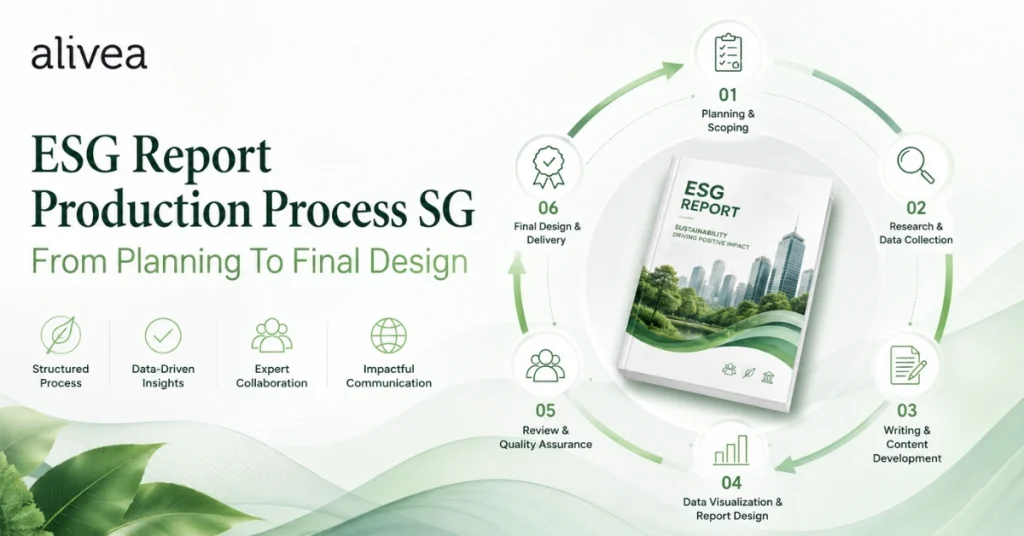
ESG Report Production Process SG Guides Reports From Planning To Final Design
ESG report production process sg helps businesses turn sustainability information into a structured, credible, and professionally designed corporate report. A strong ESG report does not begin with layout design. It begins with planning, reporting scope, stakeholder expectations, material topics, data ownership, content strategy, review workflow, and final publication goals. When these steps are managed properly, the final report becomes easier to read, more accurate, and more useful for investors, customers, employees, regulators, and business partners.
In Singapore, ESG reporting has become more structured and data-driven. SGX’s sustainability reporting guide states that sustainability reports should include material ESG factors, climate-related disclosures, policies, practices, performance, targets, a reporting framework, and a board statement. ACRA also states that all listed companies must report Scope 1 and Scope 2 greenhouse gas emissions for financial years starting on or after 1 January 2025, while STI constituents have Scope 3 reporting requirements from FY2026. These requirements make a clear esg reporting process sg essential for businesses that want to reduce confusion, improve compliance readiness, and communicate sustainability progress with confidence.
A professional sustainability report workflow sg should connect every stage of production. Data collection should support the reporting framework. Writing should explain strategy and performance clearly. Design should make the report readable without weakening disclosure quality. Review should confirm accuracy before publication. ESG report production sg is therefore not only a creative task. It is a coordinated business process that involves sustainability teams, finance, HR, operations, legal, communications, senior leadership, and design specialists.
The esg reporting lifecycle sg also continues after publication. Companies should review feedback, improve data quality, refine internal workflows, and prepare earlier for the next reporting cycle. For brands such as alivea, this process can transform ESG reporting from a deadline-driven task into a long-term corporate communication system. The final report should not only look polished. It should help stakeholders understand what the company measures, how it manages sustainability priorities, and where it is heading next.
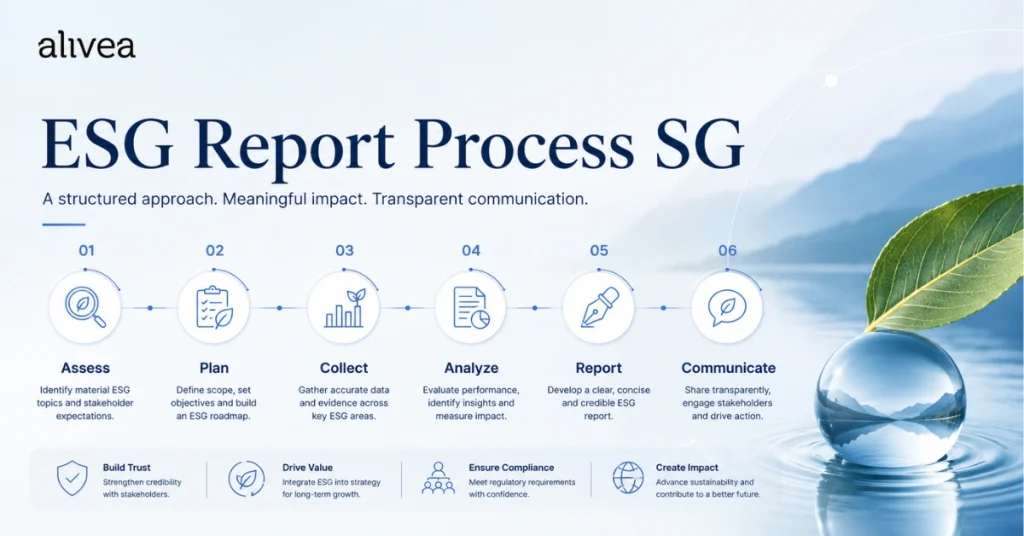
ESG Report Production Process SG Starts With Scope, Roles, And Timeline
ESG report production process SG should begin with a clear definition of scope. Before a company collects data or writes content, it needs to understand what the report will cover. Scope may include business entities, operating locations, reporting period, ESG topics, climate-related information, performance indicators, and publication format. Without this foundation, the report can become difficult to manage because different teams may collect information using different assumptions.
A strong esg reporting process sg also defines roles early. ESG reporting usually requires input from several departments. Operations may provide energy, emissions, waste, and water data. HR may provide employee statistics, training records, diversity information, and safety inputs. Procurement may contribute supplier-related information. Legal and compliance may review governance, ethics, risk, and policy disclosures. Finance may help check figures and support assurance readiness. Corporate communication teams may shape tone and stakeholder messaging.
The timeline is equally important. A sustainability report workflow sg should not begin only when the publication deadline is close. The process should include planning, data collection, content drafting, internal review, design development, proofing, leadership approval, and final publication. Each stage needs enough time because ESG reporting often involves data validation and multiple rounds of review. Rushed reporting can create errors, unclear explanations, or incomplete sections.
ESG report production sg also benefits from a realistic production calendar. The timeline should show when data owners must submit information, when writers will prepare draft sections, when designers will create layouts, and when reviewers must approve content. This creates accountability and reduces last-minute confusion.
The esg reporting lifecycle sg becomes smoother when the company documents lessons from each reporting year. If certain data was difficult to obtain, the next cycle can begin earlier. If review comments were repeated, the company can improve templates. If stakeholders asked for clearer charts or summaries, the next design approach can respond to that need. A structured start creates a stronger report and a better reporting habit.
ESG Reporting Process SG Turns Data Collection Into Reliable Disclosure
ESG reporting process sg depends on reliable data collection because sustainability claims must be supported by evidence. A company may have strong ESG activities, but if data is incomplete, inconsistent, or poorly explained, the report may lose credibility. This is why data collection should be treated as a strategic production stage, not a simple administrative task.
The first step is to identify which indicators are required for the report. These may include greenhouse gas emissions, energy use, water consumption, waste generation, training hours, employee turnover, safety performance, board composition, ethics training, supplier screening, community investment, or customer responsibility metrics. The exact indicators depend on the company’s material topics, industry, reporting framework, and stakeholder expectations.
ESG report production process sg should also define data sources. Each figure should have a clear owner and supporting reference. For example, electricity data may come from utility bills or facility systems. Employee data may come from HR records. Governance data may come from board documents, policy registers, or compliance records. Supplier information may come from procurement systems or questionnaires. When data sources are documented, internal review becomes easier.
A strong sustainability report workflow sg also clarifies reporting boundaries. If data covers only specific offices, subsidiaries, or regions, the report should explain this. If methodology changes from one year to another, the content should make that clear. Transparent disclosure helps stakeholders understand what the data represents and what it does not represent.
ESG report production sg should avoid treating data as separate from narrative. Numbers need explanation. If energy use increases, the report can explain whether this was due to business growth, expanded operations, weather conditions, or improved data coverage. If training hours rise, the report can describe the programs behind the increase. If safety performance improves, the report can connect results with workplace initiatives.
The esg reporting lifecycle sg improves when companies build data discipline throughout the year. Instead of collecting everything at the end, teams can maintain ongoing records, review data periodically, and prepare evidence earlier. This creates more reliable disclosure and a stronger foundation for future ESG reporting.
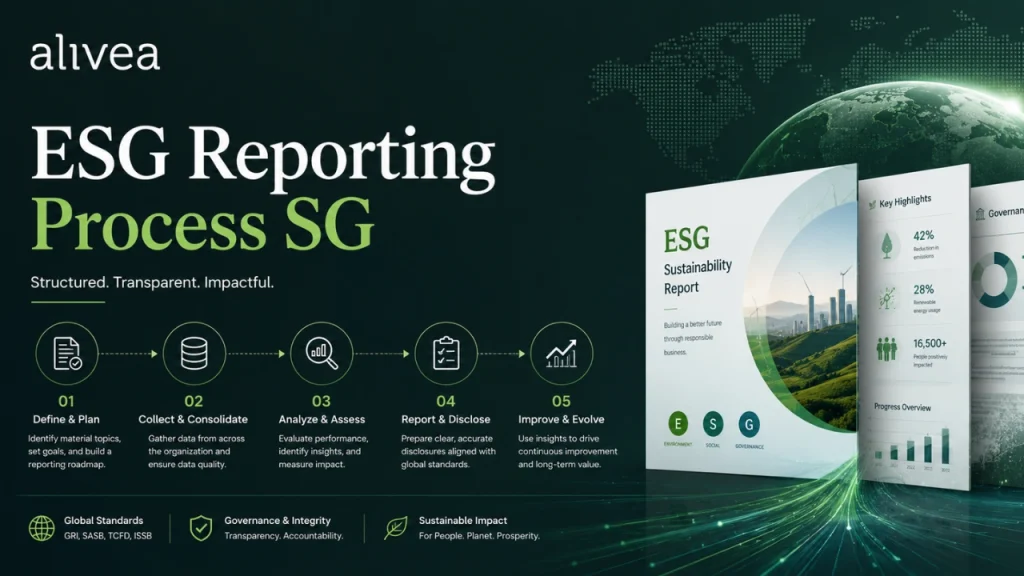
Sustainability Report Workflow SG Aligns Content, Review, And Approvals
Sustainability report workflow SG brings together content writing, internal review, and approval management. Once data and source information are available, the report must be shaped into a clear narrative. ESG reports should not feel like disconnected departmental updates. They should guide readers through strategy, material topics, governance, performance, and future priorities.
The content stage of esg report production process sg begins with an outline. The outline should show the main sections, topic flow, data requirements, case studies, leadership messages, and visual opportunities. A typical structure may include an introduction, sustainability approach, materiality overview, governance section, environmental performance, social performance, governance performance, data tables, targets, and future direction. The structure should reflect the company’s business model and reporting needs.
ESG reporting process sg requires careful writing because sustainability content must be both readable and precise. The writing should explain what the company is doing, why each topic matters, how performance is managed, and what progress has been achieved. It should avoid vague claims such as “we are committed to sustainability” unless those claims are supported by policies, actions, metrics, and responsibilities.
Review is a critical part of sustainability report workflow sg. Subject-matter owners should check technical accuracy. Finance may confirm figures. HR may validate employee information. Legal and compliance teams may review sensitive language. Senior leaders may approve strategic messages. Designers may check whether layouts support readability. This review process helps protect the company from unclear, unsupported, or inconsistent disclosure.
ESG report production sg should also include version control. Without proper version management, teams may lose track of revisions, comments, or approved content. A clear workflow defines who can edit, who can approve, and when sections are locked for design.
The esg reporting lifecycle sg becomes stronger when approvals are not treated as obstacles. They are part of quality control. A well-reviewed report shows stakeholders that the company takes ESG disclosure seriously. It also gives internal teams confidence that the final report is accurate, balanced, and aligned with corporate messaging.
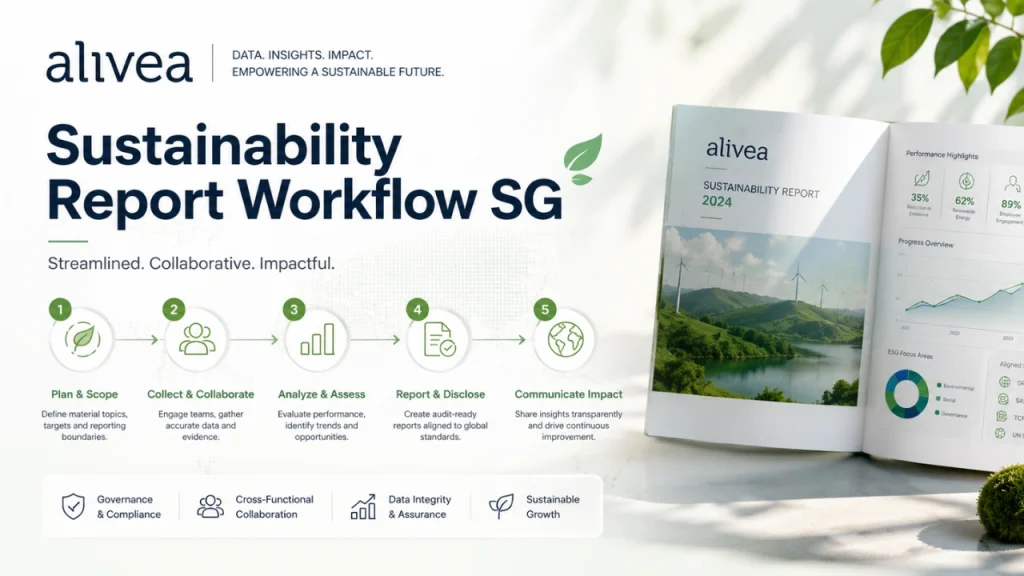
ESG Report Production SG Connects Writing, Design, And Digital Delivery
ESG report production SG connects written content with professional design and publication-ready delivery. After the report structure and draft content are prepared, design helps transform the information into a readable corporate document. However, ESG design should not be treated as decoration. It should support clarity, hierarchy, accessibility, and stakeholder understanding.
A strong esg report production process sg uses design to guide readers through complex information. Section dividers can help separate environmental, social, and governance content. Dashboards can summarize key metrics. Charts can show performance trends. Tables can present detailed data. Icons can help readers identify recurring themes. Infographics can explain governance structures, value chains, reporting workflows, or climate action plans.
The esg reporting process sg should ensure that design does not distort meaning. Charts must use clear labels, units, and time periods. Scales should not exaggerate progress. Footnotes should clarify methodology instead of hiding important information. Visual elements should make the report easier to understand, not more confusing.
A sustainability report workflow sg should also consider digital delivery early. Many stakeholders will read the report as a PDF, while others may view ESG highlights on a website or use selected visuals in presentations. Some companies may create web-based ESG reports, executive summaries, interactive dashboards, or social media snippets. Digital planning helps ensure that content and design can be reused across channels.
ESG report production sg should also focus on accessibility. Text should be readable. Color contrast should be appropriate. Charts should not depend only on decorative color differences. Page layouts should work well on common screen sizes. If the report is published online, file size and navigation should also be considered.
Google’s Search guidance emphasizes helpful, reliable, people-first content created for users rather than content made mainly for search rankings. Applied to ESG report production, this means digital ESG content should answer real stakeholder questions, explain performance clearly, and make important information easy to find. Design and digital delivery should work together to support usefulness, not only visual appeal.
ESG Reporting Lifecycle SG Builds Annual Improvement Beyond Publication
ESG reporting lifecycle SG does not end when the report is published. Publication is an important milestone, but the most mature companies treat ESG reporting as a continuous improvement cycle. After the report is released, teams should review what worked, what was difficult, and what should be improved before the next reporting period begins.
A complete esg report production process sg includes post-publication evaluation. Companies can review stakeholder questions, internal feedback, board comments, investor reactions, customer requests, and data challenges. If readers found certain charts confusing, the next report can improve visual clarity. If departments struggled to provide data, the next cycle can define responsibilities earlier. If the report lacked certain metrics, teams can prepare better systems.
ESG reporting process sg should also support year-round data readiness. Many reporting challenges happen because information is collected too late. A lifecycle approach encourages teams to track key metrics throughout the year, not only before publication. This is especially important for emissions, workforce data, safety performance, supplier information, and governance records.
Sustainability report workflow sg can also improve through reusable templates. Companies can create standard layouts for topic pages, data tables, case studies, leadership messages, charts, and dashboards. These templates help maintain consistency while reducing production pressure in future cycles.
ESG report production sg also benefits from stronger internal education. Data owners should understand why their information matters and how it appears in the report. Reviewers should understand the difference between marketing language and disclosure language. Leaders should understand how ESG reporting supports stakeholder trust, compliance readiness, and corporate reputation.
The esg reporting lifecycle sg becomes more valuable when companies treat each report as part of a multi-year journey. ESG expectations continue to evolve, and stakeholder questions become more detailed over time. A company that improves its reporting process annually can communicate with more confidence, respond faster to disclosure needs, and build stronger long-term credibility.
For brands such as alivea, this lifecycle mindset helps ESG reporting become a strategic asset. It supports clearer communication, better internal coordination, and stronger sustainability storytelling year after year. Click to read best esg report sg solutions for corporate reporting and design.
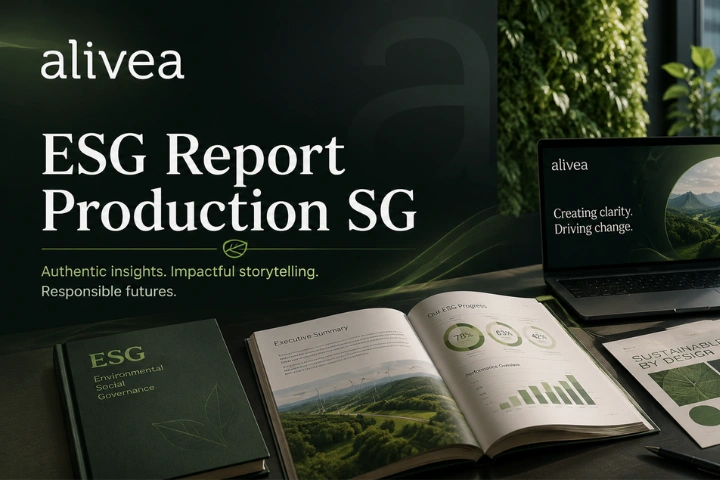
What Is ESG Report Production Process SG For Corporate Reporting Teams Today?
ESG report production process SG is the step-by-step method used to create a professional sustainability report from planning to final publication. It covers scope definition, material topic review, data collection, content writing, internal review, design development, approval, and digital delivery.
For corporate reporting teams, the process helps organize complex sustainability information into a clear document. ESG reporting process sg ensures that environmental, social, and governance content is supported by data, policies, actions, and measurable progress. Sustainability report workflow sg also helps different departments understand their roles.
ESG report production sg is important because the final report may be read by investors, customers, regulators, employees, partners, and board members. A structured esg reporting lifecycle sg helps companies reduce errors, improve consistency, and build stronger stakeholder trust. Instead of rushing the report at the end, teams can manage the process with better planning and control.
Who Should Manage ESG Reporting Process SG Across Business Functions Today?
ESG reporting process SG should be managed by a coordinated team rather than one department alone. Sustainability teams may lead the project, but they need support from finance, HR, operations, procurement, legal, compliance, communications, senior leadership, and design specialists.
In a complete esg report production process sg, each function owns specific information. Operations may provide energy, emissions, water, and waste data. HR may contribute employee, safety, training, and diversity information. Finance may help validate figures. Legal and compliance may review governance and risk-sensitive language. Communications may refine the report voice.
Sustainability report workflow sg becomes stronger when responsibilities are defined early. ESG report production sg can become difficult when teams do not know what they need to provide or when approval is required. A shared esg reporting lifecycle sg helps the business work together and produce a more reliable report.
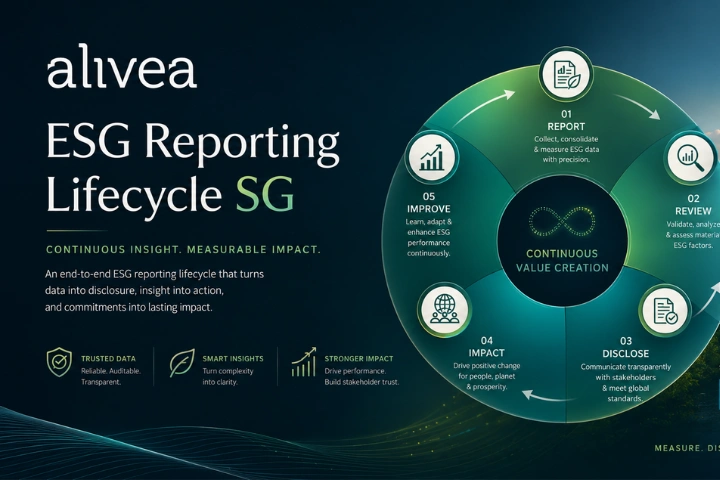
Where Does Sustainability Report Workflow SG Add Value Across Companies?
Sustainability report workflow SG adds value across every area involved in ESG communication. It improves internal coordination, data readiness, content quality, design consistency, and stakeholder confidence. The workflow is useful for annual sustainability reports, ESG reports, annual reports, investor presentations, corporate websites, tender documents, and board materials.
A clear esg report production process sg helps companies avoid scattered information. ESG reporting process sg connects data owners with writers, reviewers, designers, and leadership teams. This creates a more professional reporting experience.
ESG report production sg also supports brand credibility because the same ESG messages can be used consistently across different channels. When the annual report, website, and stakeholder summaries use aligned information, the company appears more organized. A strong esg reporting lifecycle sg helps businesses maintain this consistency every year.
When Should ESG Report Production SG Begin Before Final Publication Today?
ESG report production SG should begin months before final publication, especially when the company needs multiple departments to provide information. Early planning gives teams enough time to define scope, confirm material topics, collect data, write content, review disclosures, design layouts, and secure leadership approval.
The esg report production process sg works best when data collection begins before the report deadline becomes urgent. ESG reporting process sg may require evidence from operations, HR, finance, procurement, legal, and sustainability teams. If these inputs are gathered too late, errors and missing explanations become more likely.
Sustainability report workflow sg should include a realistic timeline for each stage. The esg reporting lifecycle sg also benefits from year-round preparation. Companies that track ESG data continuously can produce reports with greater confidence, stronger accuracy, and less pressure near publication.
Why Does ESG Reporting Lifecycle SG Improve Trust And Compliance Readiness?
ESG reporting lifecycle SG improves trust because it turns ESG reporting into an ongoing discipline rather than a rushed annual task. Stakeholders want to see accurate data, balanced claims, clear governance, and consistent progress. A lifecycle approach helps companies build those qualities over time.
A structured esg report production process sg allows teams to review data, clarify responsibilities, and improve content before publication. ESG reporting process sg also supports compliance readiness by organizing evidence, methods, and approvals. This makes the report easier to check and defend.
Sustainability report workflow sg strengthens trust by reducing confusion and improving transparency. ESG report production sg helps companies communicate performance in a professional way. When the esg reporting lifecycle sg is managed well, stakeholders can see that the company treats ESG disclosure seriously and responsibly.
How Can Companies Improve ESG Report Production Process SG Efficiently?
Companies can improve ESG report production process SG by starting with clear planning, defined roles, and practical templates. The first step is to confirm report scope, material topics, data owners, reporting framework, and publication format. The second step is to create a production calendar that includes data collection, writing, review, design, approval, and publication.
ESG reporting process sg becomes more efficient when teams use consistent data request forms and content templates. Sustainability report workflow sg should also include version control so comments and approvals are not lost.
ESG report production sg can improve further when writing and design teams collaborate early. This ensures that complex data can be explained visually and clearly. A strong esg reporting lifecycle sg also includes post-publication review, allowing the company to improve each future report with better data, smoother workflows, and stronger stakeholder communication.
ESG Report Production Process SG Creates Stronger Reports From End To End
ESG report production process SG helps companies create sustainability reports that are organized, accurate, readable, and ready for stakeholder review. A strong ESG report is not produced by design alone. It requires clear planning, reliable data, thoughtful writing, careful review, professional design, and effective publication. Each stage supports the next, creating a report that reflects both corporate responsibility and reporting discipline.
The value of esg reporting process sg begins with structure. Companies need to define what the report will cover, who will provide information, how data will be checked, and how the final message should be presented. Without this structure, the report may become fragmented or difficult to approve. With a proper workflow, sustainability information becomes easier to manage.
Sustainability report workflow sg also improves internal collaboration. ESG reporting involves many teams, including sustainability, finance, HR, operations, procurement, legal, communications, leadership, and design. When these teams understand their responsibilities, the production process becomes smoother and the final report becomes more reliable.
ESG report production sg adds value by turning technical information into clear communication. Data should be supported by narrative. Narrative should be supported by evidence. Design should make both easier to understand. Digital delivery should make the report accessible to the right audiences. This complete process helps stakeholders engage with ESG information more confidently.
The esg reporting lifecycle sg continues after publication. Companies should review feedback, improve data systems, refine templates, and prepare earlier for the next reporting cycle. This annual improvement mindset helps ESG reporting become more efficient and more credible over time.
For companies such as alivea, a professional ESG production process can transform sustainability reporting into a strategic communication asset. The report can support compliance readiness, investor relations, customer trust, employee engagement, and corporate reputation. When ESG report production is managed from planning to final design with care, the final publication becomes more than a document. It becomes a clear expression of accountability, transparency, and sustainable business growth.
