
ESG Report Content Writing SG Builds Clear Corporate Sustainability Messages
ESG report content writing sg helps companies transform sustainability information into clear, credible, and stakeholder-focused communication. A strong ESG report is not only a collection of environmental, social, and governance data. It is a structured corporate message that explains what the company values, how it manages sustainability priorities, what progress has been achieved, and where future improvement is needed. This makes content quality essential for businesses that want their ESG report to support transparency, compliance readiness, and long-term trust.
In Singapore, sustainability reporting continues to become more structured. SGX states that sustainability reports should include material ESG factors, climate-related disclosures, policies, practices, performance, targets, reporting framework, and a board statement. ACRA also states that listed companies must report Scope 1 and Scope 2 greenhouse gas emissions from financial years starting on or after 1 January 2025, while Scope 3 requirements apply to STI constituents from FY2026. These developments make esg content writing sg more important because businesses need words that are accurate, structured, and aligned with stakeholder expectations.
Professional sustainability report content sg should balance corporate messaging with evidence. It should not sound like generic sustainability promotion. Instead, it should explain material topics, governance responsibilities, management approaches, measurable results, and future commitments in a way that different audiences can understand. Investors may want risk clarity and performance data. Customers may look for ethical business practices. Employees may care about workplace culture, safety, and development. Business partners may review ESG content to evaluate supply chain reliability and corporate maturity.
A strong esg narrative sg gives the report a meaningful flow. It connects corporate purpose with sustainability action, helping readers understand how ESG priorities support business resilience. ESG disclosure writing sg then strengthens the report by ensuring that statements are specific, balanced, and supported by information. For brands such as alivea, this approach turns ESG reporting into a professional communication asset that improves credibility, strengthens corporate messaging, and helps stakeholders engage with sustainability performance more confidently.
ESG Report Content Writing SG Creates Structured Reporting From Raw Data
ESG report content writing SG begins with structure because raw sustainability data rarely communicates value on its own. A company may have emissions figures, energy records, training hours, safety statistics, diversity data, supplier policies, governance procedures, and community initiatives, but these details need to be arranged into a logical story. Without structure, the report can feel like disconnected information. With strong esg content writing sg, the same information becomes a clear sustainability disclosure that stakeholders can follow.
The first step is understanding the company’s material ESG topics. These are the environmental, social, and governance issues that matter most to the business and its stakeholders. For one company, material topics may include climate risk, energy efficiency, workplace safety, and supply chain responsibility. For another, they may include data privacy, employee development, board oversight, ethics, and customer trust. Sustainability report content sg should explain why these topics matter and how they relate to business strategy.
The second step is building a content architecture. A good ESG report usually needs an executive overview, sustainability strategy, materiality explanation, governance section, environmental section, social section, governance performance section, targets, data tables, and future direction. The exact structure depends on the company’s size, industry, maturity, and reporting obligations. However, every section should have a clear purpose.
ESG narrative sg makes this structure more readable. It helps readers understand the company’s sustainability journey instead of forcing them to interpret scattered data. For example, a section on emissions should not simply present a number. It should explain the operational context, management approach, performance movement, and next steps. A section on employee training should connect learning initiatives with workforce capability and long-term business strength.
ESG disclosure writing sg also requires discipline. Statements should be precise and supported. Instead of saying a company is “deeply committed to sustainability,” the report should explain what policies, programs, metrics, responsibilities, and targets demonstrate that commitment. This creates stronger corporate messaging because the content feels practical, measurable, and trustworthy.
When raw data is shaped through thoughtful writing, the report becomes easier to review, easier to design, and more useful for stakeholders. That is the real value of professional ESG content development.

ESG Content Writing SG Turns Sustainability Topics Into Useful Business Insight
ESG content writing sg is most effective when it turns sustainability topics into useful business insight. Many ESG reports fail because they describe activities without explaining why those activities matter. Stakeholders need more than a list of initiatives. They need to understand how sustainability actions connect to risk management, operational performance, customer confidence, employee engagement, governance quality, and long-term value creation.
A strong ESG content strategy starts by identifying the reader’s intent. Investors may review the report to assess resilience, climate exposure, governance oversight, and data consistency. Customers may want to understand responsible sourcing, product integrity, environmental practices, or ethical conduct. Employees may look for signals of workplace culture, inclusion, safety, and career development. Regulators and business partners may evaluate whether disclosures are organized, balanced, and reliable.
This means esg report content writing sg should avoid one-size-fits-all language. The report should speak with a professional corporate tone, but it should also be readable. Technical terms should be explained when needed. Long paragraphs should be broken into focused sections. Claims should be linked to evidence. Performance should be described with context, not hidden behind vague words.
Sustainability report content sg should also make business relevance visible. If a company improves energy efficiency, the content can explain how that supports cost discipline, emissions management, and operational resilience. If a business strengthens employee training, the report can connect that effort to productivity, service quality, compliance culture, or leadership readiness. If governance practices improve, the report can show how they support accountability and stakeholder confidence.
ESG narrative sg helps organize these insights into a meaningful reading experience. It gives the report momentum from strategy to action, from action to performance, and from performance to future commitments. This flow makes the report feel complete rather than fragmented.
ESG disclosure writing sg protects the credibility of this messaging. It ensures that insights do not become exaggerated claims. Clear disclosure acknowledges progress while remaining honest about limitations, data boundaries, and improvement areas. Google’s official guidance also emphasizes helpful, reliable, people-first content that benefits readers instead of content created mainly to manipulate search rankings. The same principle applies to ESG writing: content should serve real stakeholder understanding.
Sustainability Report Content SG Aligns Strategy, Evidence, And Trust
Sustainability report content SG must align corporate strategy, ESG evidence, and stakeholder trust. A sustainability report should not feel separate from the company’s business direction. It should show how environmental, social, and governance priorities support resilience, responsibility, and future growth. When the content connects strategy and evidence clearly, stakeholders can see that sustainability is part of management thinking, not only public communication.
Strategic alignment begins with the company’s ESG position. The report should explain what sustainability means for the business, which topics are material, how leadership oversees ESG matters, and how performance is monitored. This gives readers a foundation before they review detailed sections. ESG report content writing sg should help the company avoid isolated statements by connecting each major topic to a larger corporate direction.
Evidence gives the content credibility. A report should include data, policies, initiatives, targets, and progress updates wherever relevant. Environmental content may discuss emissions, energy, waste, water, resource efficiency, or climate-related risks. Social content may cover employee well-being, safety, training, diversity, customer care, and community impact. Governance content may cover board oversight, ethics, compliance, risk management, anti-corruption policies, and responsible business conduct.
ESG content writing sg should make these details understandable without oversimplifying them. If a metric is reported, the content should clarify the scope, period, and meaning where necessary. If a target is included, the report should explain how progress is being managed. If a challenge exists, the content should not hide it. Balanced reporting often increases trust because stakeholders can see that the company is communicating honestly.
Sustainability report content sg should also match the company’s brand voice. A professional services company may need refined, precise language. An industrial business may need practical, operational wording. A technology company may need forward-looking language that still respects data accuracy. The writing should feel authentic to the organization.
ESG narrative sg supports trust by giving the report coherence. ESG disclosure writing sg strengthens trust by ensuring that claims are specific, reviewable, and aligned with available evidence. When strategy, evidence, and trust work together, the sustainability report becomes a serious corporate communication tool rather than a generic annual publication.
ESG Narrative SG Connects Corporate Purpose With Measurable Performance
ESG narrative SG gives sustainability reporting a human and strategic dimension. Data is essential, but data alone does not always explain meaning. A company may report lower emissions, higher training hours, improved safety performance, or stronger governance processes, yet readers still need to understand what these changes represent. A strong ESG narrative connects the numbers with purpose, decisions, actions, and outcomes.
The best esg report content writing sg begins by defining the central message. What is the company trying to communicate about its sustainability journey? Is it improving climate readiness? Building a safer workplace? Strengthening responsible growth? Supporting communities? Enhancing governance maturity? Once this message is clear, the report can be written with stronger direction.
ESG content writing sg should then connect purpose with proof. If the company says sustainability is embedded in its strategy, the report should show how. This may include governance structures, management responsibilities, risk assessments, operational initiatives, investment decisions, measurable indicators, and future plans. Purpose without proof sounds promotional. Proof without purpose can feel mechanical. The narrative brings both together.
Sustainability report content sg should also consider pacing. A report should not overwhelm readers with dense technical information from the beginning. It can open with leadership perspective and ESG highlights, then move into material topics, management approaches, performance data, and detailed disclosures. This gives readers a logical path through the company’s sustainability story.
ESG narrative sg should remain balanced. A credible report does not present sustainability as a flawless journey. It can acknowledge areas still being improved, data that is being strengthened, or targets that require further action. This honesty helps the company sound mature and responsible.
ESG disclosure writing sg supports the narrative by making sure each claim is grounded. Clear writing avoids empty adjectives and replaces them with facts, context, and explanation. For example, instead of saying “we are leading the industry in ESG,” the report can explain specific actions, outcomes, and reporting improvements. This creates a more trustworthy message.
For companies such as alivea, a strong ESG narrative helps the report stand out because it combines corporate purpose, measurable performance, and stakeholder relevance in one cohesive voice.
ESG Disclosure Writing SG Supports Accuracy, Compliance, And Clarity
ESG disclosure writing SG is the discipline that ensures sustainability content remains accurate, clear, and suitable for corporate reporting. It is different from general marketing copy because ESG disclosures may be reviewed by investors, regulators, auditors, boards, customers, employees, and business partners. The language must therefore be carefully written, evidence-based, and easy to verify.
A strong disclosure writing process begins with understanding what the company can confidently state. If data is available, the content should explain it clearly. If a policy exists, the content should describe its purpose and coverage. If an initiative was implemented, the report should explain what happened and why it matters. If a target has been set, the report should indicate how progress will be monitored. ESG report content writing sg should avoid broad claims that cannot be supported.
ESG content writing sg must also use the right level of detail. Too little detail can make the report feel vague. Too much detail can make it difficult to read. The goal is to provide enough context for stakeholders to understand the disclosure without turning every section into a technical manual. This requires editorial judgment.
Sustainability report content sg should also maintain consistency. Terms, metrics, and topic names should be used consistently throughout the report. If the company refers to “employee training hours” in one section, it should not use several different names for the same metric elsewhere. Consistency makes the report easier to follow and reduces misunderstanding.
ESG narrative sg and disclosure writing must work together. Narrative creates flow, while disclosure ensures accuracy. A report that is only narrative may feel too soft. A report that is only disclosure may feel difficult to read. When both are combined, the content becomes engaging and credible.
ESG disclosure writing sg also supports compliance readiness. Singapore’s reporting direction requires companies to treat sustainability information with increasing care, especially around climate-related disclosures and emissions reporting. Clear writing helps companies explain boundaries, methods, governance, progress, and limitations more responsibly. This protects the report from overstatement and strengthens stakeholder confidence. Unlock more insights best esg report sg solutions for corporate reporting and design.
What Makes ESG Report Content Writing SG Important For Corporate Reports Today?
ESG report content writing SG is important because sustainability reports need to communicate complex information in a clear and trustworthy way. ESG reporting often includes environmental metrics, workforce programs, governance policies, risk management, climate information, targets, and stakeholder engagement. Without strong writing, these details can feel scattered or difficult to understand.
Professional esg content writing sg gives the report structure. It helps readers understand what the company is reporting, why each topic matters, and how performance is managed. Sustainability report content sg also improves credibility by connecting claims with evidence.
A strong esg narrative sg makes the report more engaging, while esg disclosure writing sg keeps the content accurate and balanced. This combination helps companies create reports that support compliance, transparency, and stakeholder confidence. For businesses such as alivea, quality ESG writing can turn sustainability reporting into stronger corporate messaging and long-term brand trust.
Who Needs ESG Content Writing SG For Stronger Sustainability Messaging?
ESG content writing SG is useful for listed companies, private businesses, SMEs, regional brands, sustainability teams, investor relations teams, and corporate communication departments. Any organization that needs to publish ESG information can benefit from professional writing support.
Companies often have useful sustainability data but struggle to explain it clearly. ESG report content writing sg helps turn internal information into a polished report. Sustainability report content sg is especially valuable when multiple departments contribute data, because the final report must sound consistent.
ESG narrative sg helps leadership communicate purpose and direction, while esg disclosure writing sg ensures the content remains specific and evidence-based. This support is also useful for companies preparing annual reports, ESG reports, website sustainability pages, investor materials, tender documents, or stakeholder summaries. Strong writing helps every audience understand the company’s sustainability progress more confidently.
Where Should Sustainability Report Content SG Be Used Across Channels Today?
Sustainability report content SG should be used across every channel where ESG performance is communicated. The main channel is usually the annual sustainability report or ESG report, but the same content logic can support annual reports, corporate websites, investor presentations, procurement documents, tender submissions, employee communications, and board materials.
ESG report content writing sg helps maintain consistency across these touchpoints. If the ESG report says one thing and the website uses different wording, stakeholders may become confused. ESG content writing sg creates a shared language for sustainability priorities, policies, progress, and targets.
ESG narrative sg can be adapted into executive summaries, report highlights, and digital content. ESG disclosure writing sg ensures that claims remain accurate even when the content is shortened for other formats. This creates a more professional and reliable ESG communication system across the business.
When Should ESG Narrative SG Planning Start For Stronger Annual Reports?
ESG narrative SG planning should start early in the reporting cycle, before the full report is written. Early planning helps the company define its key message, reporting structure, material topics, data needs, and stakeholder priorities. If the narrative is developed too late, the report may feel like a collection of sections instead of a coherent corporate story.
ESG report content writing sg works best when writers, sustainability teams, designers, data owners, and leadership stakeholders collaborate from the beginning. ESG content writing sg can then shape the report around both disclosure needs and reader experience.
Sustainability report content sg also benefits from early evidence collection. Teams need time to confirm metrics, review policies, and explain initiatives. ESG disclosure writing sg becomes stronger when the company has enough time to check claims, refine language, and ensure the final report is accurate, readable, and stakeholder-ready.
Why Does ESG Disclosure Writing SG Build Stronger Stakeholder Trust?
ESG disclosure writing SG builds trust because stakeholders need reliable information, not only positive statements. Investors, customers, employees, regulators, and partners may use ESG reports to evaluate responsibility, risk, governance maturity, and sustainability progress. If the writing is vague or exaggerated, trust can weaken.
Professional esg report content writing sg makes the report more credible by explaining policies, actions, metrics, and targets clearly. ESG content writing sg also helps balance achievements with improvement areas. This makes the report feel more honest and useful.
Sustainability report content sg supports decision-making when it is specific and structured. ESG narrative sg helps readers understand the company’s sustainability journey, while esg disclosure writing sg ensures that every claim is supported by context. The result is stronger communication that helps stakeholders believe the company’s ESG message.
How Can Companies Improve ESG Report Content Writing SG Effectively?
Companies can improve ESG report content writing SG by starting with a clear structure and reliable evidence. The first step is to identify material ESG topics. The second step is to collect relevant policies, actions, metrics, and targets. The third step is to shape the content into a logical report flow.
ESG content writing sg should focus on clarity, not complexity. Each section should explain why the topic matters, how the company manages it, what progress was achieved, and what comes next. Sustainability report content sg should avoid repetitive claims and generic phrases.
ESG narrative sg can make the report more meaningful by connecting sustainability with business purpose. ESG disclosure writing sg should then review every statement for accuracy, balance, and evidence. Companies that combine structure, story, and disclosure discipline can produce ESG reports that are more professional, readable, and trusted.
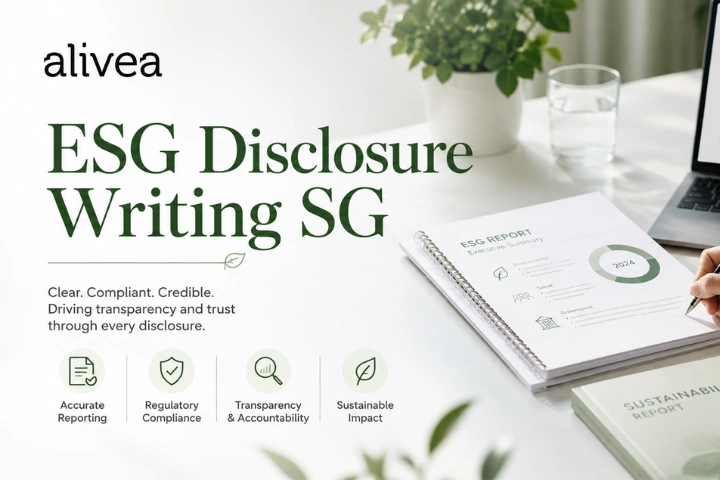
ESG Report Content Writing SG Creates Stronger Corporate Messaging Value
ESG report content writing SG helps companies communicate sustainability performance with clarity, credibility, and strategic purpose. A strong ESG report should not only provide information. It should help stakeholders understand how the company manages environmental, social, and governance responsibilities, how progress is measured, and how sustainability supports long-term business resilience.
The value of esg content writing sg begins with structure. ESG information often comes from many departments, including operations, HR, finance, procurement, legal, communications, and leadership teams. Professional writing turns these inputs into a coherent report that is easier to read and review. It helps the company organize material topics, explain management approaches, present performance, and communicate future direction.
Sustainability report content sg also supports stakeholder trust. Readers want evidence behind sustainability claims. They want to know whether the company has real policies, practical initiatives, measurable indicators, and responsible governance. Strong writing makes these elements visible without making the report too technical or difficult to follow.
ESG narrative sg gives the report meaning. It connects purpose with performance and shows how ESG priorities relate to the company’s broader business direction. This helps stakeholders understand that sustainability is not an isolated communication theme, but part of corporate responsibility and value creation.
ESG disclosure writing sg strengthens accuracy. It helps companies avoid vague language, unsupported claims, and inconsistent terminology. It also supports compliance readiness by making disclosures clearer, more balanced, and easier to review. In a market where ESG expectations continue to rise, this clarity is increasingly important.
For companies such as alivea, effective ESG content writing can turn sustainability reporting into a stronger corporate messaging asset. The report can support investor relations, customer confidence, employee engagement, procurement discussions, and brand reputation. When ESG content is written with strategy, evidence, and reader value in mind, the final report becomes more than a publication. It becomes a trusted communication platform for responsible growth, stakeholder alignment, and long-term corporate credibility.
