
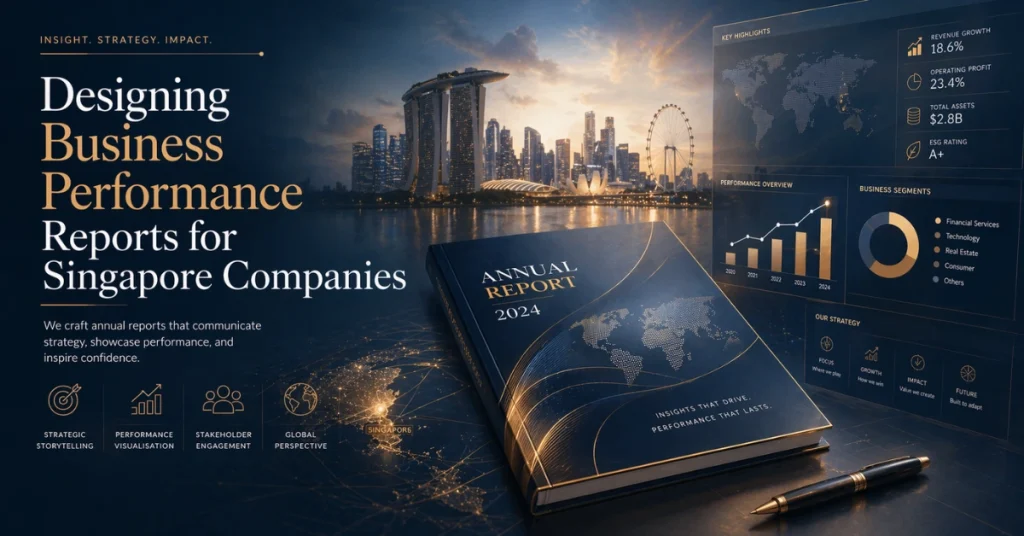
Business Performance Annual Report Design for Singapore Brands That Need Clarity and Trust
For Singapore companies, a report is no longer just a compliance document or a yearly recap placed on an investor relations page. It has become a strategic communication asset that shapes how stakeholders view performance, leadership maturity, and long-term direction. A strong business performance annual report design helps a company do more than present numbers. It turns financial and operational results into a structured narrative that explains where the business has been, what it has achieved, and how it is preparing for the future. In a market like Singapore, where businesses often operate in highly competitive and credibility-driven sectors, that clarity matters.
A well-planned report must balance insight, readability, and brand consistency. Investors want evidence. Boards want coherence. Partners want confidence. Employees want alignment. This is why high impact annual report design for business is not simply about making pages attractive. It is about organizing data, strategy, and messaging into a format that supports understanding at every level. The layout, hierarchy, charts, icons, typography, and pacing all contribute to how well the report performs.
At the same time, annual report visual design for business should never overpower substance. Good design gives structure to complexity. It highlights material information, supports faster reading, and helps audiences connect key metrics with strategic outcomes. When paired with thoughtful content, it becomes a bridge between corporate performance and stakeholder trust. This is where corporate storytelling report design for business becomes essential. A report should guide readers through performance drivers, market context, operational priorities, and future goals with logic and narrative flow.
Brand also plays a major role. Strong annual report branding for business ensures that each section reflects the company’s tone, identity, and positioning. Instead of feeling generic, the report should feel unmistakably connected to the organization behind it. For teams seeking a more refined and strategic approach, agencies like alivea often position report design as a combination of content planning, visual communication, and brand-led execution. When these elements work together, the result is not just a report that informs, but a report that reinforces trust, authority, and corporate identity.

Business Performance Annual Report Design That Turns Data Into Strategic Business Value
The purpose of business performance annual report design is to transform complex business results into a document that is useful, readable, and strategically persuasive. Many companies already have the necessary inputs: audited numbers, management commentary, operational highlights, sustainability updates, and governance disclosures. The challenge is not the lack of content. The challenge is how to structure all of that material so the report feels coherent rather than fragmented. For Singapore companies, where professionalism and accountability are expected, this structure directly affects stakeholder perception.
A high-performing report begins with editorial logic. Readers should be able to move naturally from overview to detail, from macro business context to specific results, and from current performance to future direction. This is where high impact annual report design for business creates value. Instead of presenting isolated pages of financial and corporate information, the report becomes a guided journey. The chairperson’s statement sets tone. The business review establishes context. Operational and financial sections add proof. Governance content reinforces trust. Every element should support the next.
Design choices must then reinforce clarity. Strong page architecture, balanced whitespace, consistent captioning, and intuitive navigation help make the document easier to absorb. Effective annual report visual design for business also ensures that charts are not decorative objects but tools for understanding. Readers should instantly see trends, comparisons, and performance relationships without struggling through dense presentation. Clear labeling, restrained color use, and purposeful emphasis are all important.
Beyond data presentation, companies benefit from corporate storytelling report design for business because numbers alone rarely explain progress. Revenue changes, investment decisions, market expansion, technology adoption, or operational efficiency all need narrative framing. Stakeholders want to know what influenced results, how management responded, and what those results mean for future resilience. A strong story does not replace evidence; it gives evidence meaning.
Finally, annual report branding for business ensures consistency between the report and the wider corporate identity. This includes tone of voice, visual style, and thematic direction. A report should feel like an extension of the company’s website, investor communications, and leadership culture. When done properly, business performance annual report design becomes more than a reporting exercise. It becomes an asset that communicates competence, direction, and long-term value creation.

High Impact Annual Report Design For Business That Strengthens Stakeholder Confidence
High impact annual report design for business is built on one principle: the report must leave a clear and lasting impression without sacrificing accuracy or professionalism. A high-impact report does not rely on excessive decoration or visual overload. Instead, it uses strategic design discipline to make important information more memorable, easier to interpret, and more aligned with business priorities. In Singapore’s corporate environment, where stakeholders often review multiple reports across industries, impact comes from precision, not noise.
To create that precision, companies should begin by identifying what deserves emphasis. Not every data point carries equal weight. Not every message should occupy the same visual space. A report with impact highlights what matters most, such as strategic milestones, financial performance trends, transformation initiatives, market expansion, innovation outcomes, or governance strength. This is where business performance annual report design and editorial planning work together. Once the core themes are defined, the design system can support them through layout hierarchy, visual grouping, and section pacing.
The best annual report visual design for business also recognizes how different audiences read. Some readers scan executive summaries. Some focus on financial tables. Some look directly for ESG disclosures, governance frameworks, or operational highlights. A high-impact structure accommodates both quick scanning and deeper reading. Strong headings, navigation tabs, summary blocks, infographic elements, and cross-referenced content improve usability without diluting detail.
A report also becomes more persuasive when it includes corporate storytelling report design for business. Stakeholders do not just ask whether a company performed well. They ask how performance was achieved, what obstacles were addressed, and how leadership is positioning the business for the future. Storytelling helps management explain results in context. It connects strategic ambition with execution and shows whether growth is sustainable or merely temporary.
Equally important is annual report branding for business. Impact increases when readers immediately recognize the company’s identity through tone, visual consistency, and brand discipline. From color systems to image treatment to messaging style, the report should feel unmistakably linked to the organization. That unity builds familiarity and trust. When all these elements are aligned, high impact annual report design for business becomes a valuable tool for reputation building, stakeholder engagement, and corporate differentiation.

Annual Report Visual Design For Business That Makes Complex Results Easier to Read
Strong annual report visual design for business is not about making a report look modern for the sake of appearance. It is about making information easier to understand, compare, and remember. Business performance reports often contain dense material, including financial statements, operational updates, governance frameworks, strategic commentary, and forward-looking priorities. Without a thoughtful visual system, even high-quality content can become tiring to read. For Singapore companies aiming to present themselves clearly and credibly, design plays a direct role in comprehension.
The first responsibility of visual design is hierarchy. Readers should be able to distinguish primary messages from supporting details within seconds. This can be achieved through consistent typography, heading structure, color contrast, grid alignment, and spacing. A good business performance annual report design guides the eye across the page so readers know where to start, where to pause, and what to retain. When the structure is intuitive, the report feels lighter even when the content is substantial.
Data visualization is another critical factor. Charts, timelines, performance dashboards, and comparative graphics should clarify information rather than complicate it. The best high impact annual report design for business uses visuals to shorten the distance between raw figures and strategic understanding. A revenue chart, for example, should not merely show movement. It should help the reader recognize momentum, volatility, or performance against targets. Likewise, operational indicators should be presented in a way that supports fast interpretation and reinforces the narrative.
This is where corporate storytelling report design for business becomes closely linked with visual planning. Good storytelling is not only written in paragraphs. It is also embedded in the arrangement of pages, sequencing of visuals, and rhythm of information. A well-placed case study, milestone timeline, or thematic visual spread can help explain how a company created value across the year. It gives texture to the numbers.
Finally, annual report branding for business ensures that the visual system reflects the company’s identity rather than an off-the-shelf template. Color language, image style, icon treatment, and tone should align with the brand’s market position. For some companies, that means clean corporate restraint. For others, it may mean a more innovative and dynamic aesthetic. In either case, the goal is the same: to create annual report visual design for business that supports clarity, authority, and trust.

Corporate Storytelling Report Design For Business That Connects Numbers With Narrative
Corporate storytelling report design for business helps companies explain not just what happened during the year, but why it happened and why it matters. Financial results remain essential, yet figures on their own rarely communicate leadership quality, operational resilience, market adaptability, or strategic intent. Storytelling fills that gap by turning disconnected updates into a meaningful sequence. For Singapore companies communicating with investors, regulators, partners, employees, and clients, this narrative layer is increasingly important.
A strong corporate story begins with a central theme. That theme might be transformation, resilience, expansion, innovation, sustainability, customer value, or disciplined growth. Once identified, it should shape the tone and order of the report. This is where business performance annual report design moves beyond document assembly. It becomes narrative planning. Every major section should support the central message, whether through management commentary, performance data, case examples, or visual emphasis.
Narrative does not mean exaggeration. In fact, the most effective high impact annual report design for business is grounded, evidence-based, and disciplined. Good storytelling acknowledges both progress and challenge. It explains shifts in performance honestly, outlines management responses clearly, and shows how decisions align with long-term direction. This transparency creates stronger credibility than overly polished claims.
The storytelling approach also shapes annual report visual design for business. A well-told story uses more than paragraphs. It may include chapter opener spreads, timeline devices, pull quotes, milestone summaries, market snapshots, or operational highlights that help readers connect facts to outcomes. These design elements should not distract from the report. They should support reading flow and deepen understanding.
At the brand level, annual report branding for business adds consistency to the story being told. A company focused on premium positioning, technological leadership, or trusted governance should reflect that identity in both language and design. The report then becomes a controlled expression of who the business is and how it wants to be understood. When executed carefully, corporate storytelling report design for business turns reporting into strategic communication. It helps readers see the logic behind performance, the values behind decisions, and the direction behind future ambitions.

Annual Report Branding For Business That Builds Recognition Across Every Report Page
Annual report branding for business ensures that a company’s report does not feel generic, disconnected, or visually interchangeable with every other corporate publication. A strong annual report should be immediately recognizable as belonging to a specific organization. That recognition comes from more than logo placement. It comes from a consistent brand language expressed across typography, color systems, image treatment, tone of voice, layout rhythm, and message framing. For Singapore companies operating in credibility-sensitive markets, brand consistency within reporting can strengthen reputation significantly.
When a company invests in business performance annual report design, branding should be treated as a structural layer, not a cosmetic afterthought. The report must still serve governance, financial, and stakeholder communication needs, but it should do so through a presentation style that reflects the company’s identity. A business known for precision and professionalism may require restrained visual control, formal language, and disciplined page composition. A company positioned as innovative or future-focused may use more dynamic pacing and conceptual visual elements while remaining credible.
This consistency also improves high impact annual report design for business. Readers absorb information more confidently when the report feels cohesive. Repetition of key visual cues, standardized icon sets, and aligned messaging create a sense of reliability. That reliability matters because the report is often read as evidence of internal discipline. If the brand presentation is fragmented, the organization itself can appear fragmented.
Branding also supports annual report visual design for business by giving the design team a clear framework. Instead of making arbitrary aesthetic choices, they can work from established brand rules and adapt them for reporting purposes. This keeps the report distinctive while preserving clarity. When combined with corporate storytelling report design for business, branding helps create a unified experience where visual identity and narrative direction reinforce each other.
For many companies, report branding is also a long-term asset. Year after year, it builds familiarity with investors, employees, and external stakeholders. Over time, that consistency can improve recognition and deepen trust. A well-branded annual report does more than look polished. It communicates stability, maturity, and strategic intent. That is why annual report branding for business should be considered a central part of premium report development, not a finishing touch. Related posts high impact annual report design for singapore companies.
What Makes Business Performance Report Design Valuable for Singapore Companies
Business performance annual report design is valuable because it helps Singapore companies present results in a form that is easier to understand, more persuasive to stakeholders, and more aligned with corporate credibility. A report is not simply a place to store data. It is a communication tool that interprets the year’s performance through structure, logic, and clarity. When companies invest in high impact annual report design for business, they improve the way financial, operational, and strategic information is received.
The value also lies in usability. Strong annual report visual design for business makes it easier for readers to scan key insights, compare figures, and absorb messages without being overwhelmed by dense text or poorly organized tables. At the same time, corporate storytelling report design for business helps connect results with the larger business narrative, showing what influenced performance and where management is heading next.
Brand consistency matters too. Through annual report branding for business, companies can reinforce their identity, professionalism, and market positioning on every page. For stakeholders, that creates stronger confidence in the business itself. In practical terms, good report design supports transparency, strengthens trust, and makes complex reporting far more effective.
Who Needs Strong Annual Report Design Across Leadership and Stakeholder Teams
The need for strong business performance annual report design extends far beyond design departments. Leadership teams need it to communicate strategic progress with precision. Investor relations professionals need it to present financial performance clearly. Corporate communications teams need it to align messaging with brand voice. Board members and governance teams benefit from high impact annual report design for business because it supports transparency and reduces ambiguity in how information is presented.
External audiences also rely on report quality. Investors, regulators, clients, business partners, and even potential employees often use annual reports to evaluate a company’s maturity and direction. That is why annual report visual design for business has a practical role in stakeholder understanding, not just aesthetics. Meanwhile, corporate storytelling report design for business helps management explain decisions, outcomes, and future priorities in a more coherent way.
Companies that care about perception, trust, and long-term positioning should also prioritize annual report branding for business. Whether the organization is publicly listed, privately held, family-owned, or growth-stage, a strong report can improve how internal and external stakeholders interpret performance and leadership capability.
Where Business Report Design Creates the Strongest Strategic Communication Value
The strongest value of business performance annual report design appears wherever companies need to build trust through clear communication. This includes investor relations environments, board reporting, corporate websites, stakeholder presentations, AGM materials, and downloadable annual report publications. In Singapore, where companies often compete for confidence as much as for market share, high impact annual report design for business becomes especially valuable in public-facing corporate communication.
It also creates strong value in industries where complexity is high. Financial services, property, healthcare, technology, manufacturing, logistics, and sustainability-driven sectors all benefit from better structured reporting. In these environments, annual report visual design for business helps turn complicated information into readable insights, while corporate storytelling report design for business explains how performance connects with strategic execution.
There is also strong value wherever brand reputation matters. Through annual report branding for business, companies can ensure that formal reporting still reflects their identity, professionalism, and market differentiation. The result is a document that performs well across multiple settings, from compliance needs to strategic reputation building.
When Companies Should Upgrade Their Annual Report Design and Content Strategy
Companies should upgrade their business performance annual report design when the existing report feels too dense, outdated, generic, or disconnected from the business’s actual brand and strategic progress. A report may still contain accurate information while failing to communicate it effectively. That is often the point when high impact annual report design for business becomes necessary. If readers struggle to find key insights or the document lacks narrative direction, an upgrade is overdue.
Another important moment is during periods of change. Businesses entering new markets, rebranding, launching transformation initiatives, strengthening ESG commitments, or repositioning for investors often need stronger annual report visual design for business and more intentional structure. These transitions create more communication complexity, which makes clarity even more valuable.
Companies should also refresh reporting when leadership wants better alignment between performance, messaging, and identity. This is where corporate storytelling report design for business and annual report branding for business become highly relevant. A stronger report helps explain not only the outcomes of the year, but the rationale, ambition, and direction behind them.
Why Premium Annual Report Design Improves Perception Beyond Compliance Reporting
Premium business performance annual report design improves perception because stakeholders often judge a company’s internal quality by the clarity of its external communication. A report that feels thoughtful, structured, and well executed suggests discipline, planning, and strategic maturity. This is one reason high impact annual report design for business can influence how investors, clients, and partners view an organization, even before deep analysis begins.
Perception improves further when annual report visual design for business supports clarity rather than decoration. Clean charts, readable layouts, consistent hierarchy, and well-paced sections make a report feel more trustworthy. Readers are more likely to engage with content that respects their time and helps them interpret results efficiently.
The same is true of narrative. Corporate storytelling report design for business gives context to numbers and helps explain performance with honesty and logic. Combined with annual report branding for business, it creates a more complete expression of corporate identity. Instead of appearing as a routine compliance document, the report becomes evidence of professionalism, transparency, and leadership confidence. That shift in perception can be highly valuable in competitive business environments.
How to Design a Business Performance Report With Clarity and Brand Strength
To design an effective business performance annual report design, companies should begin by defining the report’s core communication goals. The team must identify the key themes of the year, the most important performance drivers, and the primary audiences reading the report. From there, the structure can be built around a logical flow that supports both scanning and detailed review. This is the foundation of high impact annual report design for business.
The next step is content organization. Management commentary, business review sections, KPIs, financial statements, governance content, and future outlooks should connect naturally rather than appear as isolated chapters. Then comes annual report visual design for business, which should introduce clear hierarchy, readable typography, effective data visualization, and consistent page systems that improve comprehension.
After structure and visuals are in place, corporate storytelling report design for business helps shape the narrative thread. The report should explain what happened, why it happened, and what comes next. Finally, annual report branding for business ensures that every page reflects the company’s identity in a disciplined and credible way. When these elements are aligned, the report becomes clearer, more strategic, and more effective as a communication asset.
Building Business Performance Reports That Reflect Strategy, Clarity, and Brand Authority
Designing an effective report for Singapore companies requires more than assembling financial statements and corporate updates into a polished document. It requires a clear editorial framework, a disciplined visual system, a credible narrative, and a brand-led approach that turns formal reporting into meaningful stakeholder communication. That is why business performance annual report design should be treated as a strategic business function rather than a routine production task.
The strongest reports succeed because they make complexity easier to understand. Through high impact annual report design for business, companies can guide readers toward the most important insights without overwhelming them with clutter. Through annual report visual design for business, they can present metrics, operational updates, and strategic priorities with far greater readability. Through corporate storytelling report design for business, they can connect outcomes with context and show how management decisions shaped performance across the year.
Equally important, annual report branding for business ensures that the report feels consistent with the company’s larger identity. A business report should not feel detached from the brand it represents. It should reinforce the company’s values, tone, professionalism, and market position from beginning to end. This consistency helps build recognition and trust, especially among audiences who evaluate not just performance, but leadership quality and communication discipline.
For Singapore companies that want to strengthen stakeholder confidence, differentiate themselves in competitive sectors, and present results with greater authority, the report is a major opportunity. A well-designed annual report does not merely inform. It clarifies business direction, strengthens perception, and supports long-term credibility. When design, storytelling, and branding are aligned, the report becomes one of the most valuable corporate communication assets a company can produce.
