

Annual Report Credibility Through Transparent Investor Communication in Singapore
Annual report credibility becomes stronger when a company communicates with openness, accuracy, and a clear sense of responsibility. Investors do not only review annual reports to find profit figures or financial statements. They study them to understand whether management is transparent, whether business performance is explained honestly, and whether the company can be trusted to present both achievements and challenges with balance.
Transparency in annual reporting is not limited to disclosing required information. It is about making important information easy to find, easy to understand, and easy to evaluate. A company may include many pages of financial data, governance notes, operating reviews, and risk explanations, but if those details are hidden inside confusing layouts or vague language, investor confidence may still weaken. True transparency combines content quality with strong investor communication design.
For Singapore companies, this matters because investors often compare businesses across local, regional, and global markets. A transparent report can help a company appear more disciplined, accountable, and prepared. It shows that leadership is not simply publishing an investor relations report because regulations require it, but because stakeholders deserve a clear understanding of the business.
Annual report design investor trust is built when readers feel that the company is guiding them toward clarity, not away from difficult facts. If revenue increased, the report should explain why. If margins declined, the report should describe the pressure behind the movement. If risks increased, the report should discuss management response. This openness supports annual report credibility because it reduces uncertainty and helps investors make informed decisions.
Financial storytelling design is also important in transparent reporting. Investors need more than numbers. They need context, interpretation, and a credible explanation of how results connect with strategy. A transparent annual report explains the journey behind performance, including decisions, market conditions, trade-offs, and future priorities.
Brands such as alivea and professional report design teams can help companies transform transparency into a structured communication experience. When design, narrative, disclosure, and data work together, the annual report becomes a stronger platform for investor confidence and long-term stakeholder trust.

Annual Report Credibility Built on Clear Evidence and Balanced Disclosure
Annual report credibility begins with clear evidence. Investors want to know whether a company’s claims are supported by measurable facts, transparent explanations, and consistent disclosures. A report that says the business delivered strong performance should show what drove that performance. A report that discusses resilience should explain how the company responded to pressure. A report that highlights transformation should provide visible proof of progress.
Transparency requires more than listing financial results. It requires meaningful disclosure. Investors need to understand the conditions behind the numbers, including market changes, cost movements, operational decisions, capital allocation, governance practices, and strategic risks. When these elements are explained clearly, annual report design investor trust becomes stronger because stakeholders can assess the company with greater confidence.
Balanced disclosure is one of the most important credibility factors. A transparent annual report does not only present positive achievements. It also acknowledges challenges, uncertainty, and areas that require improvement. Investors understand that every company faces pressure. What they want to see is whether management can identify those pressures and respond with discipline. A report that avoids difficult topics may create suspicion, while a report that explains them responsibly can build respect.
Investor communication design supports balanced disclosure by making complex information easier to review. Risk sections can be organized into clear categories. Financial movements can be explained through charts and commentary. Governance updates can be presented in structured layouts. Sustainability progress can be connected to measurable targets. These design choices help readers understand the company’s level of transparency without becoming overwhelmed.
Annual report credibility also depends on consistency. Data shown in summary pages should match detailed financial statements. Strategic messages should align with performance evidence. Terminology should remain stable across the report. Inconsistency can make investors question whether the company controls its reporting process carefully.
Financial storytelling design helps combine evidence and disclosure into a coherent narrative. It explains how the business performed, why results changed, and what management learned from the year. This gives the investor relations report depth and usefulness. Transparency is not created by volume alone. It is created when evidence is organized, interpreted, and presented in a way that helps investors understand the company honestly.

Annual Report Design Investor Trust Through Open Data and Honest Context
Annual report design investor trust grows when a company presents open data with honest context. Investors do not expect annual reports to avoid complexity. They expect companies to explain complexity in a way that is fair, readable, and useful. This is where transparent design becomes a strategic communication advantage.
Open data means that key information is not hidden, scattered, or difficult to compare. Financial highlights, operating results, governance information, sustainability progress, and risk disclosures should be easy to locate. Investors should not need to search through the entire investor relations report to understand the company’s performance direction. A transparent report gives them a clear path from headline results to detailed explanation.
Honest context gives meaning to the data. For example, revenue growth may appear positive, but investors still need to know whether it came from recurring demand, pricing changes, acquisitions, temporary gains, or foreign exchange effects. Profit decline may appear negative, but it may reflect long-term investment, restructuring, inflationary pressure, or strategic expansion. Without context, numbers can be misunderstood.
Financial storytelling design helps provide this context in a structured way. It connects performance data with business decisions and market conditions. Instead of presenting figures as isolated results, the report explains the story behind them. This approach improves annual report credibility because investors can see the logic behind management commentary.
Investor communication design also affects trust through visual honesty. Charts should use fair scales. Comparisons should be relevant. Tables should include clear labels. Important assumptions should not be buried. Decorative visuals should not distract from essential information. Design should help investors evaluate the company, not guide them toward a misleading impression.
Annual report design investor trust is also influenced by tone. A transparent report should sound confident but not exaggerated. It should be professional but not defensive. It should communicate ambition while still acknowledging uncertainty. This balanced tone helps investors feel that management is realistic and accountable.
For Singapore companies, open data and honest context can strengthen market reputation. Investors often judge the quality of leadership partly through the quality of communication. A transparent investor relations report suggests that the company understands stakeholder expectations and values responsible disclosure. When data, context, and design align, investor confidence becomes easier to build.

Investor Communication Design That Makes Transparency Easier to Understand
Investor communication design makes transparency practical. A company may be willing to disclose information, but if the annual report is poorly structured, readers may still struggle to understand the message. Transparency is not only about what is included. It is also about how information is arranged, explained, and delivered.
A transparent report needs strong information architecture. The structure should help investors move naturally from company overview to strategy, from strategy to performance, from performance to governance, and from governance to future outlook. When the report follows a logical order, stakeholders can connect the dots more easily. This improves annual report credibility because the communication feels intentional and complete.
Clear headings are essential. Investors should be able to scan the report and understand what each section covers. Vague headings create friction. Specific headings improve navigation. For example, instead of using generic section titles, companies can use headings that signal value, performance drivers, risk response, capital priorities, or governance accountability. This helps the investor relations report become more useful.
Readable data presentation is another key practice. Investor communication design should make charts, tables, and financial summaries easy to interpret. A crowded page can hide important insights. A clean layout with clear hierarchy can make complex information more approachable. Investors should not need to decode the design before evaluating the company.
Annual report design investor trust also improves when digital usability is considered. Many stakeholders access reports through websites, PDF files, tablets, or mobile devices. A transparent report should be searchable, properly bookmarked, and readable on screen. Digital navigation can support transparency by helping readers access key disclosures quickly.
Financial storytelling design works best when supported by this communication structure. The story of the year should not be buried in disconnected paragraphs. It should appear through leadership messages, strategic reviews, performance summaries, risk explanations, and outlook sections. Each part of the report should contribute to a clearer understanding of the business.
Transparency becomes more powerful when it is easy to understand. A company can disclose extensive information, but if investors cannot interpret it, confidence may not improve. Strong investor communication design turns disclosure into clarity. It helps stakeholders identify important messages, evaluate evidence, and understand how management communicates responsibility.
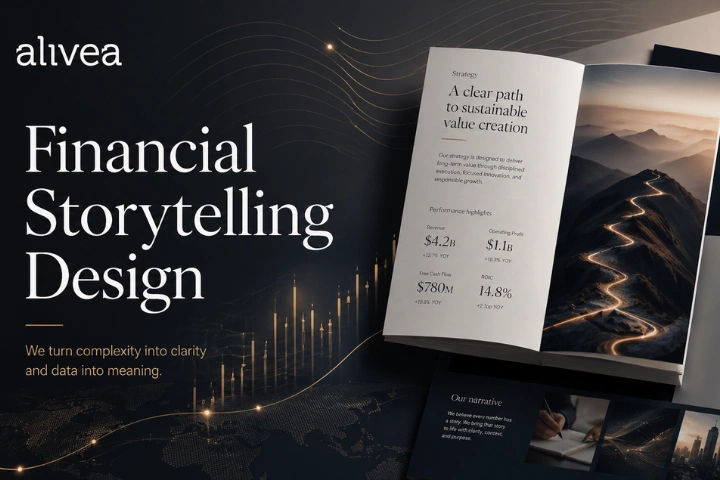
Financial Storytelling Design That Explains Data With Responsible Clarity
Financial storytelling design is a key part of transparent annual reporting because it explains the meaning behind financial results. Numbers are necessary, but they rarely tell the whole story by themselves. Investors need to understand what influenced the numbers, how management responded, and how current performance connects with future direction.
Responsible clarity means telling the financial story without exaggeration or selective emphasis. A transparent annual report should not turn every result into a promotional message. It should explain business performance with maturity. If the company achieved growth, the report should identify the drivers. If performance was pressured, the report should explain the causes. If management made long-term investments, the report should show why those decisions matter.
This approach strengthens annual report credibility because it helps investors understand the company’s reality. A credible financial story includes both progress and pressure. It explains achievements, but it also discusses constraints, risks, and trade-offs. Investors often trust reports more when they feel the company is willing to address complexity.
Financial storytelling design can be applied through several elements. A performance overview can summarize the year’s main outcomes. A strategy section can explain how management priorities shaped results. Segment reviews can show how different business units performed. A risk section can explain challenges and responses. An outlook section can connect current actions with future plans.
Investor communication design supports this storytelling by making the narrative easy to follow. Charts can show trends over several years. Timelines can illustrate key developments. Callout boxes can highlight strategic decisions. Infographics can explain business models or value creation processes. However, every visual element should support understanding. Design should not make the story look stronger than the evidence allows.
Annual report design investor trust also depends on transparency around assumptions. If future goals are discussed, the report should avoid unrealistic certainty. It can explain priorities, market opportunities, investment plans, and risk considerations without making promises that cannot be supported.
A strong investor relations report uses financial storytelling design to connect data with judgment. It helps investors see not only what happened, but how management interprets the year. This clarity strengthens confidence because stakeholders can evaluate both performance and leadership thinking.

Investor Relations Report Practices for Transparent Stakeholder Confidence
A transparent investor relations report should be designed around stakeholder confidence. It must give investors and other readers enough information to understand the company’s performance, direction, risk position, and governance culture. Best practice begins with the question: what does a serious stakeholder need to know to evaluate this company fairly?
The first practice is disclosure prioritization. Important information should be placed where readers expect to find it. Key results should not be hidden deep inside the report. Governance updates should not be difficult to locate. Risk explanations should not be vague or overly compressed. A transparent report makes high-value information accessible.
The second practice is consistency across sections. The investor relations report should not feel like separate pieces produced by different teams without coordination. Leadership commentary, financial review, sustainability discussion, governance disclosure, and future outlook should support the same corporate message. This consistency improves annual report credibility because it shows control and alignment.
The third practice is evidence-based communication. Claims about growth, resilience, innovation, efficiency, sustainability, or transformation should be supported by measurable indicators where possible. Investor communication design can help by presenting evidence through dashboards, charts, progress tables, and explanatory notes. These tools make transparency easier to verify.
Annual report design investor trust also improves when companies explain negative or uncertain information carefully. A transparent report does not need to overemphasize weakness, but it should not avoid it. If costs increased, investors should understand why. If risk exposure changed, the report should explain the response. If strategic plans shifted, readers should know the reasoning.
Financial storytelling design should be used to connect these disclosures into a meaningful investor narrative. The report should explain the relationship between strategy, performance, risk, governance, and future value. This helps stakeholders understand the company as a complete business rather than a collection of isolated data points.
Digital presentation is also part of modern transparency. A report should be easy to download, search, navigate, and read across devices. Investor relations web pages should provide clear access to current and previous reports, announcements, and financial summaries.
A transparent investor relations report strengthens stakeholder confidence by showing that the company respects informed decision-making. It communicates that management is not only reporting facts, but helping investors understand them responsibly. Related insights annual report design that builds trust with investors.
What Does Transparency Mean for Annual Report Credibility and Investor Trust?
Transparency means presenting annual report information in a way that is open, accurate, accessible, and properly explained. It is not enough for a company to include required disclosures if readers cannot understand the meaning behind them. True transparency helps investors evaluate financial performance, governance quality, risk exposure, and future direction with confidence.
Annual report credibility improves when the report explains both positive and difficult information. Investors want clear data, but they also want honest context. Annual report design investor trust grows when stakeholders can see how performance claims connect with evidence.
Investor communication design supports transparency by organizing sections clearly and making key details easy to find. Financial storytelling design adds meaning by explaining why results changed and how management responded. A strong investor relations report uses transparency to reduce uncertainty. It helps readers understand the company without feeling that important information is hidden, exaggerated, or unclear.
Who Benefits Most From Transparent Investor Communication Design in Reports?
Transparent investor communication design benefits many stakeholders. Shareholders benefit because they can better understand company performance, risks, and future priorities. Institutional investors benefit because they can compare businesses more efficiently. Analysts benefit because transparent annual reports provide clearer evidence for financial interpretation and market commentary.
Lenders also benefit from annual report credibility because they need reliable information about cash flow, capital structure, debt, and business stability. Board members benefit because transparent reporting reflects strong governance culture. Employees, partners, suppliers, media professionals, and potential investors may also use the investor relations report to understand the company’s direction.
Financial storytelling design helps each audience connect data with business meaning. Annual report design investor trust becomes stronger when the report respects the needs of different readers. A transparent report does not serve only one group. It creates a shared source of reliable corporate information that supports better decisions across the stakeholder ecosystem.
Where Transparency Matters Most Across Investor Relations Report Touchpoints
Transparency matters wherever stakeholders interact with annual report content. This includes printed reports, downloadable PDF files, investor relations websites, annual general meeting materials, analyst presentations, financial summaries, digital annual report platforms, and corporate announcements.
Annual report credibility can weaken if the report itself is detailed but other touchpoints are confusing or inconsistent. Investors may begin their research on a company website before downloading the full investor relations report. If the website is difficult to navigate, important documents are hard to find, or messaging differs across platforms, trust may decline.
Investor communication design should therefore create a consistent experience across all channels. Financial storytelling design should also remain aligned from the annual report to investor presentations and shareholder updates. Annual report design investor trust improves when stakeholders receive the same clear message wherever they access company information.
For Singapore companies, transparent reporting touchpoints are especially important because audiences may include both local and international investors who expect professional accessibility.
When Should Companies Improve Transparency in Annual Reporting Practices?
Companies should improve transparency before the annual report production process reaches the final design stage. Transparency should be planned from the beginning, when teams define reporting goals, key messages, required disclosures, and investor questions. Waiting until the end often leads to rushed explanations and disconnected sections.
Annual report credibility improves when transparency is built into content planning, data preparation, writing, design, and review. Finance teams, investor relations teams, governance teams, sustainability teams, leadership, and designers should align early. This helps the investor relations report present information consistently.
Investor communication design should guide how sections are structured, how data is shown, and how readers move through the report. Financial storytelling design should shape how performance is explained. Annual report design investor trust becomes stronger when transparency feels intentional, not added at the last moment.
Companies should also improve transparency when performance changes, risks increase, strategy shifts, or stakeholder expectations become more demanding. Clear reporting is especially valuable during periods of uncertainty.
Why Transparent Financial Storytelling Design Builds Investor Confidence
Transparent financial storytelling design builds investor confidence because it helps stakeholders understand the real meaning behind business performance. Investors do not want numbers without explanation. They want to know why results changed, what management did, and how current decisions may affect future value.
Annual report credibility becomes stronger when financial storytelling is supported by evidence. A company should explain growth drivers, cost pressures, investment decisions, market challenges, risk responses, and strategic priorities. This makes the investor relations report more useful and believable.
Annual report design investor trust also grows when storytelling is balanced. Investors may become skeptical if the report only highlights achievements and avoids difficulty. Transparent storytelling discusses both opportunity and uncertainty with professional maturity.
Investor communication design helps present this story clearly through structure, charts, summaries, and readable sections. When investors can follow the logic of the company’s financial performance, they gain more confidence in management’s communication. Trust grows because the report feels honest, organized, and responsible.
How Can Companies Strengthen Annual Report Design Investor Trust Today?
Companies can strengthen annual report design investor trust by making transparency a core reporting principle. They should begin by identifying the most important questions investors are likely to ask. These may include questions about performance, strategy, risk, governance, sustainability, cash flow, capital allocation, and future priorities.
The investor relations report should then answer those questions with clear evidence and structured explanation. Investor communication design can improve the process through better section flow, readable charts, consistent terminology, and accessible digital navigation. Annual report credibility increases when readers can find and understand information quickly.
Financial storytelling design should connect data with business context. Instead of presenting figures without interpretation, companies should explain causes, decisions, and outcomes. They should also avoid exaggeration and include balanced discussion of challenges.
Practical improvements include clearer headings, fair data visualization, transparent notes, consistent metrics, and stronger summaries. Companies can also test the report from a stakeholder perspective before publication. If investors can understand the message without confusion, trust becomes easier to build.
Stronger Transparency in Annual Reports Builds Lasting Investor Confidence
Transparency is one of the most important foundations of annual report credibility. Investors trust companies that communicate openly, explain performance responsibly, and make important information easy to evaluate. A transparent annual report does not avoid complexity. It helps stakeholders understand complexity with clarity and confidence.
For Singapore companies, transparency can strengthen investor perception because it demonstrates discipline, accountability, and respect for stakeholder decision-making. Investors often compare many companies before forming opinions. A clear and honest investor relations report can help a business stand out as more professional, reliable, and prepared.
Annual report design investor trust is built when disclosure, design, and narrative work together. Data should be accurate and accessible. Explanations should be specific and balanced. Visuals should clarify information rather than distort it. Governance, risk, financial performance, sustainability, and outlook sections should be connected through one coherent communication structure.
Investor communication design plays a major role in making transparency usable. It helps readers navigate the report, identify key information, and understand how different sections relate to each other. Without clear design, even extensive disclosure can feel confusing. With strong design, transparency becomes easier to experience.
Financial storytelling design adds meaning by connecting numbers with business decisions. It explains why results changed, how management responded, and what the company intends to do next. This type of storytelling should remain evidence-based and realistic. Investors are more likely to trust a company that explains both success and challenge than one that only presents a polished version of the year.
A transparent investor relations report also supports long-term engagement. It becomes a reliable reference for shareholders, analysts, lenders, employees, partners, and potential investors. Over time, consistent transparency can strengthen corporate reputation and improve the quality of stakeholder relationships.
Brands such as alivea and professional annual report design teams can help companies transform reporting transparency into a strategic trust-building asset. The goal is not only to create a visually attractive report, but to create a report that informs, explains, and earns confidence.
In conclusion, transparency strengthens investor confidence by reducing uncertainty and improving understanding. When annual report credibility, investor communication design, financial storytelling design, and responsible disclosure work together, companies can create annual reports that build trust year after year.
