

Corporate ESG Reporting SG Helps Businesses Build Transparent Practices
Corporate ESG reporting sg helps companies communicate environmental, social, and governance performance with clarity, evidence, and accountability. In today’s business environment, stakeholders expect more than broad statements about responsibility. They want to understand how a company manages material risks, measures sustainability progress, protects stakeholder interests, and connects ESG practices with long-term business value. This is why transparent ESG reporting has become a strategic communication requirement for Singapore-focused companies.
A strong corporate ESG report should explain what the company stands for, how sustainability is governed, which topics matter most, what actions have been taken, and how performance is tracked. Investors may review emissions data, governance oversight, climate-related risks, and targets. Customers may look for ethical operations, responsible sourcing, and environmental care. Employees may want evidence of workplace safety, inclusion, and development. Business partners may assess ESG maturity before engaging in procurement or collaboration.
In Singapore, ESG reporting expectations continue to become more structured. SGX states that sustainability reports should include material ESG factors, climate-related disclosures, policies, practices, performance, targets, a reporting framework, and a board statement. ACRA’s current sustainability reporting timeline also states that Singapore’s roadmap takes a climate-first approach from FY2025, with all SGX-listed companies needing to report and requirements depending on company tier.
For businesses, this means corporate esg reporting sg should not be treated as a last-minute compliance document. It should be planned as a structured disclosure system. ESG reporting sg requires data ownership, internal review, clear writing, and credible design. Sustainability reporting sg also needs consistency across annual reports, ESG reports, websites, investor materials, and stakeholder communications.
For brands such as alivea, transparent ESG reporting can become a valuable corporate asset. It helps communicate accountability, improve trust, support better decision-making, and strengthen stakeholder relationships. The goal is not simply to publish a report. The goal is to build a reporting process that shows how responsible business practices are managed, measured, and improved over time.
Corporate ESG Reporting SG Aligns Governance, Data, And Stakeholder Trust
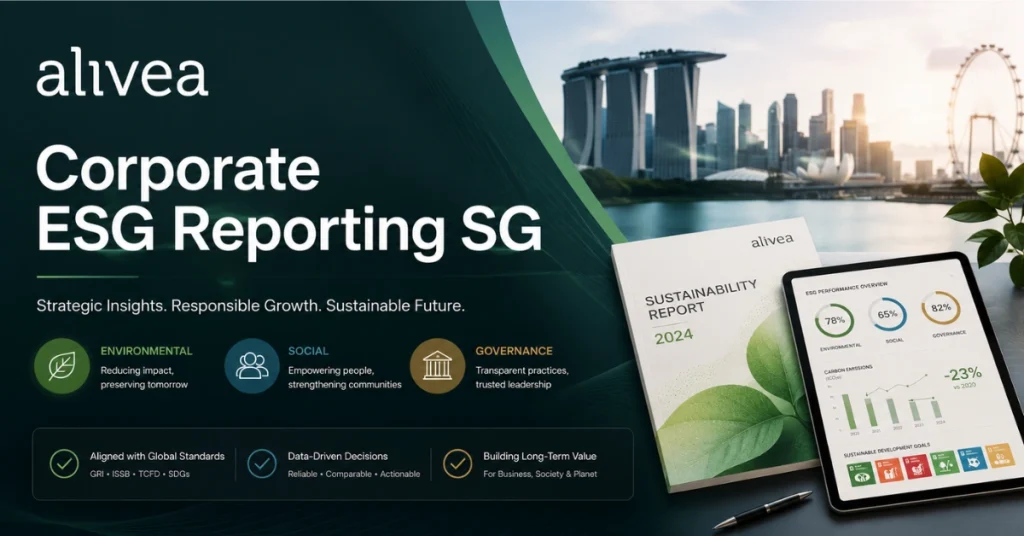
Corporate ESG reporting SG becomes stronger when governance, data, and stakeholder trust work together. Governance gives ESG reporting accountability. Data gives the report evidence. Stakeholder trust gives the report its business purpose. When one of these elements is weak, the report can feel incomplete. A company may have attractive ESG messaging, but if governance is unclear or data is unsupported, stakeholders may question the credibility of the disclosure.
A transparent corporate ESG report should explain how sustainability is overseen. This may include board responsibility, senior management involvement, ESG committees, risk functions, department owners, or internal reporting lines. The exact structure depends on the company’s size and maturity, but readers should be able to understand who monitors ESG matters and how decisions are made. SGX guidance also identifies the board statement as one of the primary components of sustainability reporting, reinforcing the importance of leadership accountability.
Data is the second foundation. ESG reporting sg should include measurable information where relevant, such as energy use, emissions, waste, water, safety performance, employee training, workforce diversity, board composition, ethics training, and supplier practices. These metrics should be clearly labeled, consistently measured, and explained with context. Stakeholders need to know what the numbers mean, where they came from, and how they connect to the company’s sustainability direction.
Sustainability reporting sg should also avoid selective storytelling. Transparent reporting is not only about celebrating achievements. It is also about explaining challenges, limitations, and improvement plans. If a company is still improving data coverage, developing targets, or strengthening supplier visibility, the report can state that clearly. Balanced disclosure often feels more credible than overly polished language.
ESG corporate sg communication should therefore be practical, specific, and evidence-led. ESG disclosure sg should help stakeholders evaluate performance instead of forcing them to interpret scattered claims. When governance and data are presented clearly, the report becomes a trust-building document that supports investor confidence, customer assurance, employee pride, and long-term corporate reputation.
ESG Reporting SG Transforms Sustainability Information Into Business Insight
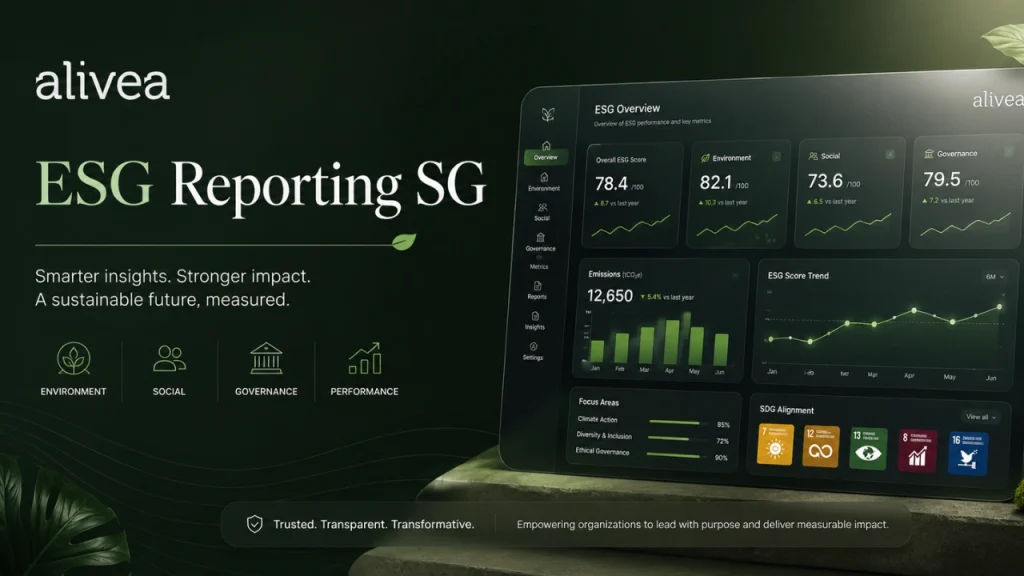
ESG reporting sg transforms sustainability information into business insight by showing how ESG issues influence strategy, operations, risk, and reputation. Many companies already collect ESG-related information, but the value of that information depends on how clearly it is organized and explained. Without structure, sustainability data can feel like isolated figures. With strong reporting, the same data can reveal progress, risk exposure, operational efficiency, and future priorities.
A useful ESG report should connect each material topic with business relevance. For example, climate-related reporting may influence energy strategy, cost management, asset resilience, investor confidence, and regulatory readiness. Workforce reporting may reveal training priorities, safety performance, culture, and retention risks. Governance reporting may show how the company manages ethics, compliance, accountability, and board oversight. These connections help stakeholders understand why ESG matters to the business.
Corporate esg reporting sg should begin with materiality. The report should identify the environmental, social, and governance topics that are most relevant to the company and its stakeholders. SGX’s Practice Note explains that sustainability reports should identify material ESG factors and describe both the reasons for and the process of selection. This makes the report more focused because it avoids giving equal weight to every possible topic.
ESG reporting sg also requires clear explanation of performance. A metric is more valuable when it is supported by interpretation. If emissions increased, the report should explain whether the change came from business expansion, improved data coverage, operational changes, or methodology updates. If employee training hours increased, the report can explain which capability areas were strengthened. If supplier assessments expanded, the report can describe how procurement practices are evolving.
Sustainability reporting sg becomes more useful when it helps readers make decisions. Investors can assess risk. Customers can evaluate responsibility. Employees can understand culture. Business partners can review ESG maturity. ESG corporate sg communication should therefore turn information into insight, while esg disclosure sg ensures that insight remains specific, accurate, and responsible.
Sustainability Reporting SG Supports Climate, Social, And Governance Clarity
Sustainability reporting sg supports clarity across environmental, social, and governance themes. These three areas are often connected, but they require different types of information and explanation. Environmental reporting usually focuses on climate, emissions, energy, waste, water, and resource use. Social reporting covers people, safety, employee development, diversity, customer responsibility, and community contribution. Governance reporting explains oversight, ethics, compliance, risk management, and responsible business conduct.
Climate-related disclosure is one of the most important areas in modern corporate esg reporting sg. ACRA and SGX RegCo announced that Scope 1 and Scope 2 greenhouse gas emissions reporting remains mandatory for all listed companies from FY2025, while Scope 3 greenhouse gas emissions reporting remains mandatory for STI constituent listed companies from FY2026 and voluntary for other non-STI constituent listed companies until further notice. This makes emissions data, calculation boundaries, methodologies, and improvement plans increasingly important for Singapore companies.
Social reporting also requires careful structure. Workforce-related sections should not only mention that the company values employees. They should explain how the business supports safety, learning, engagement, fair opportunity, and well-being. A good ESG report may include employee training hours, safety indicators, diversity data, engagement initiatives, and development programs. The content should connect these activities to business resilience and human capital quality.
Governance reporting gives sustainability reporting sg credibility. It shows how ESG responsibilities are controlled, reviewed, and embedded in the organization. This can include board oversight, management structures, whistleblowing channels, anti-corruption policies, risk processes, supplier codes, or data protection measures. Governance sections may feel technical, but they are essential because they show whether ESG is managed seriously.
ESG corporate sg reporting should also present these themes in a balanced way. Environmental, social, and governance content should not feel like separate documents forced into one report. The strongest reports create a logical flow from strategy to material topics, then from actions to performance and future commitments.
ESG disclosure sg supports this clarity by ensuring each section answers practical questions: what is the topic, why does it matter, how is it managed, what has changed, and what comes next?
ESG Corporate SG Practices Make Sustainability Part Of Business Strategy
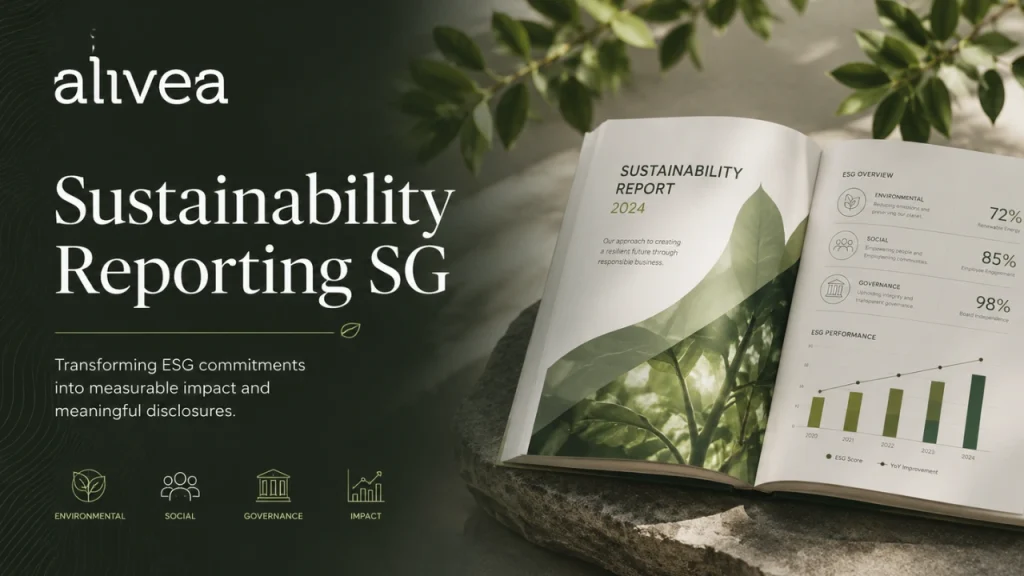
ESG corporate SG practices make sustainability reporting more strategic when they connect ESG priorities with the company’s business model. Transparent ESG reporting should not present sustainability as a side activity. It should show how responsible practices influence growth, resilience, operational discipline, stakeholder relationships, and long-term decision-making.
A strong esg corporate sg approach begins with leadership understanding. Senior leaders need to see ESG reporting as more than a compliance requirement. It can provide insight into business risks and opportunities. Energy data may reveal efficiency potential. Workforce data may highlight training needs or retention issues. Supplier information may expose procurement vulnerabilities. Governance reviews may improve controls and accountability. Corporate esg reporting sg becomes more valuable when it helps leaders act, not only communicate.
ESG reporting sg should also show how ESG priorities fit the company’s sector. A property company may focus on energy efficiency, green building performance, tenant well-being, and climate resilience. A technology company may emphasize data privacy, talent development, digital ethics, and governance. A logistics company may prioritize fuel efficiency, emissions, safety, and supply chain responsibility. A professional services company may focus on people, ethics, client trust, and responsible operations.
Sustainability reporting sg should therefore avoid generic content. Stakeholders can tell when a report sounds like a template. The report should reflect real business context, real decisions, and real performance. This makes the content more useful and more credible.
ESG disclosure sg also helps companies communicate progress responsibly. If a business is still building ESG maturity, the report can explain current foundations and future plans. Not every company needs to claim leadership. In many cases, honest improvement is more trustworthy than exaggerated achievement.
For brands such as alivea, ESG corporate strategy can become part of broader brand credibility. A professional report can show that sustainability is not only discussed externally but also organized internally. When ESG is linked to business strategy, the report becomes more than disclosure. It becomes evidence of corporate maturity.
ESG Disclosure SG Improves Accuracy, Consistency, And Reporting Confidence
ESG disclosure SG improves the quality of corporate reporting by making information accurate, consistent, and easier to verify. A sustainability report may be visually impressive, but stakeholders will still judge whether the disclosure is clear and supported. If claims are vague, data is inconsistent, or boundaries are unclear, the report can weaken trust. This is why disclosure discipline is central to corporate esg reporting sg.
Accurate disclosure begins with data ownership. Every reported metric should have a source, an owner, a reporting period, and a review process. Environmental data may come from facility records, utility bills, emissions calculations, or operational systems. Social data may come from HR platforms, safety records, learning systems, or employee surveys. Governance data may come from policies, board documents, risk registers, or compliance records. ESG reporting sg becomes more reliable when these sources are documented.
Consistency is also important. If the company reports training hours, employee numbers, emissions, or safety indicators, the definitions should remain stable where possible. If a definition changes, the report should explain why. This allows stakeholders to compare performance across years. Sustainability reporting sg should also use consistent terminology across the report, website, annual report, and investor materials.
ESG disclosure sg should avoid unsupported claims. Phrases such as “industry-leading,” “fully sustainable,” or “best practice” should not be used unless the company can provide evidence. Balanced wording is safer and more credible. Google’s Search Central guidance also emphasizes helpful, reliable, people-first content created to benefit people rather than content created mainly to manipulate search rankings. For ESG content, this means writing should answer real stakeholder questions and provide useful information instead of repeating generic sustainability phrases.
ESG corporate sg reporting also benefits from review. Data owners, finance teams, legal teams, sustainability teams, communications teams, and leadership should all review relevant parts of the report. This process improves confidence before publication.
When esg disclosure sg is handled carefully, the final report becomes more than a formal document. It becomes a reliable reference for stakeholders who need to understand the company’s business practices. Open the article best esg report sg solutions for corporate reporting and design.
What Does Corporate ESG Reporting SG Mean For Transparent Practices?
Corporate ESG reporting SG means preparing structured disclosures that explain how a company manages environmental, social, and governance responsibilities. It helps stakeholders understand material topics, policies, performance, targets, governance oversight, and improvement plans. Transparent ESG reporting shows not only what the company has achieved, but also how progress is managed and measured.
ESG reporting sg usually covers topics such as emissions, energy, waste, employee safety, training, diversity, ethics, board accountability, risk management, and supplier responsibility. Sustainability reporting sg organizes these topics into a clear report that supports trust.
ESG corporate sg communication should be accurate, specific, and relevant to the company’s business model. ESG disclosure sg then ensures that claims are supported by evidence and presented consistently. When done well, corporate ESG reporting helps businesses demonstrate accountability, strengthen stakeholder confidence, and communicate responsible practices with clarity.
Who Should Use ESG Reporting SG To Improve Corporate Transparency?
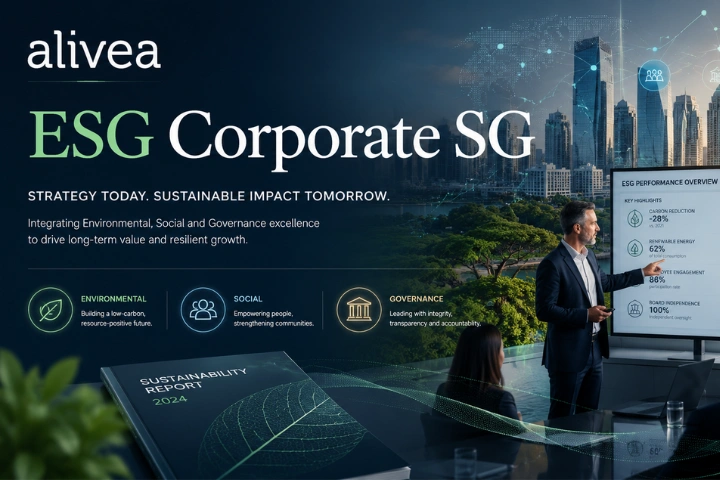
ESG reporting SG should be used by listed companies, large private businesses, growing SMEs, regional brands, and organizations that need to communicate sustainability performance to stakeholders. Companies that face investor review, customer ESG requests, supplier assessments, lender expectations, or board-level sustainability discussions can benefit from stronger reporting.
Corporate esg reporting sg is especially useful when ESG information is spread across many teams. Operations may hold environmental data. HR may manage workforce information. Procurement may handle supplier practices. Legal and compliance may oversee governance topics. Sustainability reporting sg brings these inputs together into one structured disclosure.
ESG corporate sg reporting also supports companies that want better brand credibility. ESG disclosure sg helps prevent vague claims and improves communication quality. Any business that wants to show responsibility with evidence can use ESG reporting to improve transparency.
Where Can Sustainability Reporting SG Strengthen Business Communication Most?
Sustainability reporting SG can strengthen communication across annual reports, standalone ESG reports, corporate websites, investor presentations, procurement documents, tender submissions, board papers, employee communications, and stakeholder summaries. ESG information is often used in many business contexts, so consistency is important.
Corporate esg reporting sg gives companies a central source of truth. ESG reporting sg ensures that sustainability messages, metrics, policies, and targets are aligned across channels. This reduces confusion and supports stronger corporate credibility.
ESG corporate sg communication is especially valuable in investor relations and business development. Customers and partners may want evidence of responsible practices before making decisions. ESG disclosure sg helps the company respond professionally by providing structured, clear, and reliable sustainability information.
When Should ESG Corporate SG Reporting Begin For Better Results?
ESG corporate SG reporting should begin early in the reporting cycle, ideally before the annual report deadline approaches. Early preparation gives companies enough time to define material topics, assign data owners, collect evidence, review metrics, write content, design the report, and secure leadership approval.
Corporate esg reporting sg works best as an ongoing process. ESG reporting sg should not start only when the final document is due. Environmental, social, and governance information should be tracked throughout the year where possible. This improves accuracy and reduces last-minute pressure.
Sustainability reporting sg also needs time for internal review. ESG disclosure sg may involve sustainability teams, finance, HR, operations, legal, communications, and senior leadership. A planned reporting calendar helps the final report become more complete, credible, and stakeholder-ready.
Why Does ESG Disclosure SG Matter For Long-Term Stakeholder Trust?
ESG disclosure SG matters because stakeholders want reliable information, not only positive corporate statements. Investors, customers, employees, lenders, regulators, and business partners may use ESG reports to assess responsibility, risk, governance quality, and future readiness. If the report is vague or inconsistent, trust can weaken.
Corporate esg reporting sg builds trust by linking ESG commitments with evidence. ESG reporting sg shows what the company is doing, how performance is measured, and where improvements are planned. Sustainability reporting sg also helps stakeholders compare progress over time.
ESG corporate sg communication should be balanced. It should highlight achievements while explaining challenges and next steps. ESG disclosure sg supports this balance by ensuring that statements are specific, traceable, and aligned with data. This makes ESG reporting a long-term trust-building tool.
How Can Companies Improve Corporate ESG Reporting SG Effectively Today?
Companies can improve corporate ESG reporting SG by starting with clear governance, material topics, and reliable data. The first step is to identify which ESG issues matter most to the business and stakeholders. The second step is to assign internal owners for each topic. The third step is to collect evidence, metrics, policies, and explanations.
ESG reporting sg becomes stronger when the report follows a consistent structure. Each section should explain why the topic matters, how it is managed, what progress was achieved, and what comes next. Sustainability reporting sg should also include charts, summaries, and clear writing where useful.
ESG corporate sg teams should review all claims before publication. ESG disclosure sg improves when data owners, finance, legal, communications, and leadership work together. This creates a report that is more accurate, readable, and useful for stakeholder decision-making.
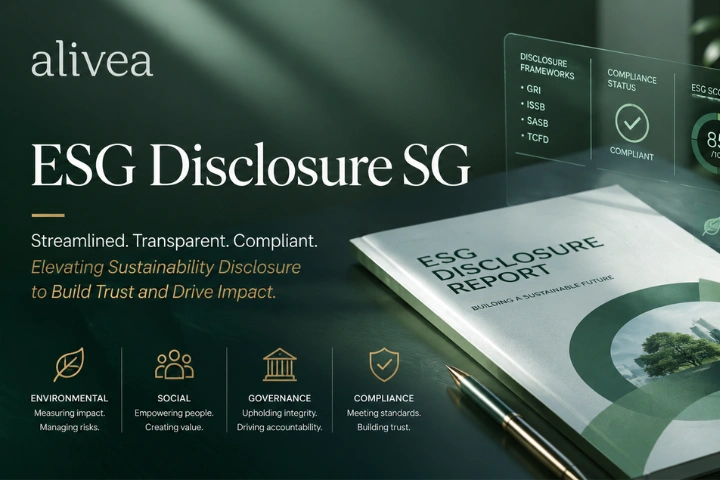
Corporate ESG Reporting SG Builds Transparency For Sustainable Growth
Corporate ESG reporting SG helps companies communicate responsible business practices with evidence, structure, and confidence. In a market where stakeholders expect greater transparency, ESG reporting is no longer a simple annual task. It is a strategic communication process that explains how a company manages environmental impact, social responsibility, governance quality, risks, and long-term sustainability priorities.
The value of esg reporting sg begins with clarity. Companies need to identify material topics, collect reliable data, explain governance responsibilities, and communicate progress in a way that stakeholders can understand. Without structure, ESG information can feel scattered. With a strong reporting approach, the company can show how sustainability supports business resilience and stakeholder trust.
Sustainability reporting sg also improves accountability. It encourages teams to define responsibilities, review evidence, and track performance more consistently. Environmental sections can explain emissions, energy, waste, and resource management. Social sections can show employee care, safety, training, inclusion, and community contribution. Governance sections can demonstrate board oversight, ethics, risk management, and compliance practices.
ESG corporate sg communication should always be authentic to the business. A strong report does not need to overstate achievements. It should explain where the company is progressing, where it is still improving, and how future commitments will be managed. This balanced approach supports credibility and reduces the risk of generic or unsupported sustainability messaging.
ESG disclosure sg strengthens the final report by improving accuracy, consistency, and review confidence. It helps companies present data clearly, explain methodologies, avoid vague language, and align sustainability messages across multiple corporate channels.
For companies such as alivea, corporate ESG reporting can become a valuable platform for transparent business practices. It supports investor confidence, customer trust, employee engagement, procurement readiness, and brand reputation. When ESG reporting is handled with discipline, it becomes more than compliance. It becomes a clear expression of responsible management, corporate maturity, and sustainable business growth.
