
Sustainability Vs ESG Reporting For Clearer Corporate Disclosure Strategy
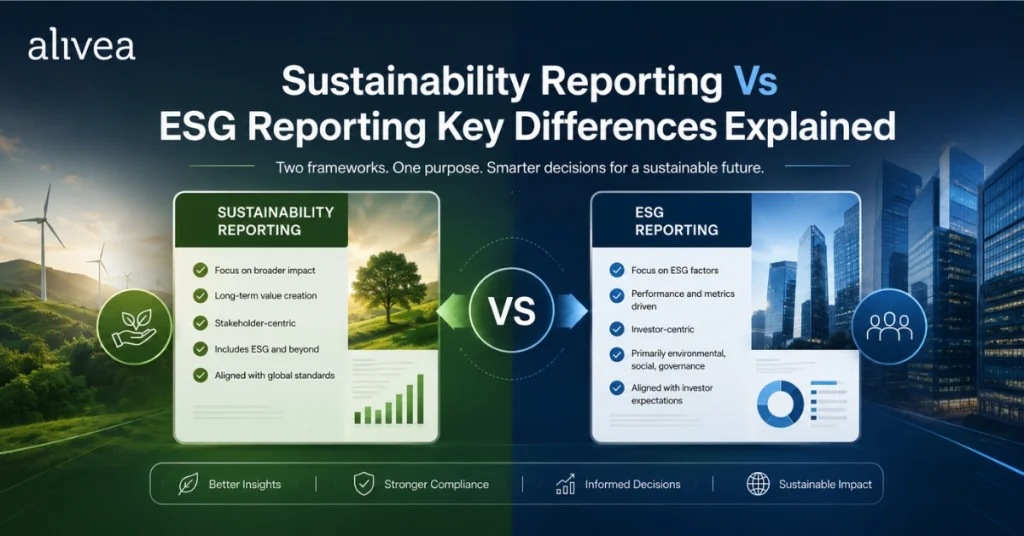
Sustainability vs ESG reporting is an important topic for companies that want to communicate responsibility, performance, and long-term value with greater clarity. Although the two terms are often used together, they do not always mean the same thing. Sustainability reporting usually presents a broad view of how a company affects the environment, people, society, and the economy. ESG reporting is often more structured around environmental, social, and governance factors that are useful for investors, regulators, boards, and stakeholders evaluating business risk, governance quality, and measurable performance.
For Singapore companies, understanding this difference is practical, not only academic. ESG reporting Singapore is becoming more connected to disclosure expectations, climate-related information, board oversight, internal review, data quality, and investor communication. SGX explains that sustainability reports should include primary components such as material ESG factors, climate-related disclosures, policies, practices and performance, targets, reporting framework, and board statement. This means companies need reports that are structured enough to meet formal expectations while still being meaningful for wider stakeholders.
Sustainability reporting Singapore can be broader in tone. It may explain social impact, responsible business practices, community contribution, employee development, ethical sourcing, environmental stewardship, and long-term corporate purpose. ESG reporting, meanwhile, often places stronger emphasis on material topics, metrics, frameworks, governance, climate risk, performance tracking, and decision-useful information. Both approaches can support credibility when they are written with evidence, balance, and transparent disclosure.
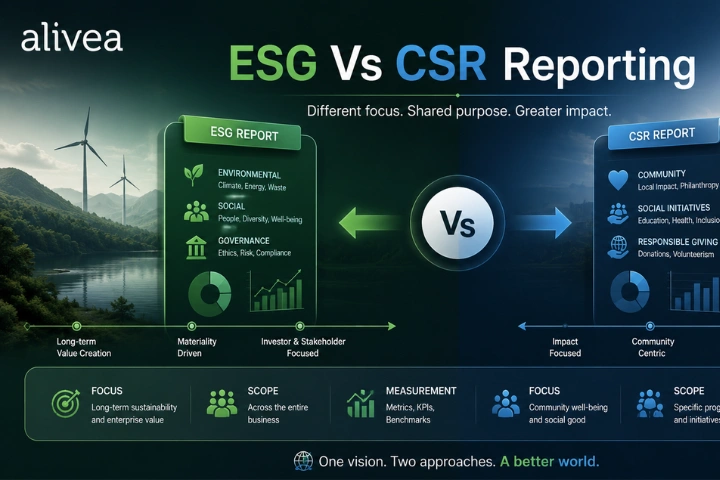
The distinction between ESG vs CSR reporting is also important. CSR reporting often focuses on corporate responsibility programmes, philanthropy, community activities, and values-based initiatives. ESG reporting tends to be more data-led and governance-focused, while sustainability reporting can connect broader impact with business strategy. ESG frameworks SG help companies decide which structure, standards, metrics, and disclosures are most relevant.
For brands such as alivea and corporates building premium reports, the best approach is not choosing one term for appearance. It is understanding the purpose of each reporting style and using the right structure to communicate strategy, impact, compliance, and trust.
Sustainability Vs ESG Reporting For Corporate Strategy And Stakeholders
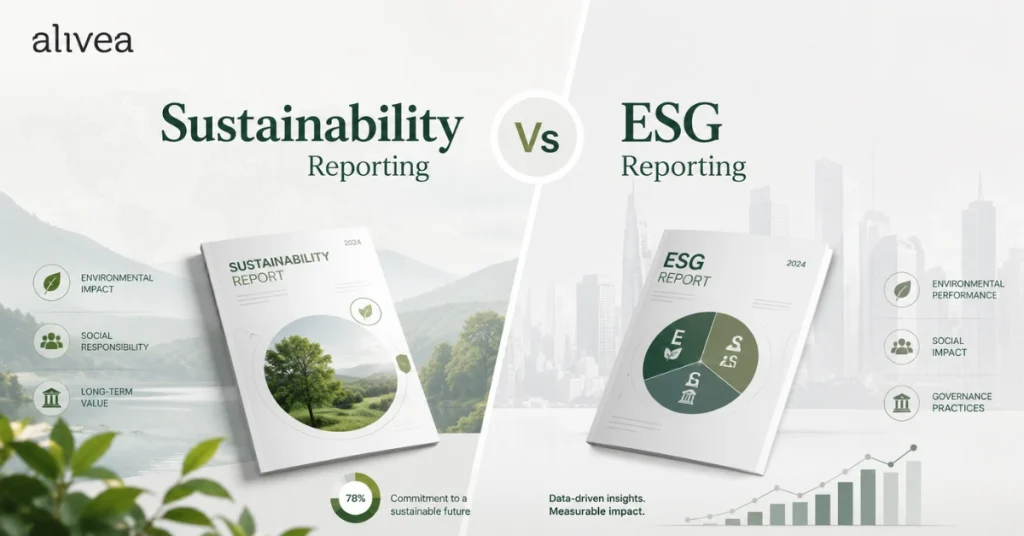
Sustainability vs ESG reporting can be understood by looking at audience, scope, and purpose. Sustainability reporting usually communicates a company’s wider responsibility toward people, the planet, and long-term development. It may include environmental practices, workforce programmes, community investment, customer responsibility, ethical operations, supplier engagement, and broader social contribution. ESG reporting, on the other hand, often organizes information into environmental, social, and governance categories so stakeholders can evaluate business exposure, management quality, accountability, and measurable progress.
The difference matters because readers use reports differently. A community partner may read a sustainability report to understand social contribution. An employee may look for workplace wellbeing and culture. A customer may review ethical practices and environmental commitments. An investor may focus on ESG reporting Singapore information that supports risk evaluation, governance oversight, climate readiness, and performance comparison. A good report should recognize these different needs and structure content accordingly.
Sustainability reporting Singapore is often more narrative-driven. It explains the company’s purpose, stakeholder relationships, and responsibility journey. ESG reporting is usually more disclosure-led. It asks the company to show how material ESG factors are identified, how policies work, what data is tracked, what targets exist, and who oversees performance. SGX Practice Note 7.6 states that a sustainability report should contain a board statement covering sustainability issues in the issuer’s business and strategy, material ESG factors, and the governance roles of board and management.
This does not mean sustainability reporting is soft or ESG reporting is only technical. The strongest reports combine both. They explain values and impact while also providing data, governance, frameworks, and measurable progress. ESG vs CSR reporting also fits into this distinction. CSR may highlight programmes and commitments, while ESG adds structured accountability and performance evidence.
For companies developing ESG frameworks SG, the key is to avoid confusion. Reporting should define what is being communicated, who needs the information, what standards apply, and how the report supports strategic decision-making. Clear positioning helps stakeholders understand both impact and accountability.
ESG Reporting Singapore For Structured Disclosure And Investor Confidence
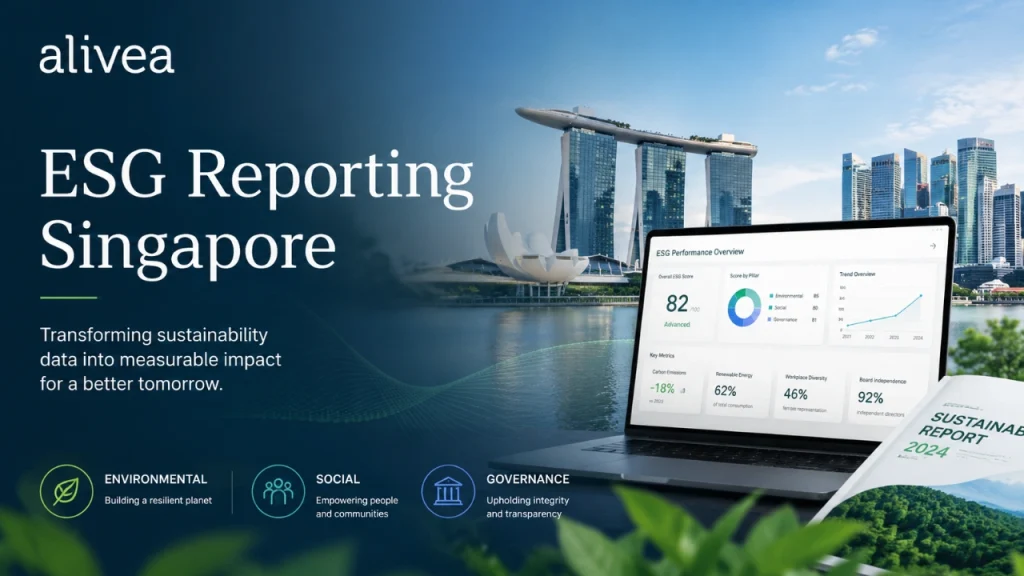
ESG reporting singapore is increasingly important because companies need to communicate sustainability information in a structured, comparable, and credible way. Stakeholders want to understand how a business identifies material ESG factors, manages risks, tracks performance, and prepares for future disclosure expectations. This is why ESG reporting is often more formal than general sustainability communication. It connects environmental, social, and governance information to business resilience, board oversight, investor confidence, and regulatory readiness.
For listed companies, ESG reporting Singapore is closely linked to sustainability reporting rules. SGX states that the sustainability report must include primary components such as material ESG factors, climate-related disclosures, policies, practices and performance, targets, reporting framework, and board statement. These components encourage companies to present ESG information with discipline rather than relying on broad corporate claims.
The climate disclosure environment also makes ESG reporting more data-driven. ACRA states that all listed companies continue to report Scope 1 and Scope 2 greenhouse gas emissions from financial years beginning on or after 1 January 2025, while Straits Times Index constituents continue with other ISSB-based climate-related disclosures from FY2025 and Scope 3 GHG emissions from FY2026. This means companies need stronger systems for emissions data, methodology, governance review, and disclosure consistency.
Sustainability vs ESG reporting becomes clearer in this context. Sustainability reporting Singapore may explain the company’s broader sustainability journey, while ESG reporting Singapore often requires more structured disclosure of risks, metrics, governance, frameworks, and targets. Investors may use ESG information to compare companies, evaluate climate exposure, assess governance maturity, or understand long-term risk management.
ESG vs CSR reporting also differs here. CSR may describe community programmes, volunteerism, donations, or ethical commitments. ESG reporting must show how such topics are managed, measured, governed, and linked to material business considerations. ESG frameworks SG help companies decide how to organize this information and which disclosures should be prioritized.
When companies handle ESG reporting well, the report becomes more than a compliance document. It becomes an investor communication tool, a governance reference, and a trust-building platform.
Sustainability Reporting Singapore For Broader Impact And Transparency
Sustainability reporting Singapore can provide a broader view of how a company contributes to long-term environmental, social, and economic responsibility. While ESG reporting often focuses on environmental, social, and governance factors that can be measured and assessed, sustainability reporting may tell a wider story about purpose, impact, stakeholder relationships, responsible operations, and contribution to sustainable development.
A sustainability report may include topics such as climate action, resource efficiency, employee wellbeing, diversity and inclusion, community engagement, customer responsibility, supplier partnerships, innovation, ethics, and long-term value creation. These topics can overlap with ESG reporting Singapore, but the tone may be more holistic. The report may explain why sustainability matters to the company, how it connects with its corporate mission, and how stakeholders are affected by business decisions.
GRI describes its standards as enabling organizations to understand and report their impacts on the economy, environment, and people in a comparable and credible way. This impact-oriented approach is often associated with sustainability reporting. It helps companies communicate how their activities affect the world around them, not only how sustainability matters affect enterprise value or investor decisions.
This is where sustainability vs ESG reporting becomes useful. ESG reporting may be more focused on risk, governance, metrics, and stakeholder decision-making. Sustainability reporting may include broader narratives about social value, environmental stewardship, responsible business culture, and long-term commitments. Both are valuable when they are honest, structured, and evidence-based.
Sustainability reporting Singapore should still avoid vague claims. A broad report does not mean a weak report. Strong sustainability content should include clear priorities, actions, metrics, examples, targets, and transparent discussion of challenges. ESG vs CSR reporting also matters because CSR stories can support sustainability reporting, but they should not replace measurable sustainability performance.
For companies using ESG frameworks SG, the best sustainability reports combine impact storytelling with reporting discipline. They explain what the company stands for, how it performs, what it measures, where it needs improvement, and how sustainability supports long-term corporate trust.
ESG Vs CSR Reporting For Responsibility, Performance, And Business Value
ESG vs CSR reporting is another distinction companies should understand before building a report. CSR, or corporate social responsibility, has traditionally focused on how companies contribute positively to society. CSR reporting may highlight philanthropy, volunteering, community partnerships, charitable giving, employee activities, ethical values, and social initiatives. These activities can be meaningful, but CSR reporting is often less standardized and less data-driven than ESG reporting.
ESG reporting is usually more structured. It organizes sustainability information into environmental, social, and governance categories. It also places greater emphasis on materiality, metrics, governance, risk management, policies, targets, and frameworks. In ESG reporting Singapore, companies are expected to communicate not only what they do but also how ESG factors are identified, managed, monitored, and reported. This makes ESG reporting more closely linked to business strategy and stakeholder decision-making.
The difference does not mean CSR is outdated or unimportant. CSR can still play a valuable role in communicating social contribution, culture, community investment, and corporate values. However, CSR stories should not be used as a substitute for ESG disclosure. A company may donate to community causes but still need to explain its emissions, workforce safety, governance controls, supplier standards, climate risks, and data quality.
Sustainability reporting Singapore can serve as a bridge between CSR and ESG. It can include community impact and values-based narratives while also presenting performance data, framework alignment, and governance accountability. This broader approach helps companies communicate both responsibility and measurable progress.
Sustainability vs ESG reporting also helps companies avoid misleading communication. If a report is mostly about charitable activities, it should not be presented as a complete ESG report unless it includes the relevant environmental, social, governance, and disclosure components. ESG frameworks SG can help determine what information is missing and how to improve the structure.
For alivea and corporate brands, the best reporting approach is clear positioning. CSR can show care. Sustainability reporting can show impact. ESG reporting can show accountability. Together, they can create a stronger corporate trust narrative when used responsibly.
ESG Frameworks SG For Better Standards Alignment And Reporting Decisions
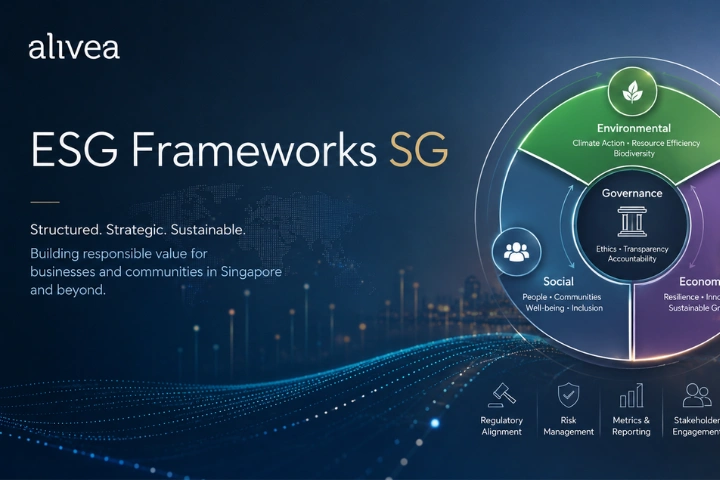
ESG frameworks SG help companies choose the right structure for sustainability and ESG reporting. A framework is useful because it guides what information should be collected, how topics should be organized, which disclosures matter, and how stakeholders can compare performance. Without a framework, reports may become inconsistent, promotional, or difficult to verify.
Different frameworks serve different purposes. SGX requirements guide sustainability reporting for listed issuers in Singapore, including material ESG factors, climate-related disclosures, policies, performance, targets, framework selection, and board statements. IFRS S1 and IFRS S2 provide a global baseline for sustainability-related financial disclosures and climate-related disclosures. The IFRS Foundation states that IFRS S1 and IFRS S2 prescribe how a company prepares and reports those disclosures. GRI standards, meanwhile, focus on reporting organizational impacts on the economy, environment, and people.
This shows why sustainability vs ESG reporting requires careful framework selection. A company that wants to communicate broad impact may use GRI-style sustainability reporting. A company responding to investor needs may prioritize ISSB-aligned disclosures. A Singapore listed company must consider SGX sustainability reporting requirements. In many cases, companies may use more than one reference, but they should avoid creating a confusing report by mixing frameworks without clear logic.
ESG reporting Singapore also requires companies to think about data readiness. A framework may ask for information the company does not yet collect well. Instead of making unsupported claims, the company should identify gaps and build a roadmap for improvement. Sustainability reporting Singapore becomes stronger when framework alignment is practical and honest.
ESG vs CSR reporting also benefits from frameworks. CSR initiatives can be included in the report, but frameworks help determine whether those initiatives are material, measurable, and connected to broader ESG performance.
For corporates, ESG frameworks SG are not just compliance tools. They support better planning, clearer disclosure, stronger internal accountability, and more credible stakeholder communication.
Materiality Differences Between Sustainability And ESG Reporting
Materiality is one of the clearest ways to understand sustainability vs ESG reporting. In simple terms, materiality helps a company decide which topics are important enough to report. However, different reporting approaches may define importance differently. Sustainability reporting may focus on the organization’s impacts on people, the environment, communities, and society. ESG reporting may focus more strongly on issues that affect business risk, financial relevance, governance, investor decision-making, and long-term enterprise value.
In sustainability reporting Singapore, material topics may include carbon emissions, workplace safety, employee wellbeing, community engagement, responsible sourcing, customer trust, ethical business conduct, waste management, and resource use. These topics are selected because they matter to stakeholders and because the company’s operations may affect them. A sustainability report should explain how these topics were identified and why they are relevant.
In ESG reporting Singapore, materiality may be connected more directly to risk management, business strategy, financial planning, governance oversight, and measurable performance. For example, climate risk may be material because it affects assets, costs, supply chains, regulation, financing, or business continuity. Workforce development may be material because it affects productivity, service quality, retention, and culture. Governance may be material because it affects compliance, trust, and corporate resilience.
SGX guidance states that the sustainability report should identify material ESG factors and describe both the reasons for and process of selection, considering relevance or impact to the business, strategy, financial planning, business model, and key stakeholders. This creates a useful bridge between sustainability impact and business relevance.
ESG vs CSR reporting also differs in materiality. CSR reports may highlight initiatives the company wants to share, while ESG reporting should focus on topics selected through a structured assessment. ESG frameworks SG help formalize this process by guiding topic identification, stakeholder engagement, and disclosure priorities.
A strong report should not list every possible sustainability topic. It should show which issues matter most, why they matter, how they are managed, and what progress has been made. Materiality turns reporting from storytelling into strategy.
Data And Metrics Differences In ESG And Sustainability Reporting
Data and metrics are another important difference in sustainability vs ESG reporting. ESG reporting often places stronger emphasis on measurable indicators, year-on-year comparison, targets, data quality, and decision-useful information. Sustainability reporting can also include metrics, but it may combine them with broader narratives about impact, culture, purpose, and stakeholder relationships.
In ESG reporting Singapore, companies may need to present quantitative data such as Scope 1 and Scope 2 emissions, energy use, water consumption, waste generation, employee headcount, training hours, safety incidents, supplier screening, board composition, ethics training, and governance controls. These metrics help stakeholders assess performance and compare progress. ACRA’s timeline confirms mandatory Scope 1 and Scope 2 GHG emissions reporting from FY2025 for all listed companies.
Sustainability reporting Singapore may include the same figures but may also explain the human or environmental story behind them. For example, a sustainability report may describe how employee training supports career development or how waste reduction supports operational culture. ESG reporting may require that same story to be supported by performance indicators, targets, policies, and governance oversight.
ESG vs CSR reporting is also visible in data expectations. CSR communication may include stories about community projects or volunteer hours. ESG reporting asks whether those social initiatives are material, how outcomes are measured, and how they connect to business responsibility. This does not reduce the value of CSR, but it raises the standard of evidence required for ESG disclosure.
ESG frameworks SG help companies choose appropriate metrics. IFRS S2, for example, focuses on climate-related risks and opportunities useful to users of general purpose financial reports when making decisions about providing resources to an entity. GRI focuses on organizational impacts on economy, environment, and people.
The best reports use data carefully. They define metrics, explain boundaries, disclose limitations, and connect numbers to meaningful context.
Audience Differences Across ESG, Sustainability, And CSR Reports
Audience is a practical way to understand sustainability vs ESG reporting. Different reports serve different reader needs. ESG reporting often speaks strongly to investors, boards, regulators, lenders, analysts, and business partners. These readers want structured information about risk, governance, climate readiness, metrics, targets, and material ESG factors. Sustainability reporting may speak to a wider stakeholder group, including employees, customers, communities, suppliers, NGOs, government bodies, and the public.
In ESG reporting Singapore, the audience may look for decision-useful information. Investors may ask whether climate risks could affect financial performance. Boards may need to understand oversight responsibilities. Lenders may evaluate sustainability-linked financing criteria. Business partners may review supply chain standards. Regulators may examine disclosure completeness. This makes ESG reporting more formal and evidence-focused.
Sustainability reporting Singapore may include broader stakeholder communication. Employees may want to understand workplace culture and career development. Customers may want to see responsible business practices. Communities may want to understand local impact. Suppliers may want clarity on ethical procurement expectations. A sustainability report should therefore be readable, relatable, and transparent.
CSR reporting often speaks to an even more values-driven audience. It may highlight community programmes, philanthropy, volunteerism, and social contribution. ESG vs CSR reporting differs because ESG readers typically expect more structured metrics and governance context, while CSR readers may focus more on goodwill, social responsibility, and corporate citizenship.
ESG frameworks SG can help companies decide how to serve multiple audiences without creating confusion. A report can include executive summaries for busy readers, detailed data tables for technical review, stories for broader engagement, and framework indexes for professional users. The report should not assume every reader has the same knowledge level.
For alivea and companies building premium corporate communication, audience alignment is essential. A strong report should be clear enough for general stakeholders and precise enough for investors or reviewers. This balance improves both engagement and credibility.
Framework Selection For Singapore Companies Comparing ESG And Sustainability
Framework selection is a major decision for companies comparing sustainability vs ESG reporting. Choosing a framework affects what information is collected, how content is structured, which metrics are emphasized, and how stakeholders interpret the report. A poor framework choice can make a report feel disconnected from the company’s actual risks and priorities. A strong framework choice improves credibility and reporting efficiency.
Singapore companies should first consider applicable local requirements. SGX sustainability reporting rules are important for listed issuers, while ACRA’s sustainability reporting and assurance requirements apply to listed companies and large non-listed companies according to their implementation timelines. ACRA’s sustainability reporting page states that listed companies and large non-listed companies need to comply from FY2025 and FY2030, respectively.
Next, companies should consider global standards. IFRS S1 and IFRS S2 are relevant for sustainability-related financial disclosure and climate-related disclosure. GRI is often useful for broader impact reporting on economy, environment, and people. Companies may also consider greenhouse gas accounting guidance, sector-specific standards, or stakeholder-specific requirements depending on their industry.
ESG reporting Singapore may prioritize frameworks that support investor confidence, risk disclosure, governance, and climate-related reporting. Sustainability reporting Singapore may include frameworks that explain impact and stakeholder contribution more broadly. ESG vs CSR reporting may require companies to separate voluntary social initiatives from formal ESG disclosures, while still showing how community work supports corporate responsibility.
ESG frameworks SG should be selected based on business model, reporting obligation, stakeholder needs, data readiness, industry exposure, and internal capability. Companies should avoid using framework names only for reputation. If a report claims alignment, the content should show that alignment through structure, data, and disclosures.
A practical framework strategy may start simple and mature over time. Companies can begin with required components, strengthen data systems, expand climate disclosure, and improve impact reporting as capability grows.
Writing And Design Differences Between ESG And Sustainability Reports
Writing and design also reveal the difference between sustainability vs ESG reporting. Sustainability reports often use a broader storytelling style. They may include leadership messages, stakeholder stories, community narratives, employee features, programme highlights, and long-term purpose statements. ESG reports typically need tighter structure, clearer metrics, stronger governance explanations, and more formal disclosure language.
In ESG reporting Singapore, writing should be precise and evidence-based. A report should avoid exaggerated claims such as “fully sustainable,” “best-in-class,” or “industry-leading” unless they can be substantiated. ESG content should explain what has been done, how it was measured, which policies apply, who is responsible, what progress has been made, and what still needs improvement.
Sustainability reporting Singapore can use more narrative depth, but it still needs credibility. Stories should include context, action, outcome, and future direction. If a company discusses community impact, the report should explain the purpose and result. If it discusses employee development, it should include training, participation, or capability outcomes where possible.
Design also differs. ESG reports often need dashboards, materiality matrices, emissions charts, governance diagrams, target trackers, and data tables. Sustainability reports may use more storytelling layouts, impact highlights, photography, case study spreads, and stakeholder visuals. The best corporate reports combine both styles: strong visual storytelling supported by data discipline.
ESG vs CSR reporting design also differs. CSR pages may highlight initiatives and human stories. ESG pages should connect those initiatives to materiality, metrics, governance, or strategy. ESG frameworks SG can guide which sections need formal disclosure and which can be presented as supporting narratives.
For alivea and corporate brands, design should not blur meaning. A sustainability story can be visually engaging, while ESG disclosure can be beautifully structured. The goal is to make the report readable, credible, and aligned with the company’s reporting purpose.
Common Mistakes When Comparing Sustainability And ESG Reporting
Companies often make mistakes when comparing sustainability vs ESG reporting. One common mistake is using the terms interchangeably without defining the reporting purpose. If a company calls a document an ESG report but only includes community stories and broad values, stakeholders may question its completeness. If a company calls a report a sustainability report but ignores measurable impact, it may feel weak or promotional.
Another mistake is treating ESG reporting Singapore as only a compliance exercise. Compliance is important, but ESG reporting should also support strategy, governance, risk management, investor communication, and internal accountability. A report that only checks boxes may fail to communicate what matters most.
A third mistake is overloading sustainability reporting Singapore with too many topics. Some companies try to include every activity from every department. This creates long reports with little focus. Materiality should guide the content so readers understand which topics are truly important.
ESG vs CSR reporting confusion is another common issue. CSR initiatives can be valuable, but they should not replace ESG disclosure. A company may have excellent volunteer programmes while still needing to report emissions, safety, governance, supplier risk, climate readiness, and targets. CSR belongs inside the broader responsibility story, but ESG requires stronger evidence and structure.
Companies also make mistakes with ESG frameworks SG. Some use too many frameworks without clear mapping, while others mention framework alignment without showing how disclosures correspond to the framework. A framework should guide content, not decorate the report.
Another mistake is weak data governance. Reports may include inconsistent numbers, unclear boundaries, or unsupported claims. This can harm trust. Companies should define data owners, maintain evidence, review figures, and explain methodology changes.
The best way to avoid these mistakes is to clarify the report’s purpose, audience, standards, structure, and evidence before writing begins. Clear planning leads to stronger reporting.
Alivea Approach To Sustainability Vs ESG Reporting Communication
An alivea-style approach to sustainability vs ESG reporting communication should help companies choose the right message, structure, and design for their reporting goals. The process should begin with understanding the company’s business model, ESG maturity, reporting obligations, stakeholder expectations, brand identity, and available data. Without this foundation, reporting may become generic or confusing.
The first step is positioning. Is the company producing a formal ESG report, a broader sustainability report, a CSR-focused publication, or a hybrid corporate responsibility report? Each format has a different purpose. ESG reporting Singapore should emphasize material ESG factors, governance, metrics, targets, climate-related disclosure, and framework alignment. Sustainability reporting Singapore may include broader impact narratives and stakeholder engagement. CSR content may highlight community and social responsibility initiatives.
The second step is content architecture. A professional report should have a clear structure, including executive message, reporting scope, materiality, strategy, environmental performance, social impact, governance, climate information, targets, and appendices where needed. ESG vs CSR reporting differences should be reflected in the structure so readers do not confuse programme stories with formal ESG disclosure.
The third step is evidence-based writing. Every claim should be supported by data, policy, action, or management explanation. ESG frameworks SG should guide what information is necessary and how it should be presented. Clear writing helps readers understand both impact and accountability.
The fourth step is design. Sustainability stories can use photography, case studies, and impact highlights. ESG disclosures can use dashboards, tables, charts, matrices, and governance diagrams. A premium report should combine both styles carefully.
For alivea and companies seeking stronger corporate communication, the goal is to make reporting understandable, trusted, and strategically useful. A clear distinction between sustainability, ESG, and CSR improves content quality and stakeholder confidence.
Future Direction Of ESG And Sustainability Reporting In Singapore
The future of sustainability vs ESG reporting in Singapore will likely become more integrated, data-driven, and assurance-ready. Companies will need to communicate broad sustainability impact while also providing structured ESG disclosure that supports investor and regulatory expectations. This means the separation between sustainability reporting and ESG reporting may remain conceptually useful, but companies will increasingly need both perspectives in one coherent reporting system.
Climate-related disclosure will continue to shape ESG reporting Singapore. Companies will need to improve emissions data, reporting boundaries, methodology, governance, risk assessment, and transition planning. ACRA’s timeline shows staged requirements for climate reporting and assurance across listed and large non-listed companies. This will increase the importance of data quality and internal controls.
Sustainability reporting Singapore will also remain important for broader impact communication. Stakeholders still want to understand how companies affect people, communities, the environment, and society. Reports that focus only on financial materiality may feel too narrow for some audiences. Reports that focus only on broad impact may lack decision-useful structure. The future will require balance.
ESG vs CSR reporting will also continue evolving. CSR will likely become more connected to measurable outcomes and materiality. Community initiatives, volunteering, philanthropy, and social programmes will be more credible when they are linked to stakeholder needs, business values, and impact evidence.
ESG frameworks SG will become more important because companies need guidance amid changing expectations. Frameworks will help companies decide what to report, how to disclose it, and how to prepare for assurance or stakeholder review. However, companies should avoid treating frameworks as static checklists. Reporting should evolve with strategy, data capability, and stakeholder feedback.
For corporate brands, the future belongs to reports that are transparent, readable, strategic, and evidence-led. Companies that understand the difference between sustainability, ESG, and CSR will be better prepared to communicate responsibly. Must read article trusted esg report agency singapore for professional reporting design.
What Is Sustainability Vs ESG Reporting For Modern Companies Today?
Sustainability vs ESG reporting refers to the difference between broad sustainability communication and structured environmental, social, and governance disclosure. Sustainability reporting usually explains how a company affects people, the environment, society, and long-term development. ESG reporting focuses more directly on environmental, social, and governance factors that stakeholders use to assess risk, performance, governance, and business resilience.
For Singapore companies, ESG reporting Singapore often requires clearer metrics, material topics, frameworks, board oversight, climate-related information, and performance targets. Sustainability reporting Singapore may include a wider narrative about purpose, stakeholder impact, community contribution, and responsible operations.
ESG vs CSR reporting is also different. CSR often highlights social programmes and corporate citizenship, while ESG reporting requires stronger evidence and structured accountability. ESG frameworks SG help companies decide which topics, standards, and disclosures should guide the report. A strong company report can combine sustainability impact, ESG discipline, and CSR value when each part is clearly positioned.
Who Needs ESG Reporting Singapore And Sustainability Reporting Guidance?
Companies that publish corporate reports, sustainability reports, ESG disclosures, investor updates, or responsibility content need guidance on sustainability vs ESG reporting. This includes listed companies, large private enterprises, multinational groups, investor-facing businesses, professional services firms, property companies, technology brands, manufacturers, logistics companies, financial institutions, and growing corporates preparing for stronger disclosure expectations.
ESG reporting Singapore guidance is especially useful for boards, management teams, sustainability managers, finance departments, investor relations teams, legal teams, risk teams, and corporate communications professionals. These groups need to understand what information should be collected, reviewed, and disclosed.
Sustainability reporting Singapore guidance also helps companies communicate broader impact to employees, customers, suppliers, communities, and business partners. ESG vs CSR reporting guidance helps teams avoid confusing community initiatives with formal ESG disclosure. ESG frameworks SG support better report structure, data collection, and stakeholder communication. The result is a clearer, more credible report.
Where Do Sustainability Reporting Singapore And ESG Reports Differ Most?
Sustainability reporting Singapore and ESG reports differ most in scope, audience, structure, and evidence requirements. Sustainability reporting often covers broad impact, corporate purpose, stakeholder relationships, environmental responsibility, social contribution, and long-term sustainable development. ESG reports usually organize content around environmental, social, and governance factors with stronger focus on materiality, metrics, risks, frameworks, governance, and targets.
In ESG reporting Singapore, investors and regulators may look for climate-related disclosures, board oversight, policies, performance data, and reporting framework alignment. In sustainability reporting, employees, communities, customers, and public stakeholders may look for impact stories, responsible practices, and broader value creation.
ESG vs CSR reporting differs even more. CSR may focus on volunteering, donations, community programmes, and corporate citizenship. ESG requires more structured data and accountability. ESG frameworks SG help companies decide where each type of content belongs. The most effective reports do not blur these differences; they use each approach for the right communication purpose.
When Should Companies Use ESG Vs CSR Reporting In Communications?
Companies should use ESG reporting when they need structured disclosure about environmental, social, and governance performance, risks, governance responsibilities, targets, and material topics. ESG reporting Singapore is especially important for investor communication, listed company reporting, climate disclosure, board oversight, and stakeholder evaluation.
CSR reporting is useful when companies want to communicate corporate citizenship, community support, volunteering, philanthropy, employee-led initiatives, and values-based social contribution. CSR can be part of a broader sustainability story, but it should not replace ESG disclosure when stakeholders expect measurable performance and governance accountability.
Sustainability reporting Singapore can combine both approaches when done carefully. It can include CSR stories while also presenting ESG metrics, materiality, frameworks, and performance. The key is clarity. Sustainability vs ESG reporting should be explained through structure, headings, data, and narrative. ESG frameworks SG can help companies decide when CSR content is supportive and when formal ESG disclosure is required.
Why Do ESG Frameworks SG Matter For Better Corporate Reporting?
ESG frameworks SG matter because they help companies create reports that are structured, comparable, and credible. Without frameworks, sustainability reporting may become inconsistent or overly promotional. A framework guides topic selection, data collection, governance explanation, performance metrics, targets, and disclosure structure.
In ESG reporting Singapore, frameworks help companies align with local requirements and global expectations. SGX sustainability reporting requirements guide listed issuers on key report components, while IFRS S1 and IFRS S2 guide sustainability-related financial disclosure and climate-related disclosure. GRI can support broader impact reporting across economy, environment, and people.
Sustainability vs ESG reporting becomes easier to manage when companies know which framework supports which purpose. ESG vs CSR reporting also becomes clearer because frameworks show what information needs measurement and governance. Companies can still include CSR stories, but ESG frameworks help ensure the report includes evidence-based disclosure. This improves stakeholder trust and reporting quality.
How Can Companies Balance Sustainability Vs ESG Reporting Effectively?
Companies can balance sustainability vs ESG reporting by defining report purpose, audience, material topics, frameworks, data needs, and communication structure before writing begins. The first step is deciding whether the report is primarily an ESG report, a sustainability report, a CSR report, or a hybrid corporate responsibility report.
The second step is mapping stakeholder needs. ESG reporting Singapore should address investors, regulators, boards, and business partners with material ESG factors, metrics, governance, targets, and climate-related disclosure. Sustainability reporting Singapore should also address employees, customers, communities, and suppliers with broader impact narratives and responsible business practices.
The third step is using ESG frameworks SG properly. Companies should align formal disclosures with relevant standards and use CSR content as supporting evidence where appropriate. ESG vs CSR reporting should not be mixed carelessly. Each section should have a clear role.
The fourth step is reviewing claims, data, and design. A balanced report should be readable, evidence-based, visually clear, and honest about progress and challenges.
Building Clearer Trust Through Sustainability Vs ESG Reporting Strategy
Understanding sustainability vs ESG reporting helps companies communicate responsibility with more precision and credibility. Sustainability reporting, ESG reporting, and CSR reporting are connected, but they are not identical. Sustainability reporting usually explains broader impact on people, planet, economy, and stakeholders. ESG reporting focuses more directly on environmental, social, and governance factors that can be assessed through materiality, metrics, governance, risk management, frameworks, and targets. CSR reporting often highlights corporate citizenship, community initiatives, and values-based programmes.
For Singapore companies, this distinction matters because reporting expectations are becoming more structured. ESG reporting Singapore requires stronger attention to material ESG factors, climate-related disclosures, policies, performance, targets, reporting frameworks, board oversight, and internal review. Sustainability reporting Singapore remains important because stakeholders still want to understand purpose, responsibility, social impact, and long-term contribution. A strong report should combine both perspectives without confusing them.
ESG vs CSR reporting is especially important for corporate communication. CSR stories can strengthen the human side of a report, but they should not replace formal ESG disclosure. Community programmes, volunteering, and philanthropy are valuable when they are presented honestly and connected to stakeholder impact. ESG reporting needs additional evidence, governance, and measurable performance.
ESG frameworks SG help companies organize this complexity. SGX requirements, ISSB-aligned standards, GRI impact reporting, climate disclosure guidance, and internal data governance can all support better reporting decisions. The right framework helps a company decide what to report, how to measure it, how to structure it, and how to prepare for future expectations.
For brands such as alivea and corporates seeking premium sustainability communication, the goal is clarity. A strong report should not rely on terminology alone. It should show real priorities, reliable data, balanced narratives, responsible governance, and thoughtful design. When companies understand the differences between sustainability reporting, ESG reporting, and CSR reporting, they can build reports that are more useful, more trusted, and more aligned with long-term corporate growth.
